


Industrial steel buildings serve a wide range of trades — logistics and warehousing, manufacturing, truck terminals, heavy equipment maintenance, marine repair, agriculture, and energy — because they deliver large, column-free interiors, high ceilings, and fast construction at a lower cost than conventional building methods. The same engineered structure can be configured for storage, production, service bays, or a mix, with offices built right in.
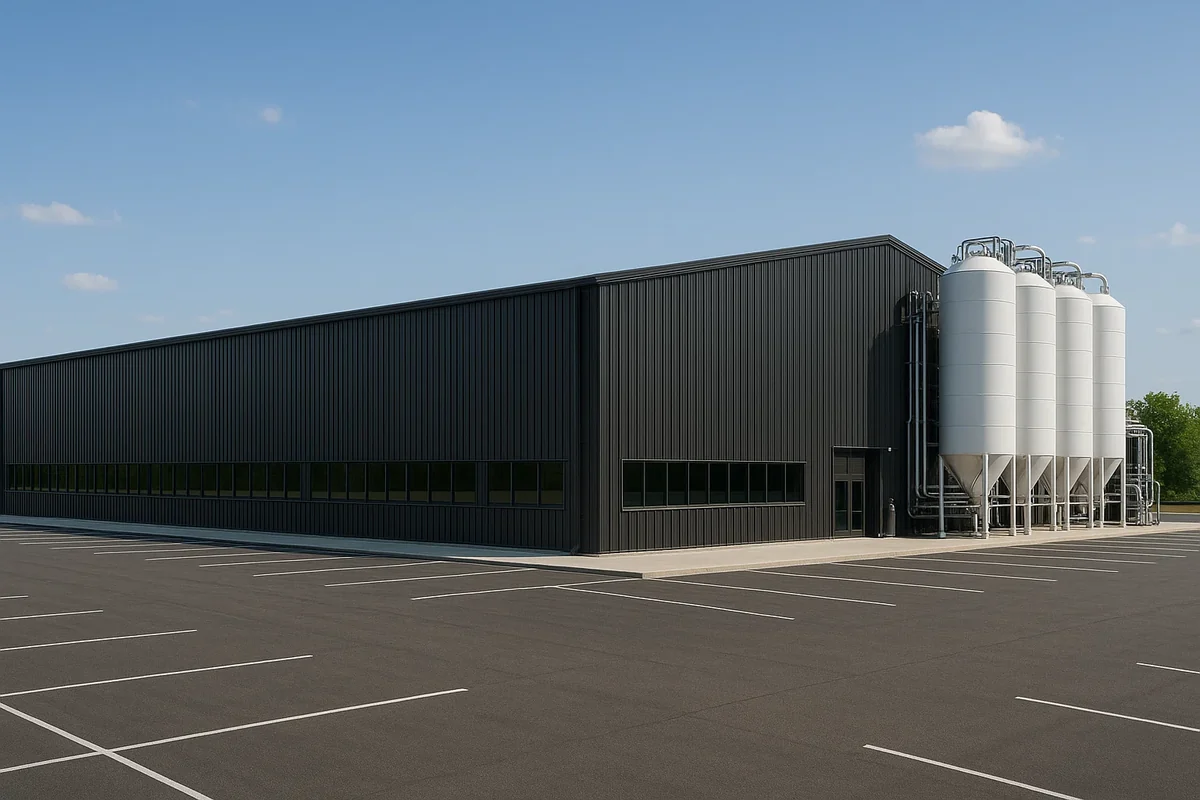
Why Industrial Operations Choose Steel
- Clear-span space: Wide interiors with no columns in the way of racking, equipment, forklifts, or vehicles.
- High ceilings: Room for tall racking, overhead doors, and large equipment.
- Faster construction: Prefabricated components get operations running sooner.
- Adaptable layouts: Floor plans can be reconfigured as the business changes, and buildings can be expanded.
- Durability and low maintenance: Steel resists rot, pests, and fire, and holds up to heavy daily use.
- Energy efficiency: Insulation packages keep large spaces comfortable and control operating costs.
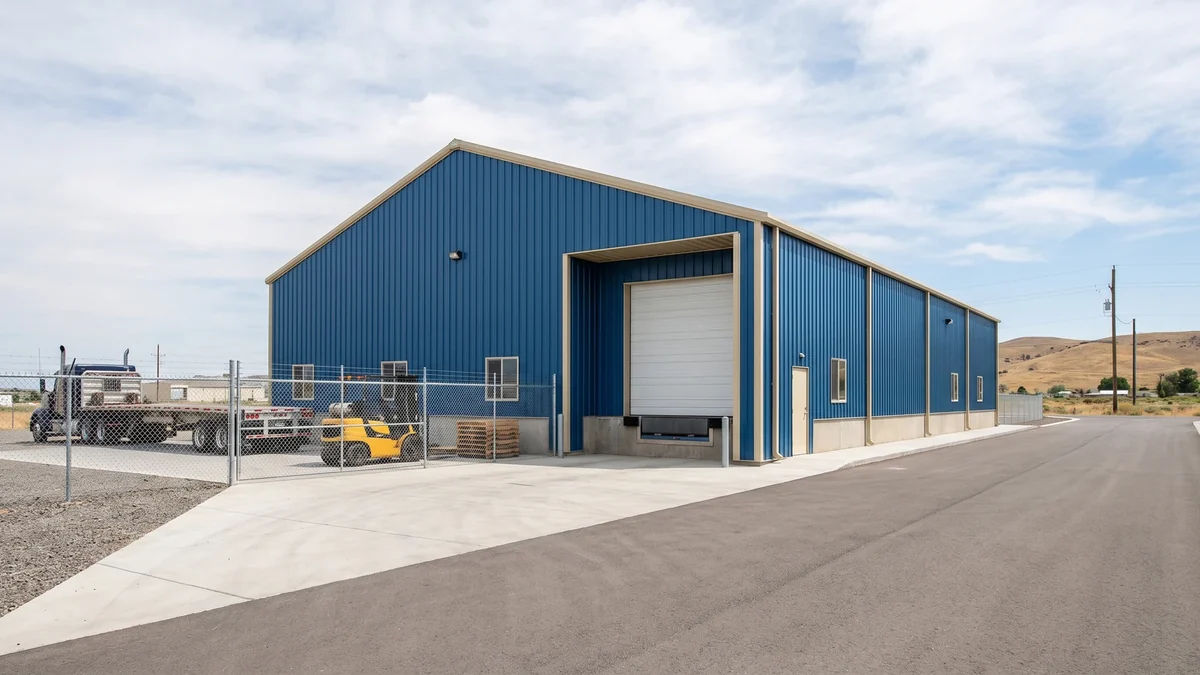
Top Trades That Use Industrial Steel Buildings
Logistics and Warehousing
As businesses grow, they need more space to store, sort, and ship goods. Leasing warehouse space gets expensive over the long run, so many logistics companies build their own steel warehouses — often with integrated offices for staff. Clear-span interiors make it easy to lay out racking, loading docks, and forklift aisles efficiently.
Manufacturing
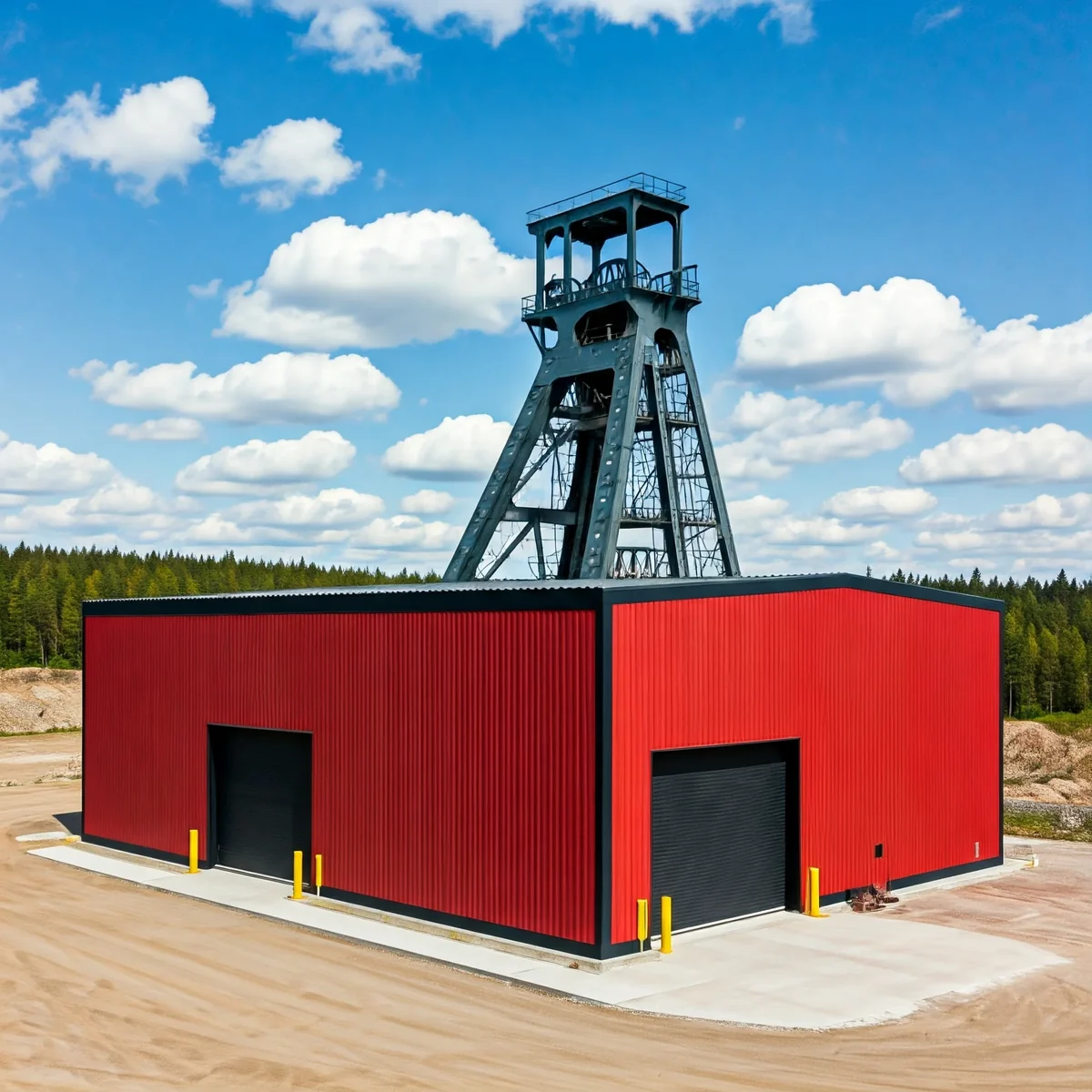
Manufacturers need wide-open production floors that can be reorganized as product lines change. A steel building can be insulated for energy efficiency, sized to nearly any footprint, and reconfigured without major structural changes, making it a simple, cost-effective home for production.
Truck Terminals and Distribution
Much of North America’s freight moves by truck, and terminals are where goods are stored, consolidated, and sorted for their next leg. Steel terminals provide secure, weather-protected space, and can be climate-controlled for perishable goods.
Heavy Equipment Maintenance
Excavators, loaders, tractors, and trucks need regular maintenance in a space large enough to accommodate them. A steel maintenance facility provides tall, wide service bays, oversized doors, and protection for expensive equipment — without the cost of conventional construction.
Marine Repair and Boat Maintenance
In cold climates, boats and marine equipment are often repaired and stored under cover through the winter. A clear-span steel building with a large door opening shelters vessels during maintenance and leaves room to work around them.
Agriculture and Food Processing
Farms and processors use industrial steel buildings for equipment storage, feed and grain storage, packing, and processing, where clean, durable, pest-resistant interiors matter.
Oil, Gas, and Energy
Energy operations use steel buildings for equipment storage, maintenance shops, and field facilities, often in remote locations where prefabricated components and straightforward assembly are a major advantage. See our article on steel buildings for the oil and gas industry.
Planning an Industrial Building
Start with the operation, not the building: the equipment, workflow, number of doors and loading docks, office and washroom needs, and any overhead loads you plan to hang from the structure. Plan for growth, too — it’s far cheaper to design for a future expansion now than to retrofit one later. Share all of this with your Building Specialist so the building is engineered for how you’ll actually use it.
What Does an Industrial Steel Building Cost?
Toro’s steel building kits start at $19 to $26 per square foot for the shell. Where your building lands in that range depends mainly on your site’s snow, wind, and seismic requirements, along with size, doors, and accessories. Foundation, assembly, and interior fit-out are separate costs.
Permits, Codes & Engineering
Industrial buildings face occupancy and fire-safety requirements beyond standard structural review. Design loads follow the ASCE 7 standard from the American Society of Civil Engineers, referenced by the International Code Council‘s International Building Code, or the National Building Code of Canada. Toro’s in-house engineering team — not a third-party engineer most competitors outsource to — calculates your building’s loads for its specific address before it ships.
Related Building Types
Industrial Buildings | How to Design an Industrial Workshop | Prefabricated Steel Warehouses: Own vs. Rent
Build Your Industrial Steel Building
Toro Steel Buildings engineers every industrial building to your operation and your site. Request a free quote to get started.