


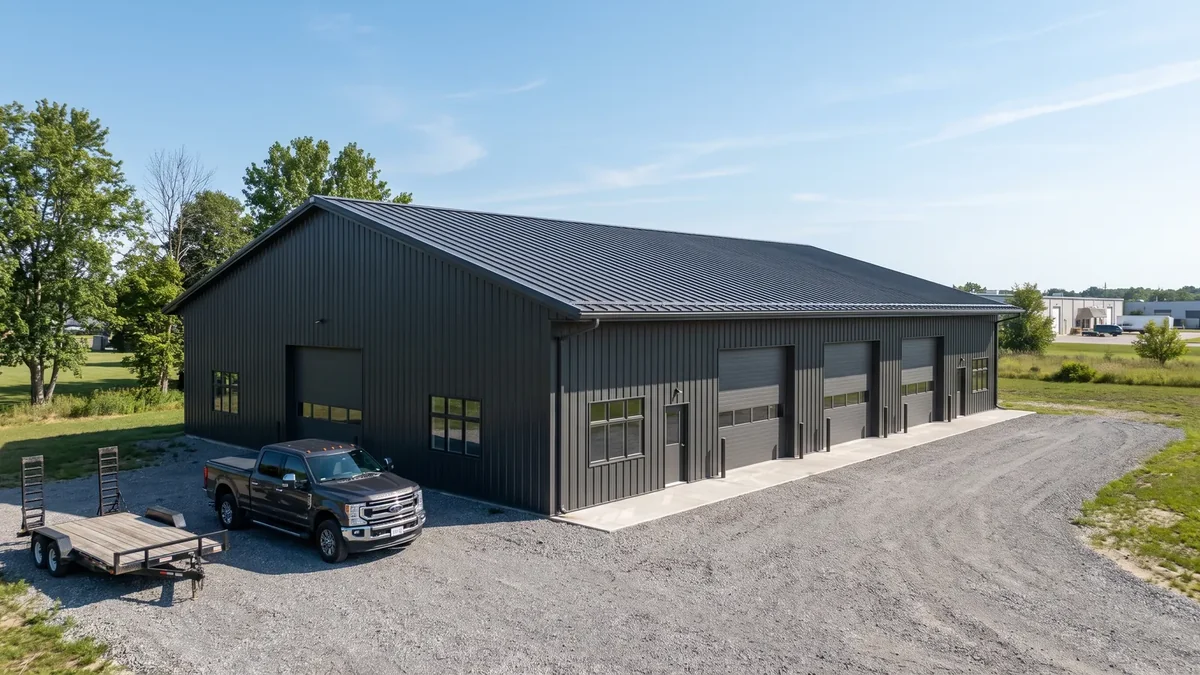
Cold-formed steel buildings use framing roll-formed from steel sheet at room temperature, while red iron buildings use heavier structural steel members, either hot-rolled shapes or built-up sections welded from steel plate. For most garages, workshops, barns, storage buildings, and small commercial projects, cold-formed steel offers real advantages: lower cost, lighter components that are easier to ship and assemble, design flexibility, and fast, DIY-friendly construction. Red iron remains the better fit for very wide spans and heavy structural loads. Toro offers both: the cold-formed M-Model and the red iron T-Model, so you can choose the system that fits your project.
Cold-Formed Steel vs. Red Iron: The Basics
Cold-formed steel (CFS) is shaped into structural sections — typically C and Z profiles — by rolling or bending galvanized steel sheet at room temperature. The result is light, precise, corrosion-resistant framing.
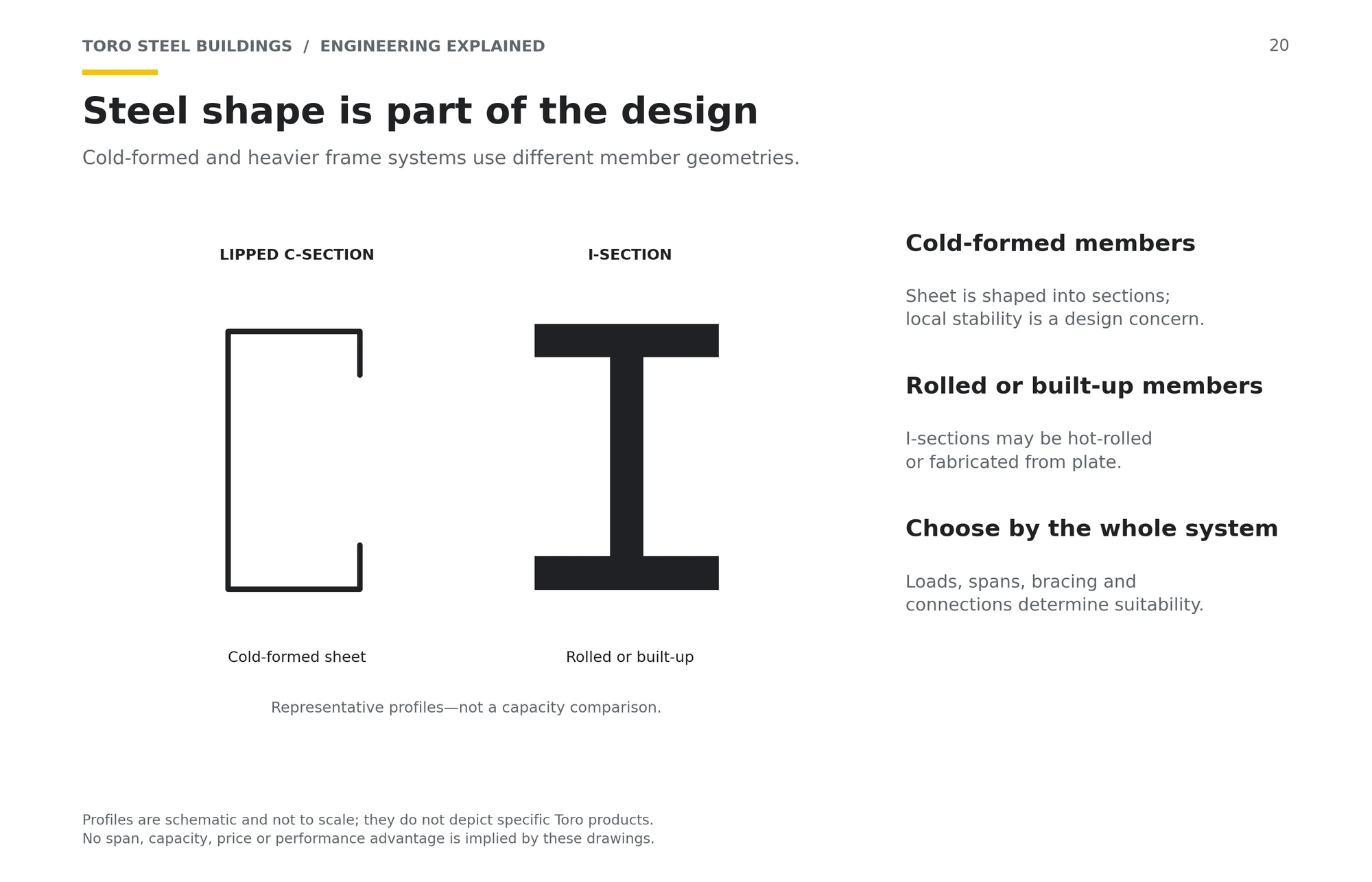
Red iron refers to structural steel framing, made from hot-rolled shapes or built-up members welded from steel plate, traditionally painted with a red-oxide primer. Its heavy I-beam and tapered frames are built for large spans and heavy loads.
6 Advantages of Cold-Formed Steel Buildings
1. Cost-Effectiveness
Roll-forming is a highly efficient process that minimizes material waste, and lighter components cost less to ship and handle. Cold-formed systems also make options like lean-tos, overhangs, extended eaves, and mezzanines straightforward to price, engineer, and supply. Toro’s steel building kits start at $19 to $26 per square foot for the shell, with the final price driven mainly by your site’s snow, wind, and seismic requirements.
2. Design Flexibility
Cold-formed sections can be produced in a range of profiles and gauges and cut precisely to length, so buildings can be tailored closely to each project — with quick turnaround from design to delivery.
3. Lightweight Construction
Cold-formed buildings are lighter than comparable red iron structures. That simplifies transport and on-site handling, and lighter structures can reduce foundation requirements, which lowers overall project cost where the site and design allow.
4. Energy Efficiency
Cold-formed framing integrates easily with insulation systems, so the building can be well insulated for comfort and lower heating and cooling costs. Like all steel framing, it conducts heat, so a properly designed insulation package — including thermal breaks where needed — is what delivers the performance. Cold-formed steel is also fully recyclable.
5. Speed of Construction
Light, precisely manufactured components go together quickly, often with fewer specialized tools and less heavy equipment than red iron. Toro kits use nut-and-bolt assembly with pre-punched holes and no welding, which makes many buildings realistic DIY projects.
6. Durability and Longevity
Galvanized, corrosion-resistant cold-formed framing resists rust, rot, pests, and fire, and it’s engineered to the same site-specific snow, wind, and seismic loads as any other building system. With Galvalume Plus panels and basic maintenance, a cold-formed steel building is built to last for decades.
When Red Iron Makes Sense
Red iron is the stronger choice for very large clear spans, tall buildings, heavy overhead crane systems, and projects with unusually heavy structural loads. For those applications, its heavier structural shapes are worth the added weight and cost. Toro’s red iron line is the T-Model; our Building Specialists can help you compare it against the cold-formed M-Model for your project.
Cold-Formed vs. Red Iron at a Glance
| Factor | Cold-Formed Steel | Red Iron |
|---|---|---|
| Manufacturing | Roll-formed from sheet at room temperature | Hot-rolled shapes or built-up plate members |
| Weight | Lighter | Heavier |
| Typical cost for small and mid-size buildings | Lower | Higher |
| Assembly | Lighter handling, DIY-friendly | Heavier equipment usually needed |
| Best for | Garages, shops, barns, storage, light commercial | Very wide spans, heavy loads, cranes |
Permits, Codes & Engineering
Cold-formed steel design follows specifications jointly published by the American Iron and Steel Institute and CSA Group, and building design loads follow the ASCE 7 standard from the American Society of Civil Engineers or the National Building Code of Canada. Toro’s in-house engineering team — not a third-party engineer most competitors outsource to — calculates your building’s loads for its specific address before it ships.
Related Building Types
PEMB: The Complete Guide | Steel Purlins Guide | Why Tube Steel Building Kits Are a Bad Investment
Build With Cold-Formed Steel
Toro Steel Buildings engineers every cold-formed steel building to your project and your site. Request a free quote to get started.