


What are the advantages of a metal storage building? Metal storage buildings have real advantages, but a few persistent misconceptions still hold buyers back from considering one. Clearing those up matters more than another generic list of benefits. Here are the real advantages of a metal storage building, and the myths worth clearing up.
Key takeaways
- Not just for small sheds. The same system scales to full warehouses.
- You or a contractor build it. Toro designs, engineers and ships the kit.
- Cheaper to own over time. Maintenance savings add up over decades.
- Engineered for your site. Snow, wind and seismic loads for your address.
Common misconceptions, corrected
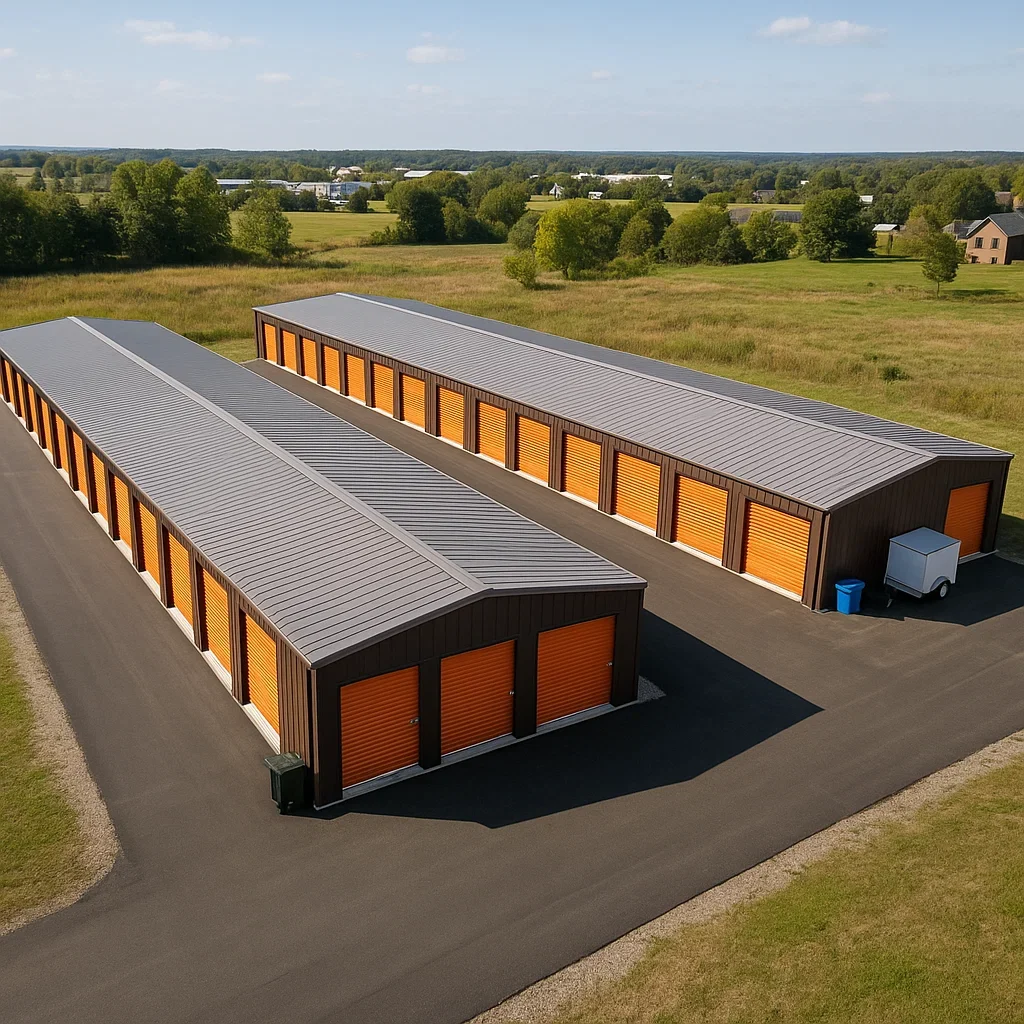
“They’re only suitable for small sheds.” A steel building can be customized to nearly any size — and once a building exceeds roughly 1,200 square feet, steel typically becomes more cost-effective than conventional construction, not less. Buyers picturing a backyard shed often don’t realize the same core system scales up to full commercial warehouses.
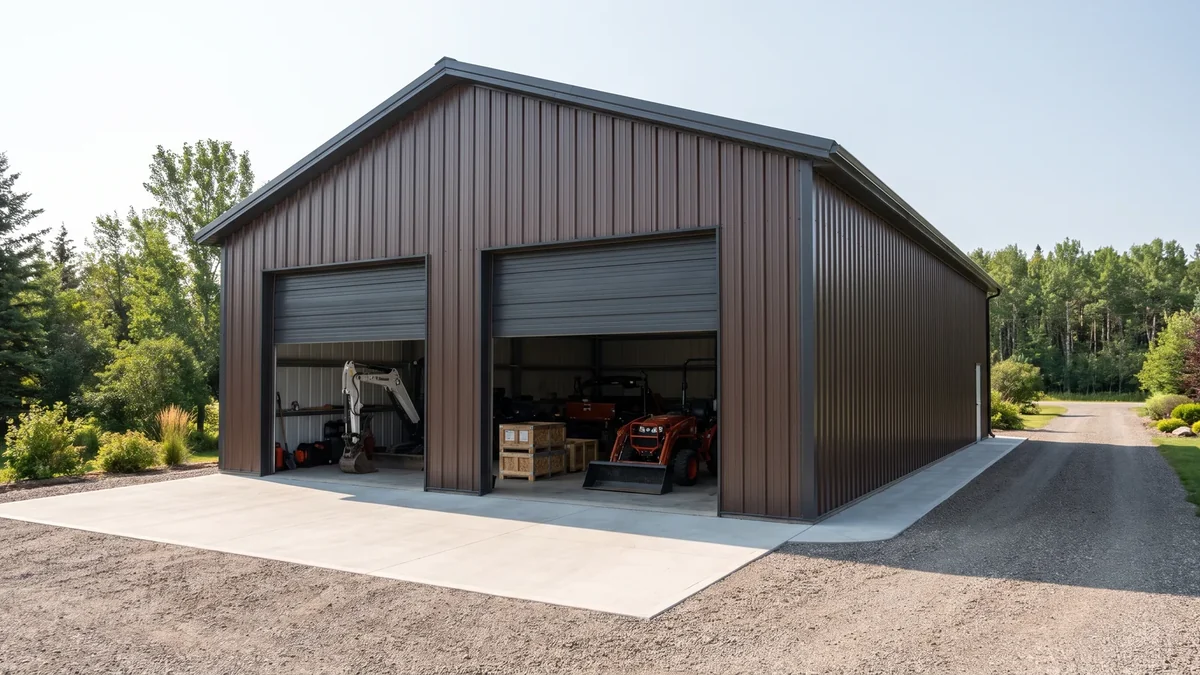
“The manufacturer pours the concrete and assembles it.” Most manufacturers, Toro included, do not pour concrete, erect, or assemble your metal storage building. You handle that yourself or hire a local contractor — the manufacturer designs, engineers, and ships the kit.
“Steel buildings are more expensive to own and maintain.” Wood may look cheaper upfront, but over the building’s full lifetime, steel is typically the more cost-efficient material once maintenance and repair are factored in — repainting, sealing, and pest treatment add up over decades in a way steel simply doesn’t require.
8 advantages of a metal storage building
Why owners choose steel.
1. Design flexibility
Close to limitless configurations, and fully recyclable.
2. Durability
Protects equipment, assets and vehicles for years.
3. Designed for your area
Engineered to your seismic, snow and wind requirements.
4. Lower insurance costs
Some insurers price in steel's lower risk.
5. Reliable quality
Uniform steel components, piece after piece.
6. Low maintenance
No repainting, sealing or pest treatment cycles.
7. Clear-span space
No interior posts to work around.
8. Security
Steel walls and doors resist break-ins.
The real long-term maintenance benefits
- Design Flexibility: Steel offers close to limitless configuration options, and it’s fully recyclable at the end of its useful life.
- Durability: Steel resists the elements well enough to protect equipment, assets, and vehicles for years without significant wear.
- Designed for Your Area: Unlike brick or wood, a steel building is engineered to your specific seismic, snow, and wind requirements — genuine peace of mind that a generic structure can’t offer.
- Lower Insurance Costs: Some insurers recognize steel’s lower risk of storm and pest damage and price accordingly — worth confirming with your specific provider, since this varies.
- Reliable Quality: Steel is uniform across every component, unlike wood, which varies piece to piece — no irregular or defective piece to worry about affecting your build.
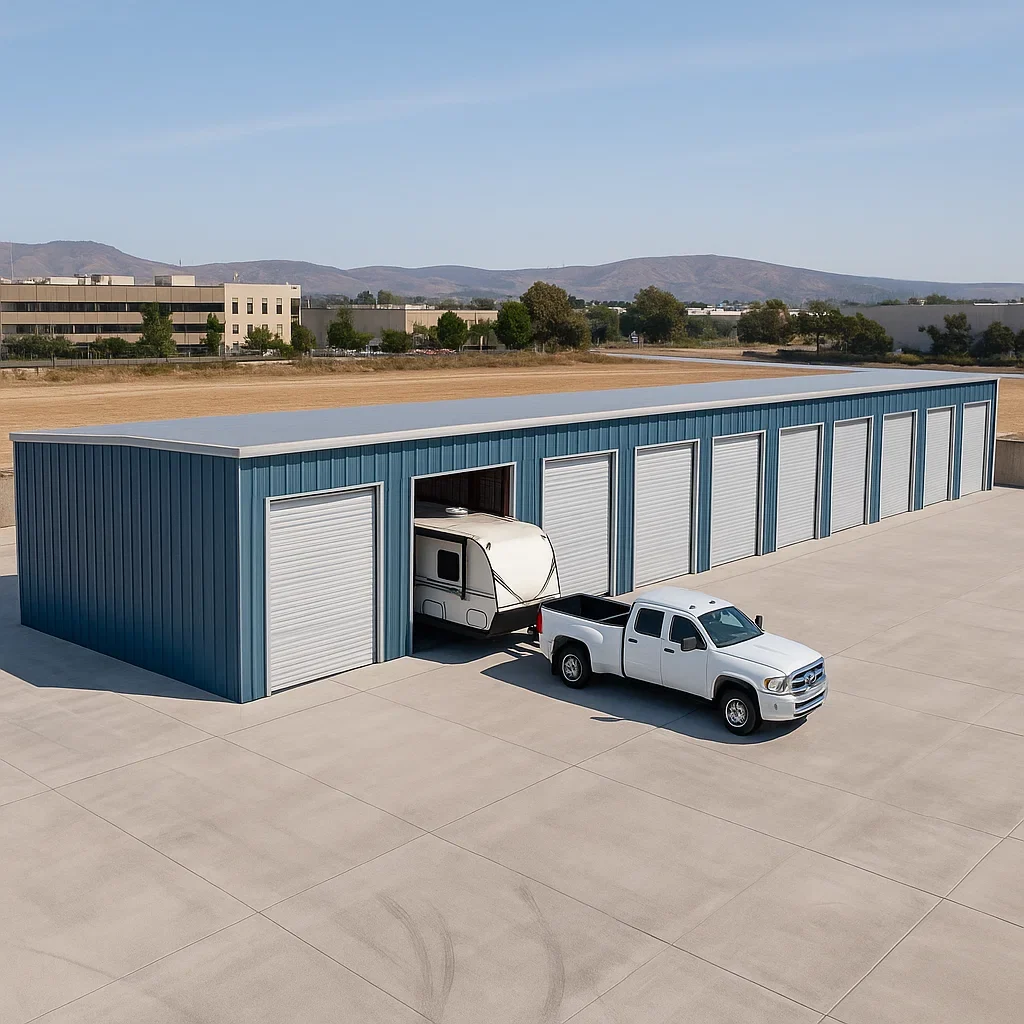
Metal storage building vs. wood shed
How they compare over time.
| Factor | Metal storage building | Wood shed or barn |
|---|---|---|
| Rot, mold and termites | Not affected | Vulnerable |
| Fire | Non-combustible | Combustible |
| Maintenance | Occasional cleaning | Painting, sealing and repairs |
| Engineering | Stamped for your site | Varies by builder |
| Size range | Small kits to warehouses | Large spans need posts |
| Material waste | Precision-cut parts | Warped or miscut lumber |
See steel vs. wood for the full comparison.
Metal storage building sizes
From mini kits to warehouses.
| Size | Typical use |
|---|---|
| 20 x 24 or 25 x 30 | Mini kits for lawn, garden and small vehicles |
| 30 x 40 | Vehicles, a tractor and shelving |
| 40 x 60 | RVs, boats, farm equipment or business inventory |
| 50 x 100 | Large equipment or commercial storage |
| 100 x 200 | Warehouses and storage facilities |
Examples only. Your building is sized to what you store.
See mini storage building kits for smaller needs, or try sizes in the free 3D Building Designer.
How long does it actually take?
Timeline is one of the most common questions buyers ask, and the honest answer depends on several factors: building type, complexity, and the manufacturer’s current workload all affect how long it takes from order to delivery. Once delivered, how long assembly takes depends heavily on whether you handle it yourself or bring in a contractor crew — a genuinely variable factor worth discussing directly with your building specialist before you order, rather than assuming a fixed timeline. A simple mini kit and a large clear-span warehouse are on completely different timelines, so pinning down realistic expectations for your specific project early avoids frustration later.
As a guide, delivery usually takes 2 to 8 weeks, but always confirm timing with your building specialist.
Beyond personal storage
A metal storage building isn’t limited to personal belongings — the same structure works well as a full warehouse, a dedicated storage facility, or individual rentable storage units for a commercial operation. The core advantages that make it work for a backyard shed — durability, low maintenance, design flexibility — scale up cleanly to a much larger commercial application without changing the underlying value proposition.
See starting a self-storage business and commercial storage buildings.
Multiple design options for larger items
Metal buildings accommodate oversized equipment — tractors, bulldozers, trucks — with the right height and opening size. Measuring your equipment’s actual dimensions before finalizing openings avoids a frustrating mismatch later. A clear-span design, with no interior obstruction, is the most flexible option for large equipment or vehicles that need genuine room to maneuver.
Who buys a metal storage building?
Homeowners, farmers and businesses alike.
Homeowners use them for vehicles, boats, lawn equipment and the overflow from a crowded garage. Farmers store tractors, implements, hay and feed. Contractors keep tools, materials and trucks dry and secure. Small businesses use them for inventory, records and equipment, and investors build rows of rentable units. What they share is the need for durable, low-maintenance space at a sensible price, which is exactly where steel shines. Many start with one building and add a second once they see how little upkeep the first one needs, often in a matching size and colour so the property looks consistent.
Doors and openings
Size them around what moves in and out.
Measure your largest vehicle or machine, including mirrors, booms, ladders and roof racks, before you finalize door openings. Roll-up doors suit most vehicle bays, while wide sliding doors work well for farm equipment and don't need headroom for overhead tracks. Think about where vehicles will turn in and out, too, so doors line up with your driveway or yard. Add a walk-in door so you don't have to open the big door every trip. Toro engineers the framed openings into your building, and most owners buy the doors locally to fit, which makes it easy to match styles or add insulated doors later.
Power, light and comfort
Make the space usable year-round.
A few upgrades turn a storage building into a place you'll want to spend time in. Plan lighting, outlets and any heating before the walls are finished, add insulation if you'll heat the space or store sensitive items, and include roof or wall vents to keep air moving. Windows bring in daylight and make the building feel larger, and translucent light-transmitting panels on arch-style buildings can do the same for less. If you might add a workshop corner later, run extra circuits now; it's far cheaper than adding them after the fact.
Resale and property value
A building that holds its value.
A well-kept metal storage building adds useful, secure space to a property, and buyers notice a straight, solid building with no rot, sagging or peeling paint. Because steel needs so little maintenance, it looks much the same years later as it did on day one. Keep your stamped drawings, permit and warranty information together with your property records; they show future buyers exactly what was built and how it was engineered.
Protecting what you store
Dry, secure and organized.
A metal storage building only protects what's inside if it stays dry. Insulation and ventilation control condensation, which matters for vehicles, tools, paper and fabric. Keep items off the floor, leave airflow around stored goods and plan shelving along the walls; see how to organize space in storage buildings and 7 ways to prevent condensation. Steel walls, solid doors, good locks and exterior lighting also deter theft and give you peace of mind when you're away.
Arch-style or straight-wall?
Two ways to build a metal storage building.
Arch-style buildings, manufactured by our sister company Future Buildings and sold through Toro, are economical and DIY-friendly, and they carry a 50-year limited rust perforation warranty. Straight-wall buildings, made by Toro, make the most of every square foot for shelving, vehicles and racking, with a 1-year limited material warranty plus a 25 to 40-year paint warranty depending on panel and finish. Compare them in arch-style vs. straight-wall.
Foundation and assembly
What you handle locally.
Toro doesn't supply or build foundations, but every building comes with its structural reactions so a local contractor can build the foundation to spec. Anchor bolts are included with every cold-formed building and are an add-on for arch and red iron buildings. Parts arrive precision-cut and pre-punched with a manual for your building, so you can assemble it yourself or hire a local contractor. See how to build a steel building.
Watch storage buildings go up


Mistakes to avoid when buying
Plan these and you won't regret it.
- Building too small: storage fills up much faster than anyone expects, so add a few feet now.
- Doors too low or narrow: measure the biggest thing you'll ever store.
- Skipping insulation for sensitive items: condensation can damage stored goods.
- Ignoring drainage: water at the doors becomes ice in winter.
- Buying a generic kit: make sure it's engineered for your address.
Before you order
A quick checklist.
- List everything you'll store now and in five years
- Measure your largest vehicle or machine
- Check setbacks, height limits and permit needs
- Pick a level, well-drained site with delivery access
- Decide on insulation, vents, windows and lighting
- Line up a foundation contractor and assembly help
Storage buildings in snowy regions
Engineered for heavy snow loads.
In Canada and the northern U.S., a metal storage building carries heavy snow for months. Every Toro building is engineered for its exact address under the National Building Code of Canada or U.S. codes, and Canadian kits start at $26 per square foot (CAD). Plan doors away from prevailing winter winds and keep the area in front of them clear of roof snow.
Price your metal storage building
Tell us what you'll store and where, and a building specialist will send a quote within 1 business day.
Cost and pricing
Size, loads and options set the price.
Toro's steel building kits start at $19 per square foot in the U.S. and $26 per square foot in Canada (CAD). Freight isn't included. Your size, options, intended use, and local snow, wind and seismic loads and codes set the final price, so every building needs a quote to make sure it meets the loads and codes where you'll build.
Foundation, freight and assembly are separate. See steel building prices for more.
Need a storage building sooner, or for less?
Toro makes 500+ buildings a month, and about 10% are never delivered because a customer's plans change. These clearance buildings are offered at a discount, re-engineered for your site if needed and come with stamped drawings. Inventory changes daily and not every building is listed online, so call to ask about unlisted clearance inventory, including storage buildings.
Permits, codes and engineering
Structural requirements follow the ASCE 7 standard from the American Society of Civil Engineers, referenced by the International Code Council‘s International Building Code, or the National Building Code of Canada. Toro’s in-house engineering team calculates your storage building’s design loads for its specific address before it ships.
Frequently asked questions
Still weighing a metal storage building? Price your building and a building consultant will walk you through it.
Are metal storage buildings only for small sheds?
No. The same system scales from mini kits to full commercial warehouses; above roughly 1,200 square feet, steel is often more cost-effective than conventional construction.
Does Toro pour the concrete and assemble the building?
No. Toro designs, engineers and ships the kit; you or a local contractor handle the foundation and assembly.
Is a metal storage building expensive to maintain?
No. It needs far less maintenance than wood: no repainting cycles, sealing or pest treatment.
Can a metal storage building hold large equipment?
Yes. With the right height, openings and clear span, it fits tractors, trucks and heavy equipment.
How long does it take to get a building?
Delivery usually takes 2 to 8 weeks, but confirm timing with your building specialist.
How much does a metal storage building cost?
Toro kits start at $19 per square foot in the U.S. and $26 in Canada (CAD). Freight isn't included, and size and site loads set the final price.
Keep reading
Related building types
Storage buildings | Large storage buildings | Garages | Warehouses | Quonset buildings
Get your metal storage building
Toro Steel Buildings engineers every storage building to your exact site and use case, with a quote within 1 business day.