


The best way to organize a metal storage building is to plan the interior before anything goes on the walls — sketch a basic layout, then choose shelving, racking, and hanging systems that match what you’re actually storing. A building with the right square footage can still feel cramped if its interior isn’t planned, while a well-organized one makes every foot of floor and wall space work. These shed organization ideas work especially well in a steel building.
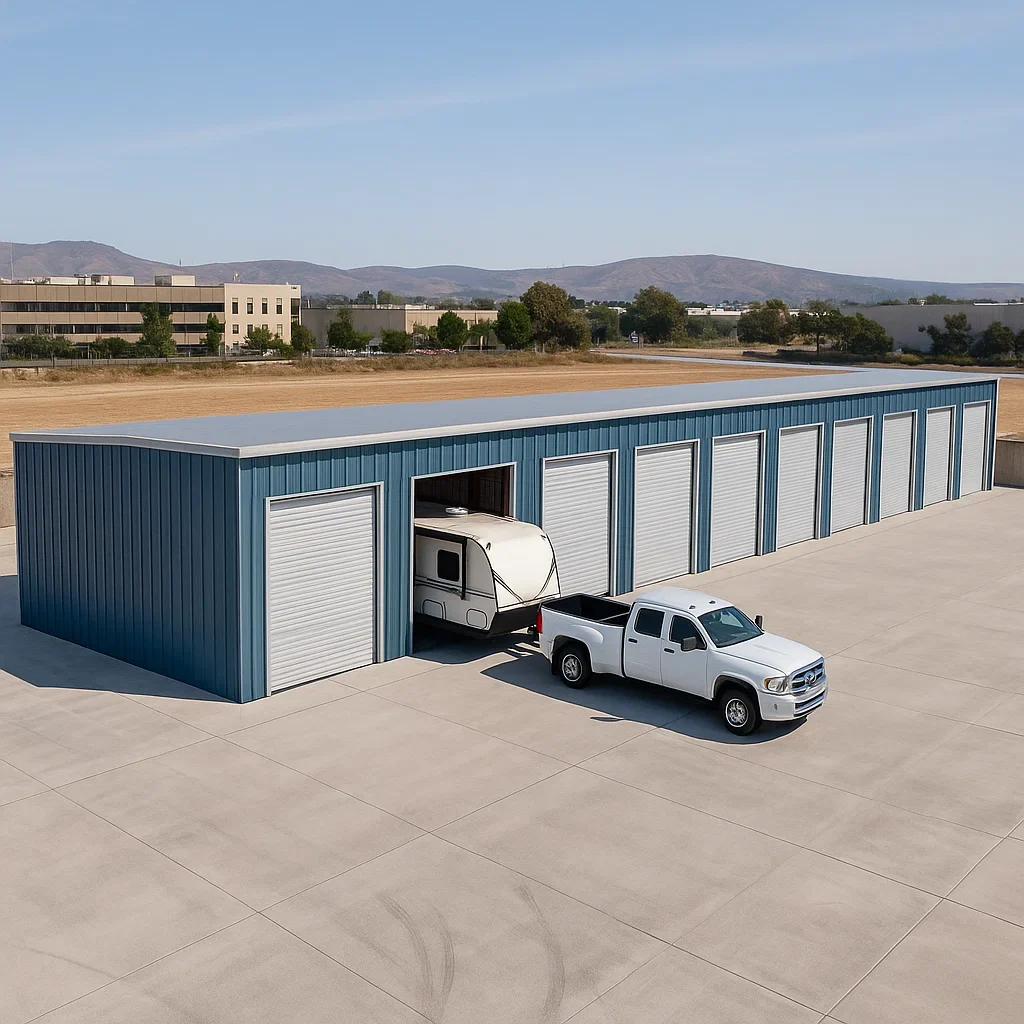
Start With a Storage Plan
You could start adding shelves the day your building is finished, but doing it without a plan usually leads to wasted wall space that can’t be filled, or overloaded corners where items become impossible to retrieve. Sketching a simple blueprint of your interior layout first lets you spot items that won’t fit, overlapping uses of the same space, and traffic paths that need to stay clear — especially important if vehicles or equipment will move in and out regularly.
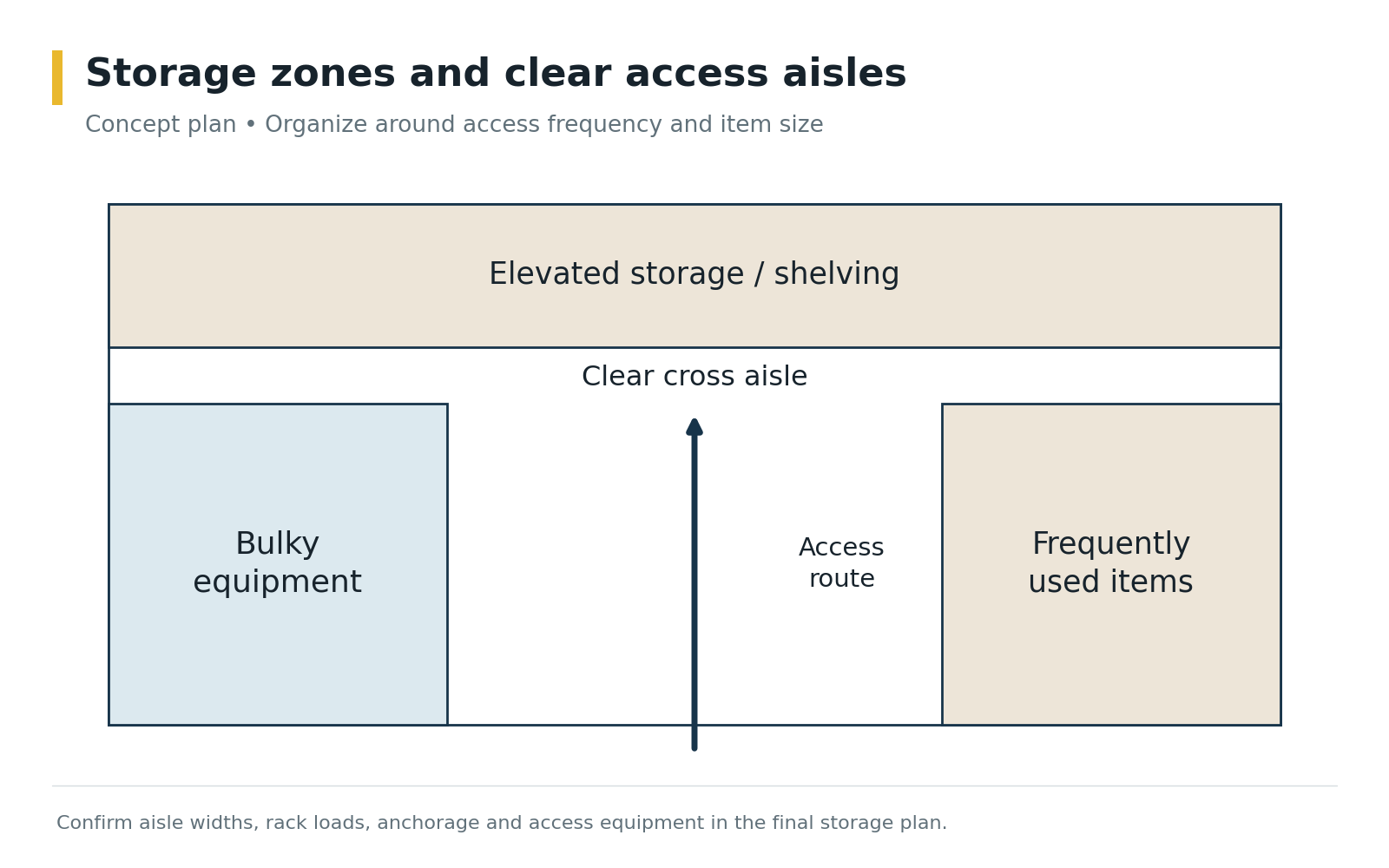
A good plan answers three questions before you buy anything: what are you storing, how often do you need to reach it, and how heavy is it? Frequently used items belong at waist-to-shoulder height near the door. Heavy items belong low and close to the floor. Seasonal or rarely used items can go up high or toward the back.
It also helps to think in zones rather than individual shelves — a tool zone near a workbench, a seasonal zone along the back wall, a vehicle or equipment zone kept clear near the main door. Zoning keeps related items together and makes the layout easier to maintain as your storage needs grow.
Why Shelving Should Be Part of the Design
- Maximizes usable space: Wall-mounted shelves put vertical space to work and keep the floor clear.
- Keeps things organized: The right shelving system makes the whole building look and function more orderly.
- Improves access: Items stay visible and reachable without moving other things out of the way.
- Improves safety: Organized storage makes hazards easier to spot and keeps items from being damaged or lost.
Organization and Shelving Options
- Tool hanging: Wall-mounted tool holders free up floor space and keep frequently used tools within reach.
- Wall-mounted vs. freestanding shelving: Wall-mounted shelves capitalize on vertical space; freestanding units can be moved around as your needs change. Many buildings use both.
- Wood vs. metal shelves: Wood offers more styles and finishes; metal shelving typically carries heavier loads and resists moisture better.
- Cabinets and counters: Cabinets hold items that don’t suit open shelving, while counters add a work surface for projects like woodworking or repairs.
- Wire shelving: Simple, inexpensive, lightweight, and easy to set up — but not suited to heavy tools or machinery.
- Pallet racking: An upright system of horizontal beams and vertical posts for bulky, heavy items that won’t fit on standard shelves — common in commercial storage.
- Equipment stalls: Defined bays for machinery or vehicles keep large items secure and easy to access.
- Ceiling-mounted shelves: Extra storage overhead for seasonal or rarely used items — more involved to set up, but sturdy when done properly.
What to Consider When Choosing Shelves
Before buying any shelving system, check its load-bearing capacity against what you plan to store — ratings vary widely by product, so rely on the manufacturer’s stated capacity rather than a general rule of thumb. Look for materials that resist rust and corrosion, particularly if your building isn’t climate-controlled. Factor in your budget and how much effort each system takes to set up.
You’ll also see two main assembly styles. Boltless shelving connects with pins and slots, making it faster to assemble and reconfigure. Bolted shelving is secured with nuts and bolts, which takes longer to put together but is generally the sturdier choice for heavy, permanent loads.
How to Hang Things in a Metal Building
- Attach to the framing: Wall girts and framing members give you solid attachment points along open walls. Fasten into girts or purlins rather than wall panels alone, and don’t cut, notch, or weld primary structural members — check with your supplier first if you’re unsure what can safely carry a load.
- Add wooden backing: Securing wood beams or plywood backing to the framing creates a continuous surface for heavier-duty shelves and hanging hardware.
- Use freestanding units: Freestanding or floating shelving needs no attachment at all — a good option if you’d rather not drill into the structure.
Common Mistakes to Avoid
- Choosing shelving before deciding what it actually needs to hold
- Skipping accurate measurements of walls, ceiling height, and door clearances
- Ignoring weight ratings and overloading shelves
- Blocking the paths vehicles or equipment need to move through
Permits, Codes & Engineering
Interior shelving and racking can fall under local building and fire codes, and commercial buildings are typically held to stricter standards than residential ones — particularly for tall pallet racking. Confirm local requirements before installing large systems. The building itself is engineered to the ASCE 7 standard from the American Society of Civil Engineers, referenced by the International Code Council‘s International Building Code, or the National Building Code of Canada. If you plan to hang heavy loads from the roof framing, tell Toro’s in-house engineering team before your building ships so those collateral loads can be accounted for in the design.
Related Building Types
Storage Buildings | Steel Storage Buildings: A Comprehensive Guide | Commercial Storage Buildings
Get a Storage Building Designed Around Your Needs
Toro Steel Buildings engineers every storage building to your exact site and use — including the interior loads you plan to add. Request a free quote to get started.