


A steel farm building can serve nearly any agricultural purpose — housing livestock, storing hay, grain, and machinery, sheltering horses, or running a farm business — with far less maintenance than a traditional wood structure. Toro engineers every farm building to your property’s exact wind, snow, and seismic requirements before it ships, so the same core structure can be configured for whatever your operation needs. Here are nine ways farms put steel farm buildings to work.
9 Uses for a Steel Farm Building
1. Main Barn
The main barn is the workhorse of most farms — shelter for livestock plus storage for hay, grain, supplies, and machinery. Barns vary by purpose: a horse barn might include grooming areas, wash stalls, and a tack room, while a general livestock barn can house cattle, sheep, goats, pigs, llamas, and alpacas. A clear-span steel interior lets you lay out pens and aisles exactly the way you work.
2. Poultry Coops and Brooder Houses
A poultry coop gives chickens a protected place to lay eggs and sleep at night, with doors that let them out for daylight and fresh air. A brooder house is a heated building for raising young birds like chicks, goslings, and turkey poults, which depend on steady warmth — it needs reliable heat, clean water, and good sanitation. Steel’s resistance to pests and moisture makes both easier to keep clean.
3. Livestock Shelters and Loafing Sheds
Livestock shelters protect animals from snow, wind, cold, and heat while letting you make better use of surrounding pasture or rangeland. Loafing sheds — three-sided run-in structures built in a paddock or training area — give horses a covered retreat they can use whenever they like, so they can spend more time outdoors without being exposed to the elements.
4. Equipment and Machinery Storage
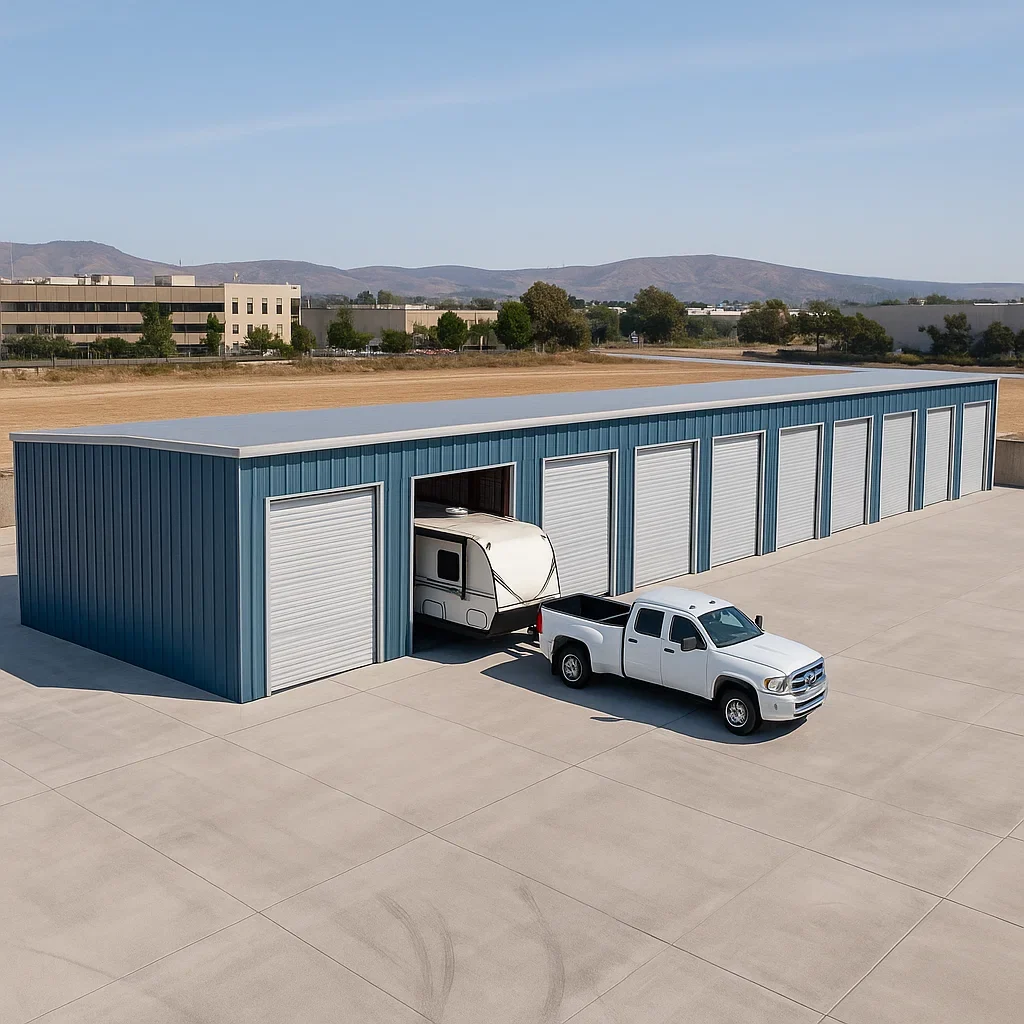
Tractors, balers, harvesters, trailers, and implements often cost more individually than the building that stores them. A steel equipment building protects that machinery from weather, extends its working life, and adds real security against theft — with large framed openings sized to your biggest piece of equipment.
5. Hay, Feed, and Grain Storage
Stored feed only has value if it stays dry and pest-free. A steel building protects hay, feed, and grain from weather and rodents, and with proper ventilation and insulation, it controls the condensation that causes spoilage. See our dedicated guides to hay storage and grain storage for the details each requires.
6. Cold Storage
Temperature-controlled cold storage helps farms reduce post-harvest losses, keeping produce fresh longer and giving you more flexibility on when to sell. An insulated steel building is a strong starting point for cold storage on farms of any size.
7. Workshop and Repair Space
A dedicated workshop keeps equipment maintenance under cover and out of the weather, with room for a workbench, tools, and parts. Many farms combine a workshop bay with equipment storage in the same building, so repairs happen right where the machinery is kept.
8. Horse Barn and Indoor Riding Arena
An indoor riding arena lets horses keep a daily exercise routine regardless of weather, and removes some of the risks of riding on wet, icy, or uneven ground. Steel’s clear-span framing creates the wide, column-free interior an arena needs, and it can be combined with stalls under one roof.
9. Farm Retail and Garden Centres
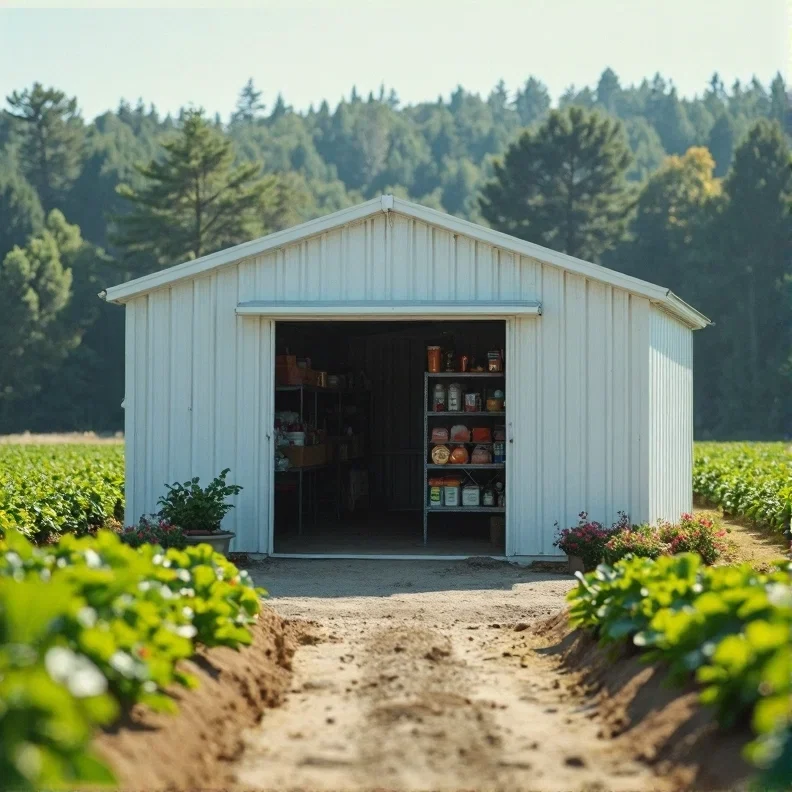
Many farms sell directly to the public — produce stands, farm stores, nurseries, and garden centres that stock plants, seeds, tools, and equipment. A steel building gives a farm business a durable, open retail space with room for displays, checkout, and stock storage, and it can be designed with skylights and large openings that suit plant sales.
One Building, Multiple Uses
Few farms need nine separate buildings. A single steel structure can be divided into zones — equipment storage on one side, a workshop bay, feed storage along the back wall, and a section for animals — as long as the layout is planned before the building is ordered. Planning a multipurpose building upfront is far cheaper than adding separate structures later.
Straight Wall vs. Arch for Farm Buildings
Toro offers farm buildings in both straight-wall and arch styles. Straight-wall buildings maximize usable wall space and headroom, making them well suited to large animals, pens, and stalls. Arch-style Quonset buildings are often an economical choice for crop, hay, and equipment storage, since the arch shape itself provides structural support. Both are engineered by our in-house team to your site’s loads.
Why Steel Outperforms Wood on Working Farms
- Mold resistance: Wood absorbs moisture and gives mold and fungus a place to grow, which can affect the respiratory health of animals and the people working with them. Steel doesn’t feed mold, and paired with good ventilation it stays much easier to keep clean and dry.
- Durability: Steel resists rot, termites, and fire in ways pole barns and wood structures can’t over decades of real farm use.
- Low maintenance: No repainting, sealing, or pest treatment — time that goes back into running the farm.
- Consistent material: Steel components are uniform, without the warping, splitting, or defective pieces that come with lumber.
- Faster to build: Precision-cut, pre-punched components bolt together quickly, so the building is in use sooner.
Permits, Codes & Engineering
Agricultural buildings still need to meet real structural requirements, even in rural areas with lighter permitting. Design loads follow the ASCE 7 standard from the American Society of Civil Engineers, referenced by the International Code Council‘s International Building Code, or the National Building Code of Canada. Toro’s in-house engineering team — not a third-party engineer most competitors outsource to — calculates your farm building’s loads for its specific address before it ships. Toro designs, engineers, manufactures, and ships the kit; you or your local contractor handle the foundation and assembly.
Related Building Types
Agricultural Buildings | Metal Barns | Considerations When Constructing a Steel Farm Building
Build Your Steel Farm Building with Toro
Toro Steel Buildings engineers every farm building to your operation and your site. Request a free quote to get started.
Looking for a chicken house for broilers,
About 750 square feet.