


Steel Buildings Detroit
Steel Buildings Built to Perform in Detroit, MI
Why Detroit Buyers Choose Toro Steel Buildings
Detroit’s climate does not allow for engineering shortcuts. Heavy snow accumulation, deep freeze-thaw cycling, sustained moisture exposure, high wind loads, and seasonal temperature swings that can exceed 100 degrees Fahrenheit across the year all place real and compounding structural demands on a steel building over its service life. A structure not engineered around those conditions from the start will reflect that decision in performance failures, maintenance costs, and structural deterioration that a properly specified building avoids entirely.
Toro Steel Buildings brings over 40 years in business, more than 85,000 customers served, an in-house design and engineering team, and manufacturing support across more than 30 facilities in North America. Detroit buyers working with Toro are not handed a standard catalog package and left to make it fit the property. Every project is developed around the actual site conditions, intended occupancy, and structural demands of the build before a quote is ever issued.
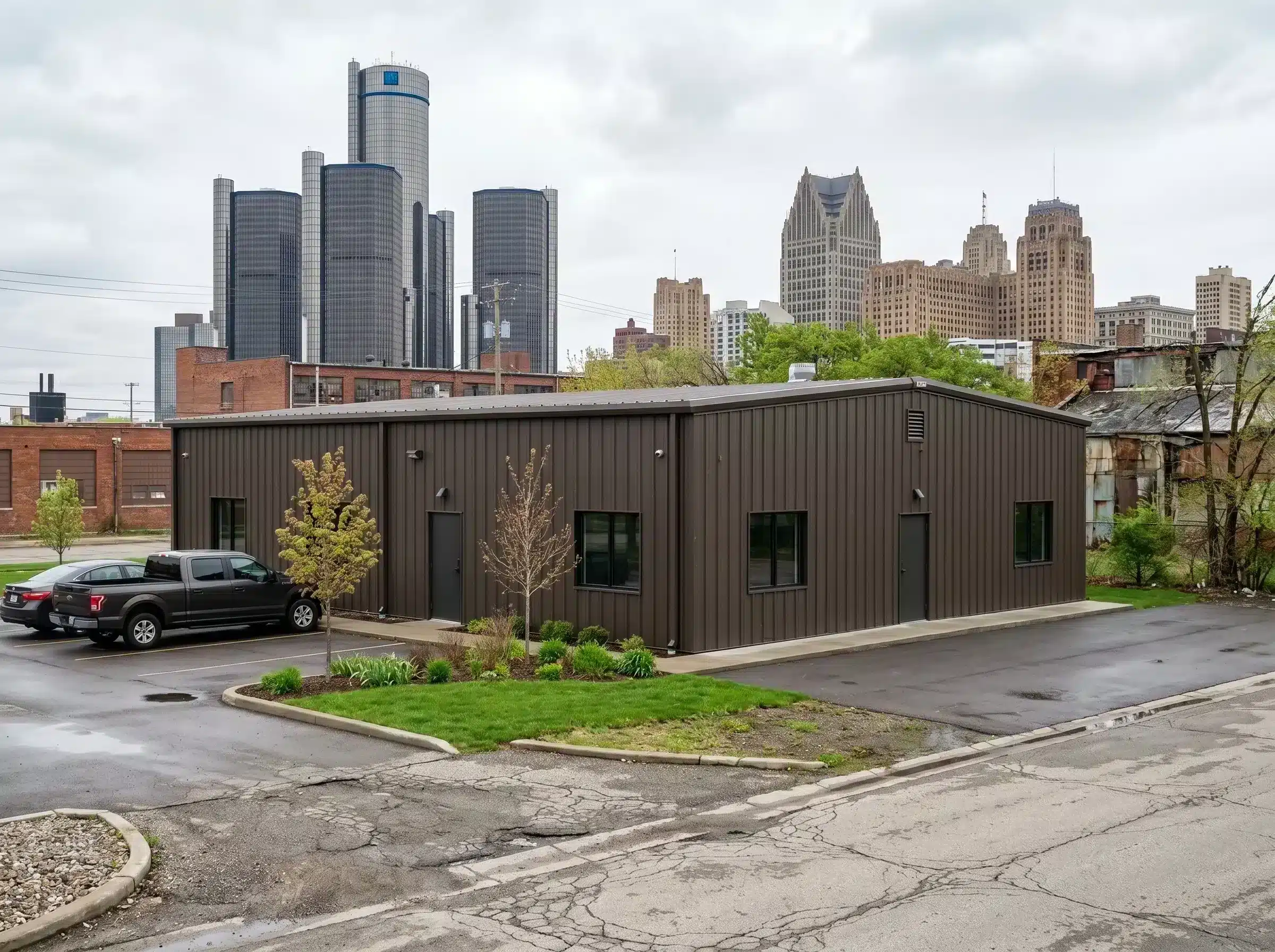
Why Steel Is the Right Material Choice for Detroit
Detroit’s environment makes material selection a structural engineering decision rather than a cosmetic one. Freeze-thaw cycling degrades materials that absorb moisture. Sustained winter exposure accelerates deterioration in wood framing through repeated expansion and contraction. Moisture infiltration creates pathways for rot, mold, and pests in organic materials that steel does not provide. Over a service life measured in decades, those material differences compound into a significant performance gap between a steel building and one framed with conventional materials.
Steel performs reliably in Detroit’s conditions because it is dimensionally stable across wide temperature ranges, non-combustible, impervious to rot and biological degradation, and engineerable to precise load specifications rather than relying on conservative blanket assumptions. Structural parts are fabricated to tight dimensional tolerances, which means load paths behave predictably, connections perform as designed, and the building maintains its structural integrity through years of demanding seasonal exposure.
Clear-span steel framing adds a further functional advantage. Eliminating interior columns gives buyers unobstructed floor area that can be organized around actual operational requirements. Garages, workshops, warehouses, storage facilities, contractor operations, and commercial buildings all benefit from interior space that works around the use rather than forcing the use to work around the structure. That combination of material reliability, engineering precision, and layout efficiency is why steel buildings in Detroit remain the practical long-term solution across residential, commercial, agricultural, and industrial applications.
What Our Detroit Customers Say
What Our Detroit Customers Say
“We needed a commercial steel building that would work for our operation now and still make sense as we grow. Toro helped us get the layout, access points, and overall design right, and the finished building has been a great fit for the business.”
“Our automotive workshop had to be practical from day one, with enough room for equipment, vehicles, and everyday workflow. Toro delivered a building that feels solid, well-designed, and genuinely built around how we use the space.”
Common Metal Building Uses in Detroit
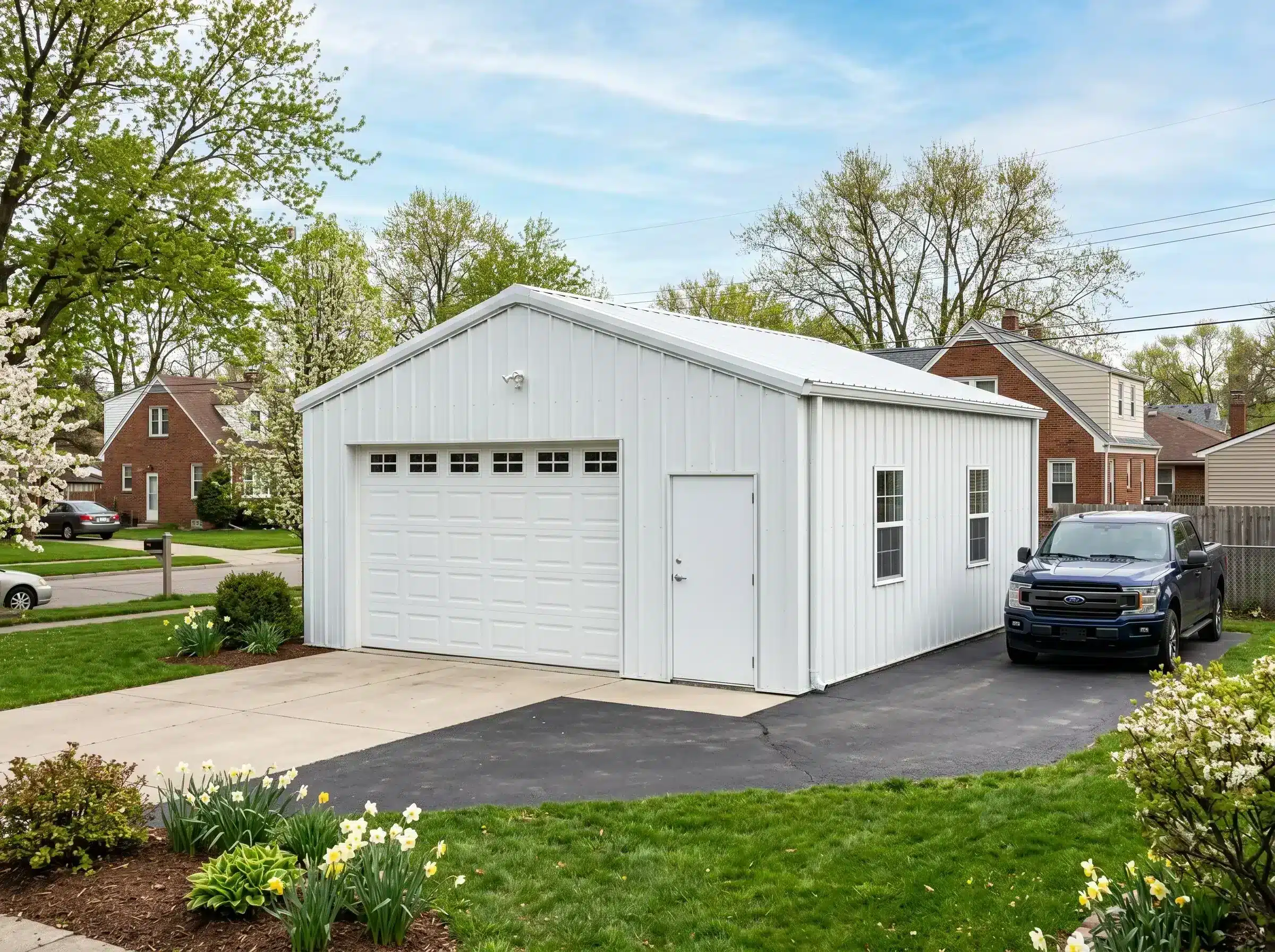
Steel Garages
A Detroit garage has to perform reliably through months of winter exposure, heavy snow, the risk of moisture infiltration, and freeze-thaw cycling without creating a constant maintenance burden. Steel garages are engineered to withstand those conditions while providing organized, durable space for vehicles, tools, equipment, and storage. Layouts can be configured around single or multiple bays, larger vehicle access, workshop integration, and the specific access points that make the building practical for daily use across all four seasons.
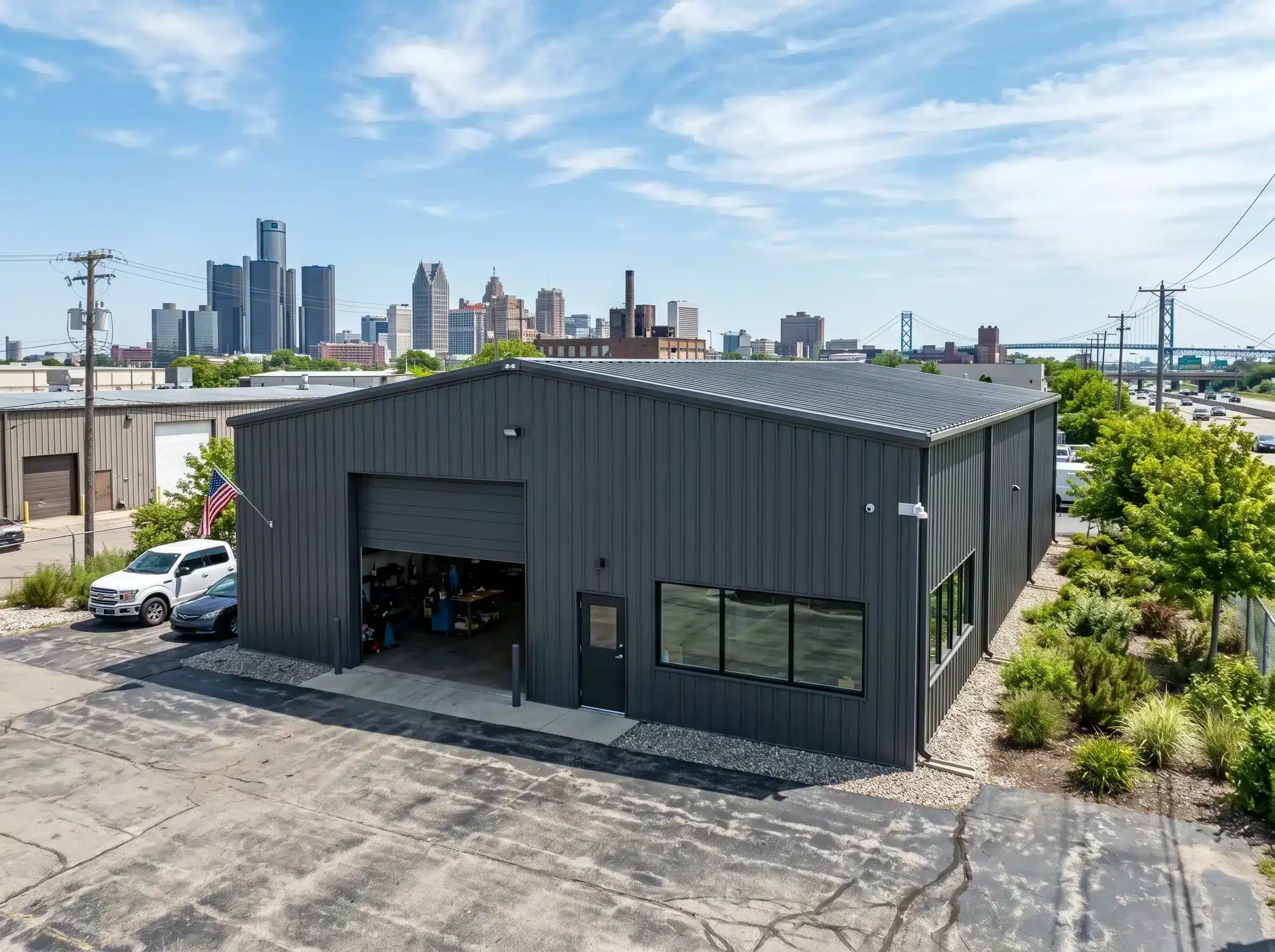
Workshop Buildings
A workshop in Detroit needs to be functional year-round in conditions that quickly reveal inferior construction. Steel clear-span framing removes the structural constraints that limit layout decisions, force equipment around load-bearing walls, or reduce the usable floor area available for benches, machinery, and workflow. The result is a building that can be configured around how the work is actually performed rather than around what the structural system will allow.
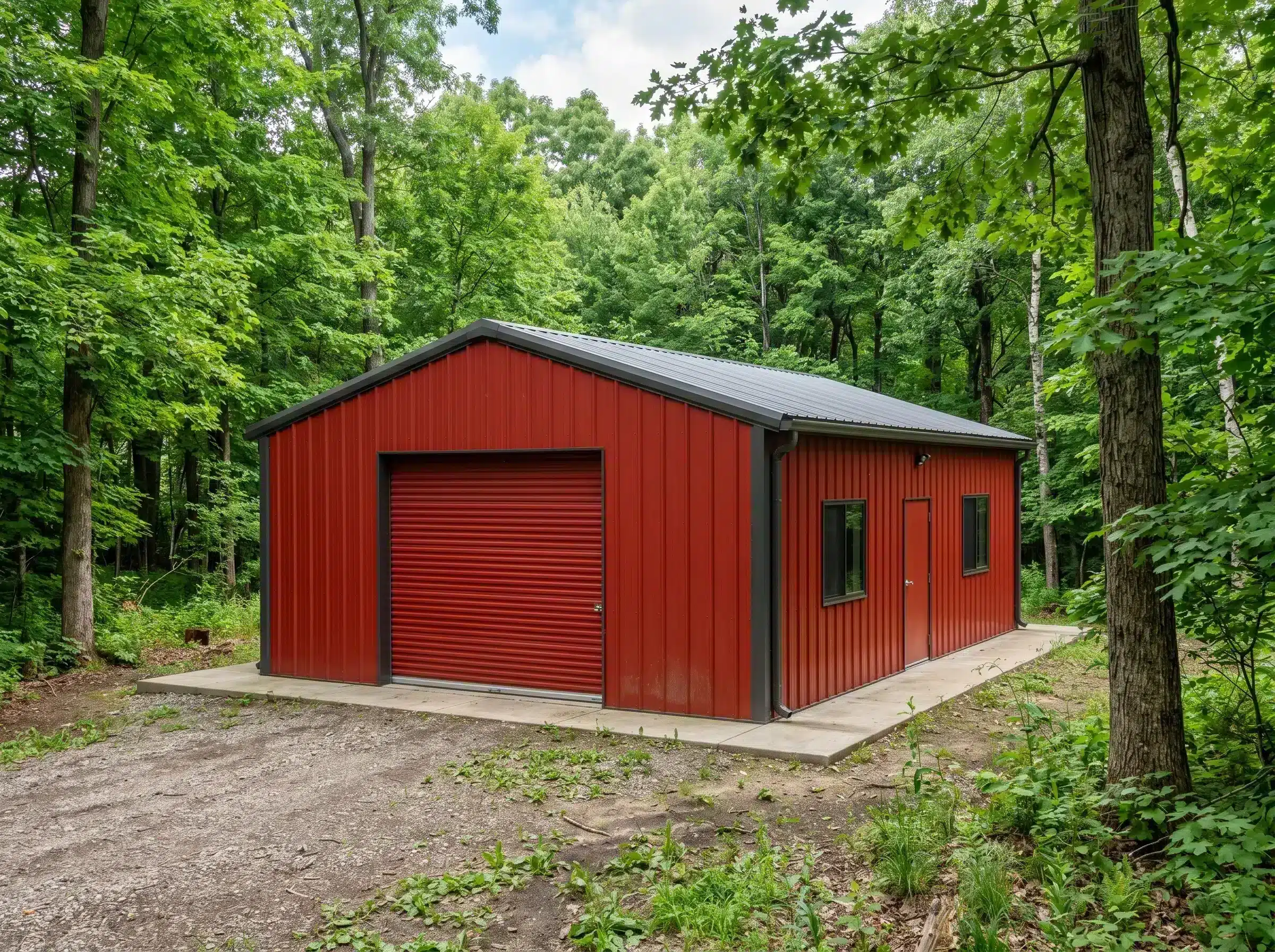
Storage Steel Buildings
Detroit’s seasonal conditions demand storage buildings that protect contents from cold, moisture, and temperature cycling without requiring constant attention. Steel storage buildings provide enclosed, structurally reliable space with clear-span interiors that remain easy to access, organize, and use regardless of what is being stored. The material’s resistance to moisture, rot, and pest damage makes it particularly well-suited for long-term storage in Detroit’s climate.
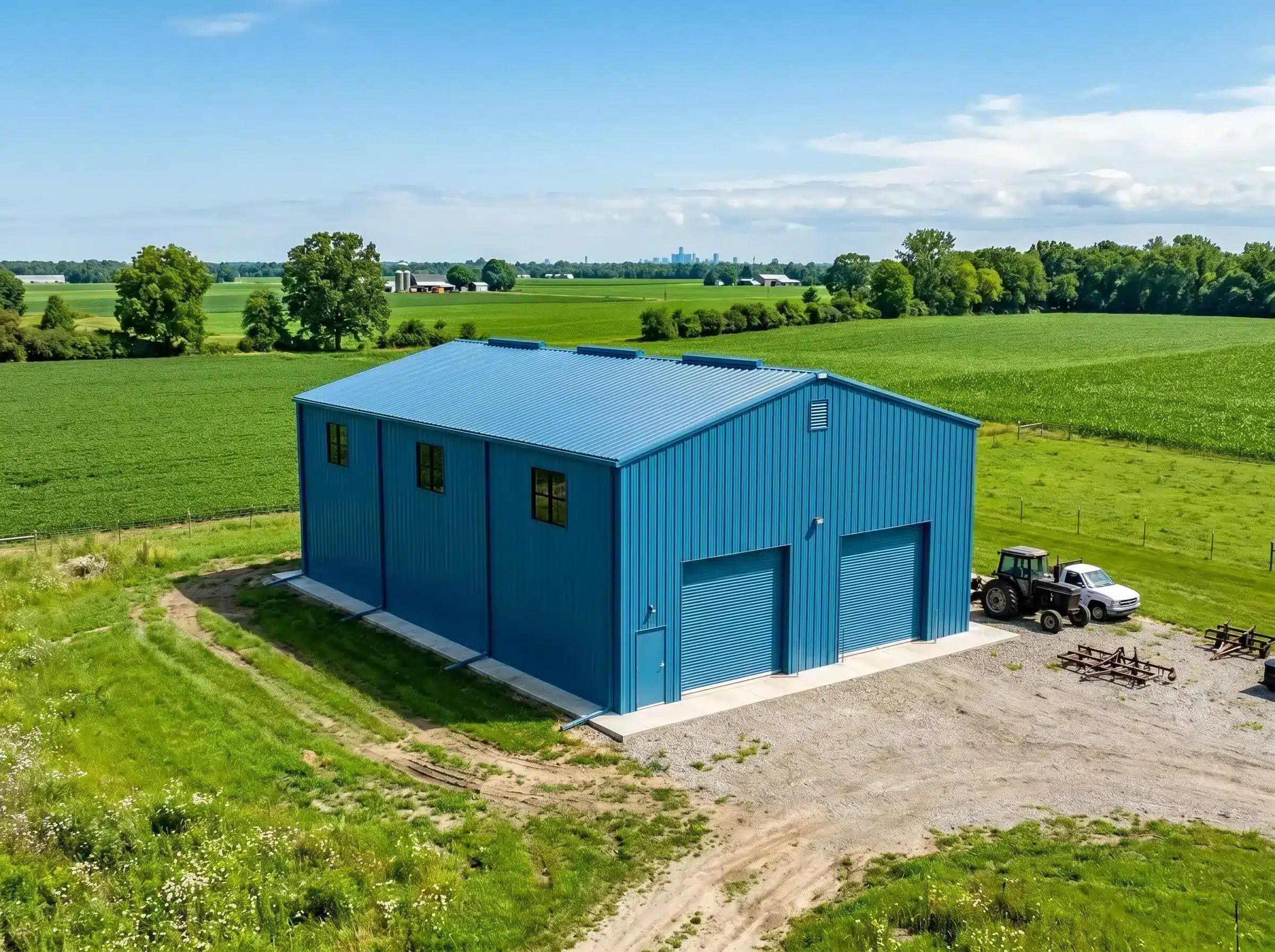
Agricultural Buildings
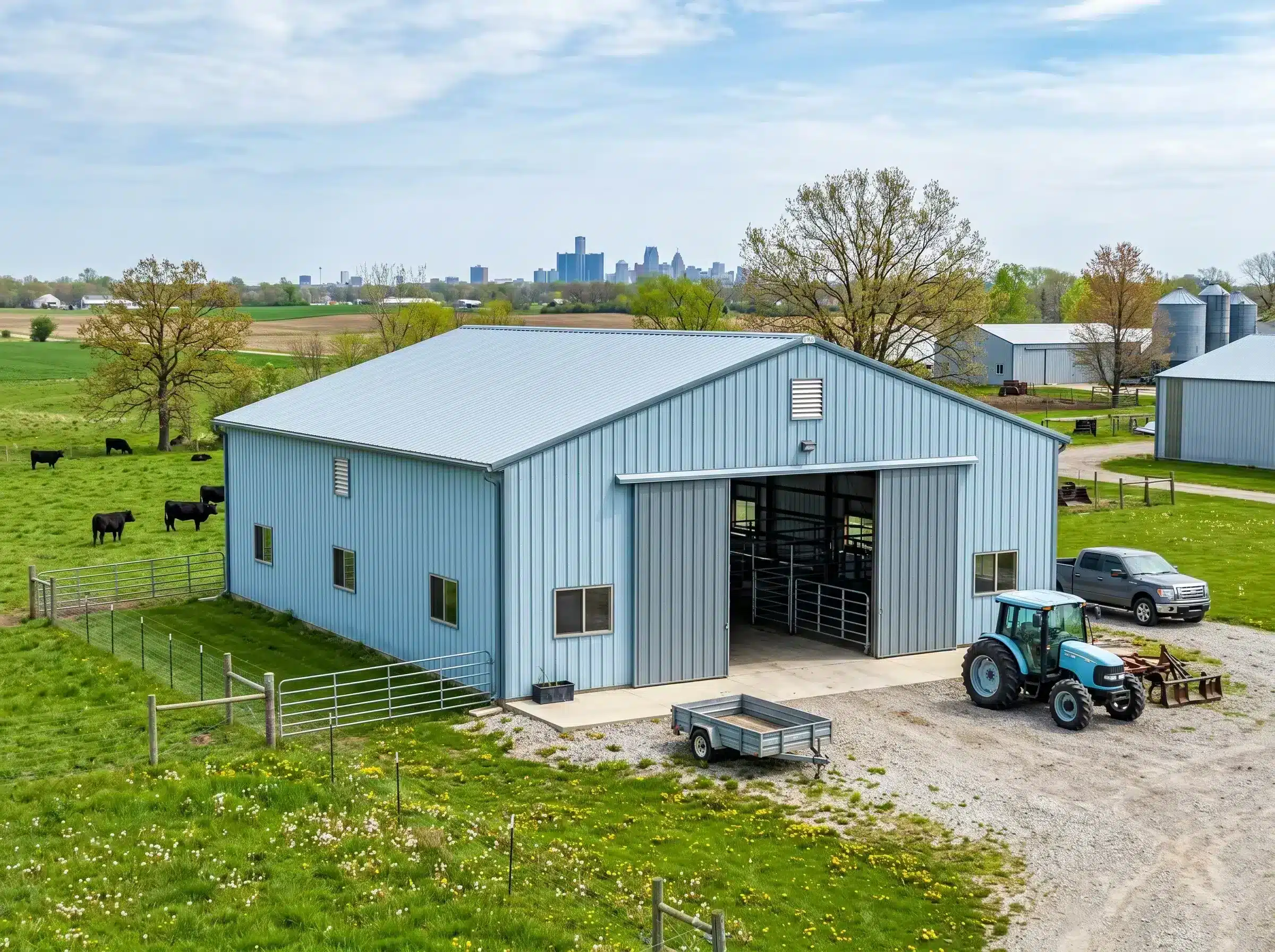
Agricultural and utility-focused properties in the Detroit region need structures built for the realities of farm and equipment operations, not generic shell dimensions. Steel makes it practical to engineer buildings around the clearance heights large equipment requires, the ventilation demands of livestock operations, the access configurations that working farms depend on, and the long-term structural durability that agricultural use requires through demanding seasonal conditions.
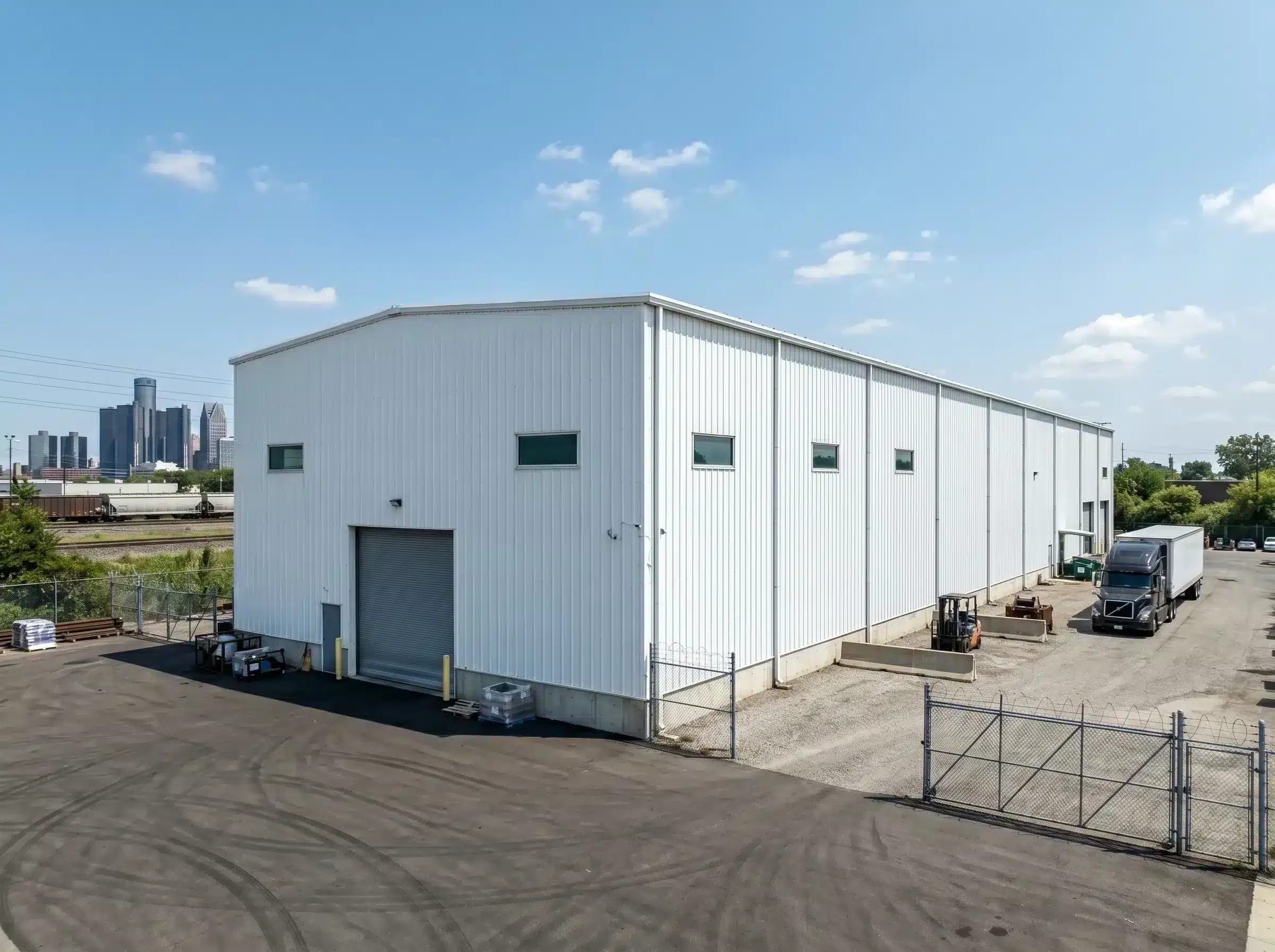
Commercial Steel Buildings
Detroit commercial and industrial buyers need buildings that support sustained operations without creating structural limitations or maintenance demands that interfere with business performance over time. Steel delivers the large framed openings, open interior layouts, and long-term structural reliability that contractor shops, service facilities, warehouses, and industrial operations require. Future expansion requirements can be incorporated into the original design rather than addressed as a costly structural problem after the building is already in service.
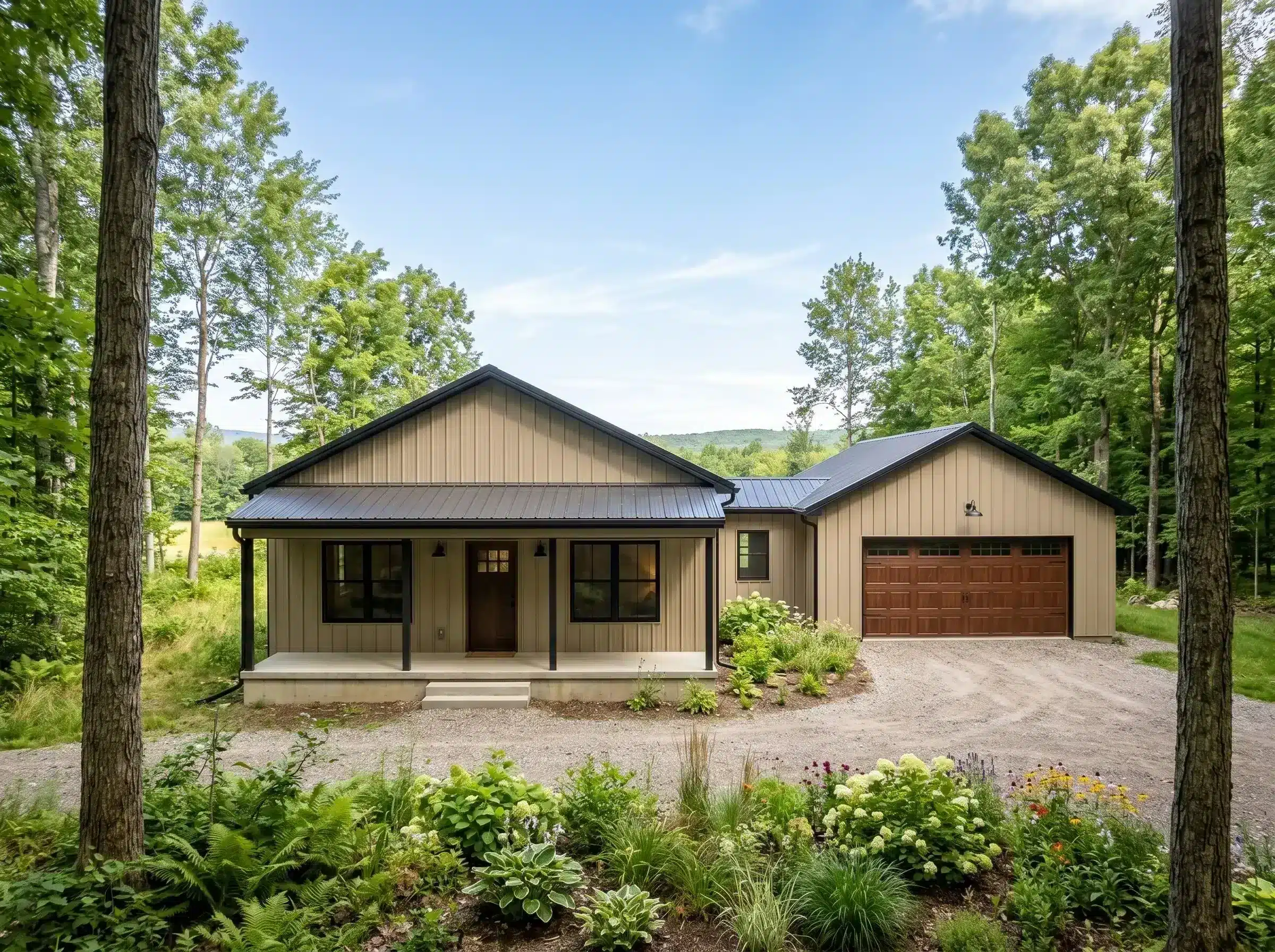
Metal Barndominiums
A steel barndominium allows Detroit-area buyers to combine residential living space with a garage, workshop, or utility storage area under a single structural roof. That integration reduces construction complexity, consolidates the site footprint, and delivers a practical mixed-use structure that balances residential comfort with functional utility space without the cost of building two separate structures on the same property.
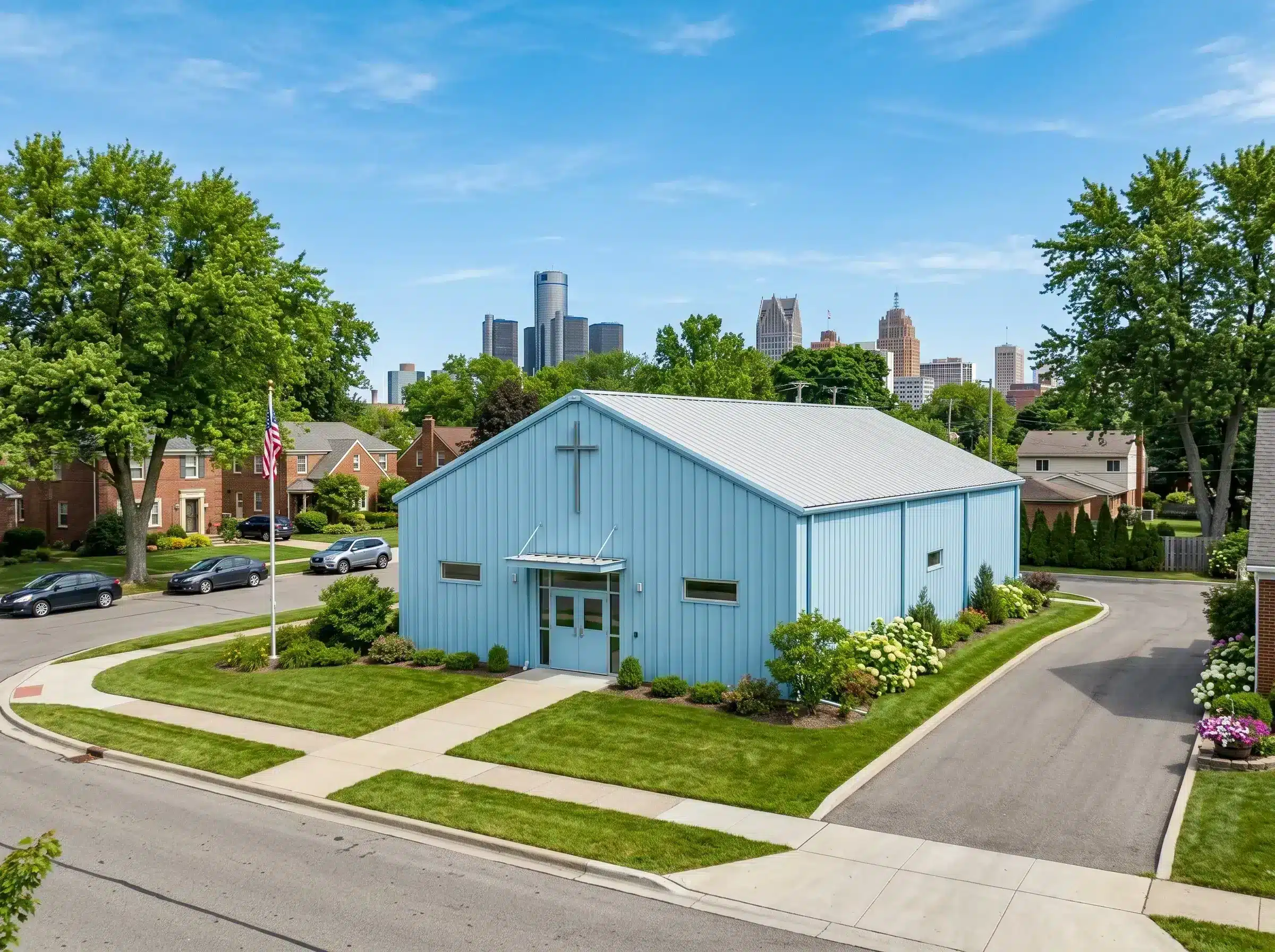
Steel Church Buildings
Church buildings impose long-term and diverse demands on their structures. Worship space, classrooms, administrative offices, fellowship areas, and community programming all need to be accommodated within one adaptable building over a service life that often spans generations. Steel clear-span framing delivers the column-free interior space that makes flexible layout planning practical, and the structural durability that reduces the long-term maintenance burden on the organization managing the facility.
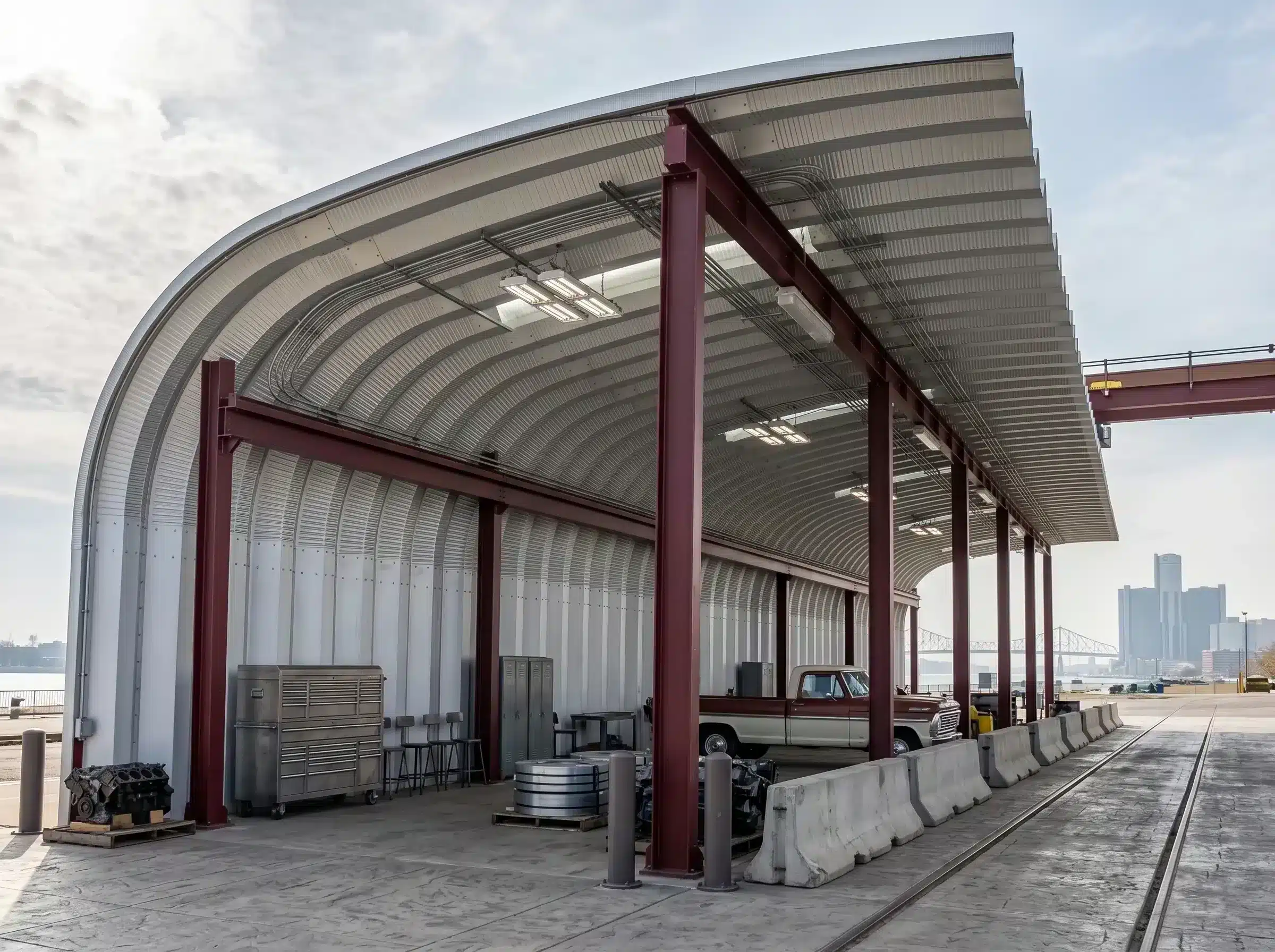
Roofing Systems
Roofing systems in Detroit must be engineered for snow accumulation, ice loading, moisture exposure, and repeated seasonal stress rather than selected primarily on appearance or cost. Steel roofing provides structurally reliable overhead protection for covered walkways, loading docks, equipment shelters, work zones, and other open-sided applications where full enclosure is not required but durable, low-maintenance coverage is essential.
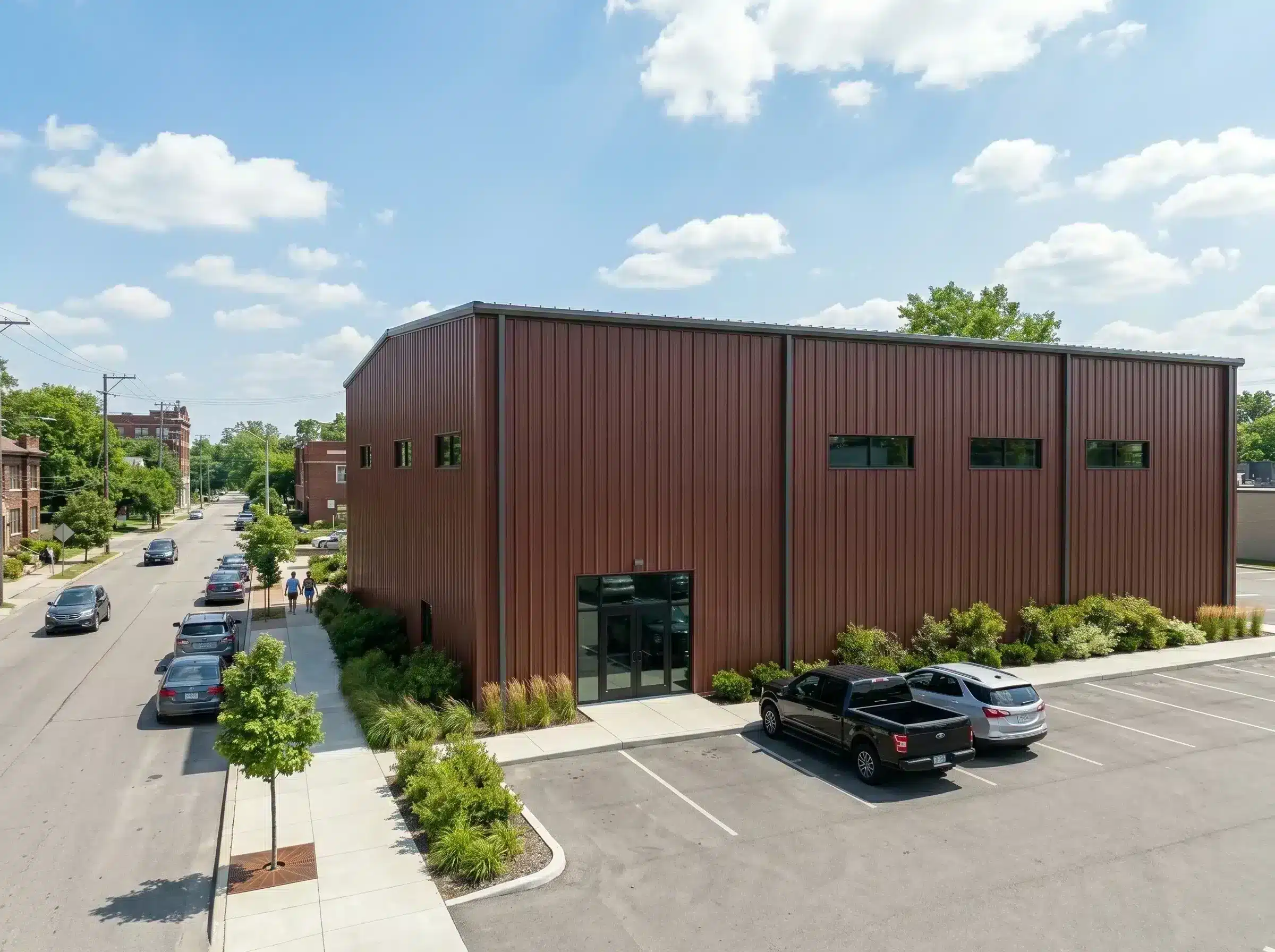
Arena Buildings
Arena buildings require wide, unobstructed interior space that can accommodate physical activity, equipment layout, and flexible programming over time. Steel clear-span framing enables the design of riding arenas, sports courts, training facilities, and multi-purpose recreational buildings without interior columns, posts, or load-bearing walls that would disrupt usable floor area or limit how the space can be reconfigured as programming needs evolve.
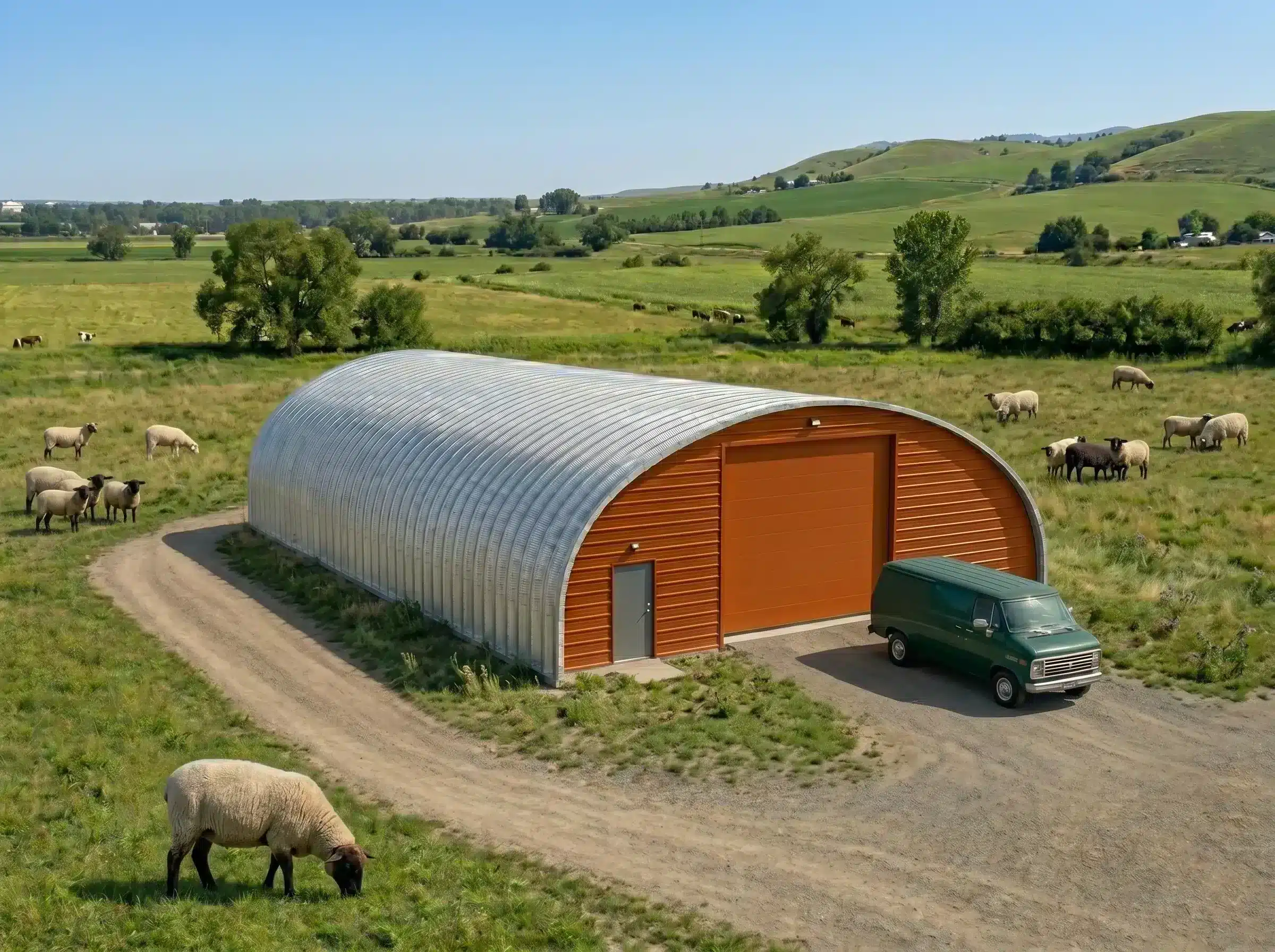
Metal Quonset Huts
Quonset huts provide efficient, clear-span covered space for storage, workshops, garages, and utility applications with a structural profile that handles Detroit’s snow loads effectively. Their arch geometry distributes snow loads across the curved surface rather than allowing accumulation on flat spans, making them a structurally practical and low-maintenance option for Detroit properties where snow management is a seasonal operational concern.
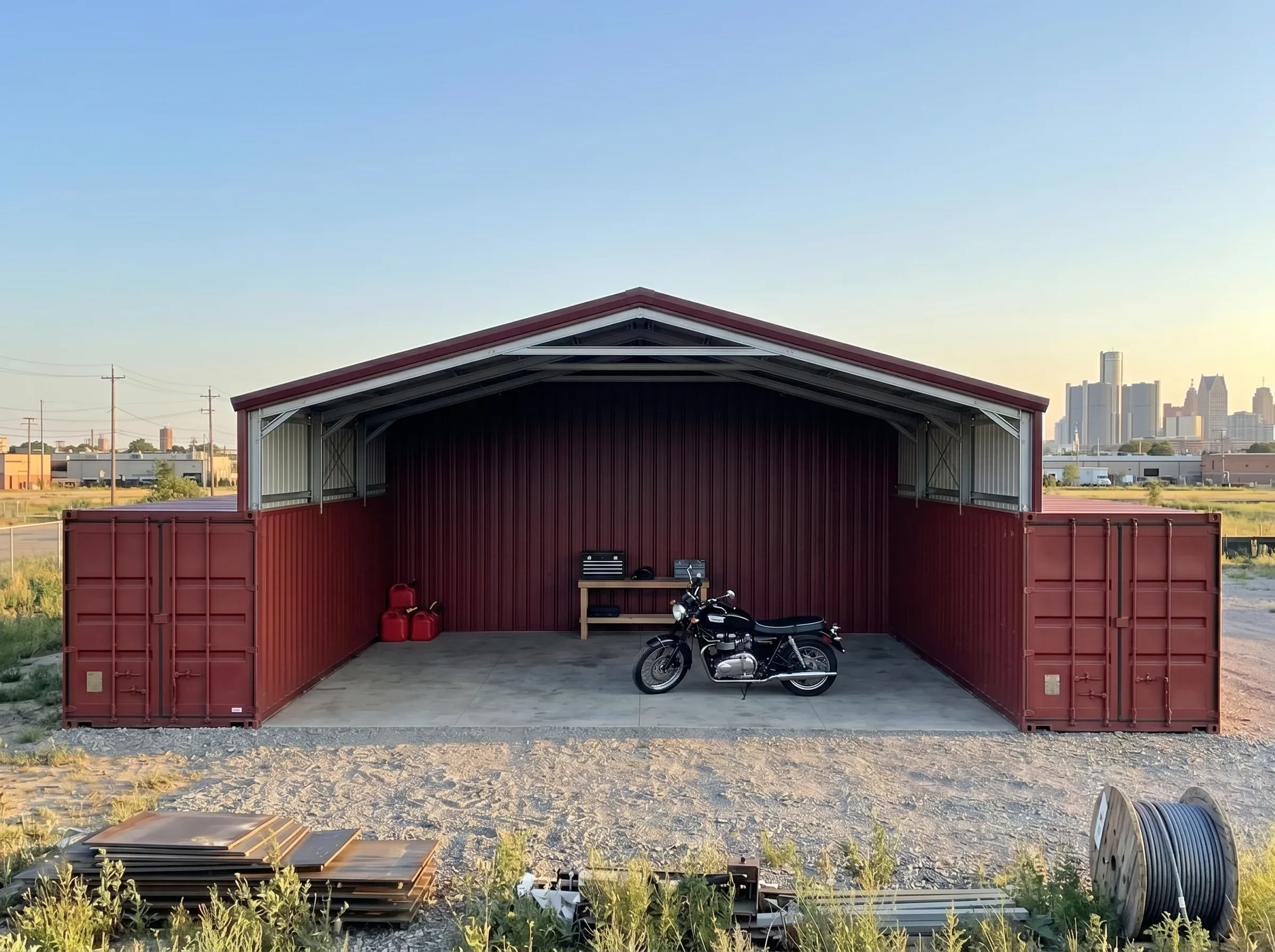
Shipping Container Covers
Container covers create usable covered space by engineering steel framing between shipping containers, which serves as the structural support base. They provide a cost-effective solution for equipment shelter, vehicle parking, open storage, and covered work areas where full enclosure is not operationally necessary but reliable overhead protection from Detroit’s weather conditions is.
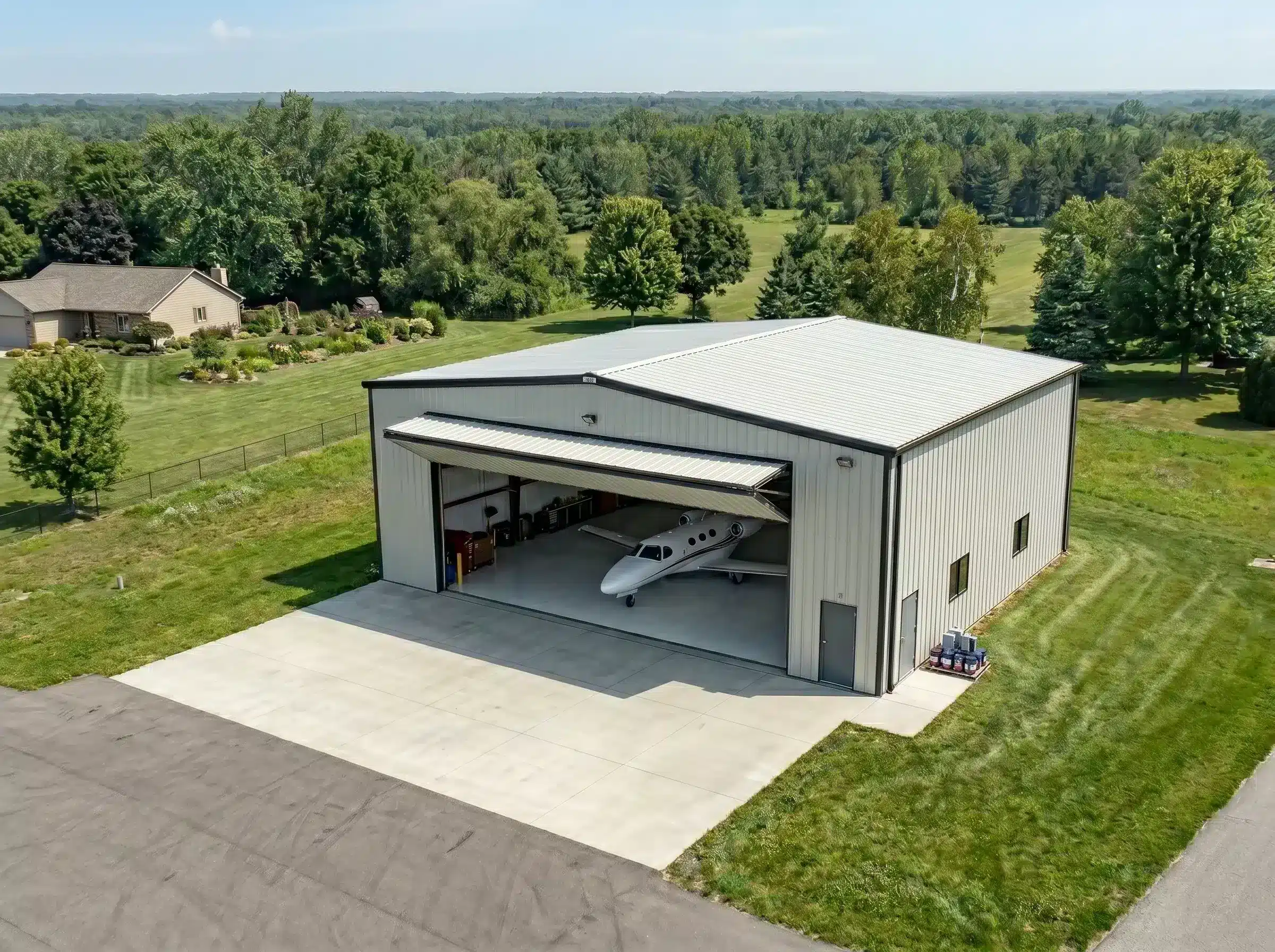
Aircraft Hangars
Aircraft hangars impose precise structural requirements that generic framing approaches cannot compromise. Wide, clear spans, tall door openings sized for aircraft movement, and completely unobstructed interior space for servicing and storage all need to be engineered into the structure from the beginning. Steel is the appropriate material for aviation applications because it can be specified around the exact dimensional, loading, and access requirements of the project without the structural compromises that affect less capable framing systems.
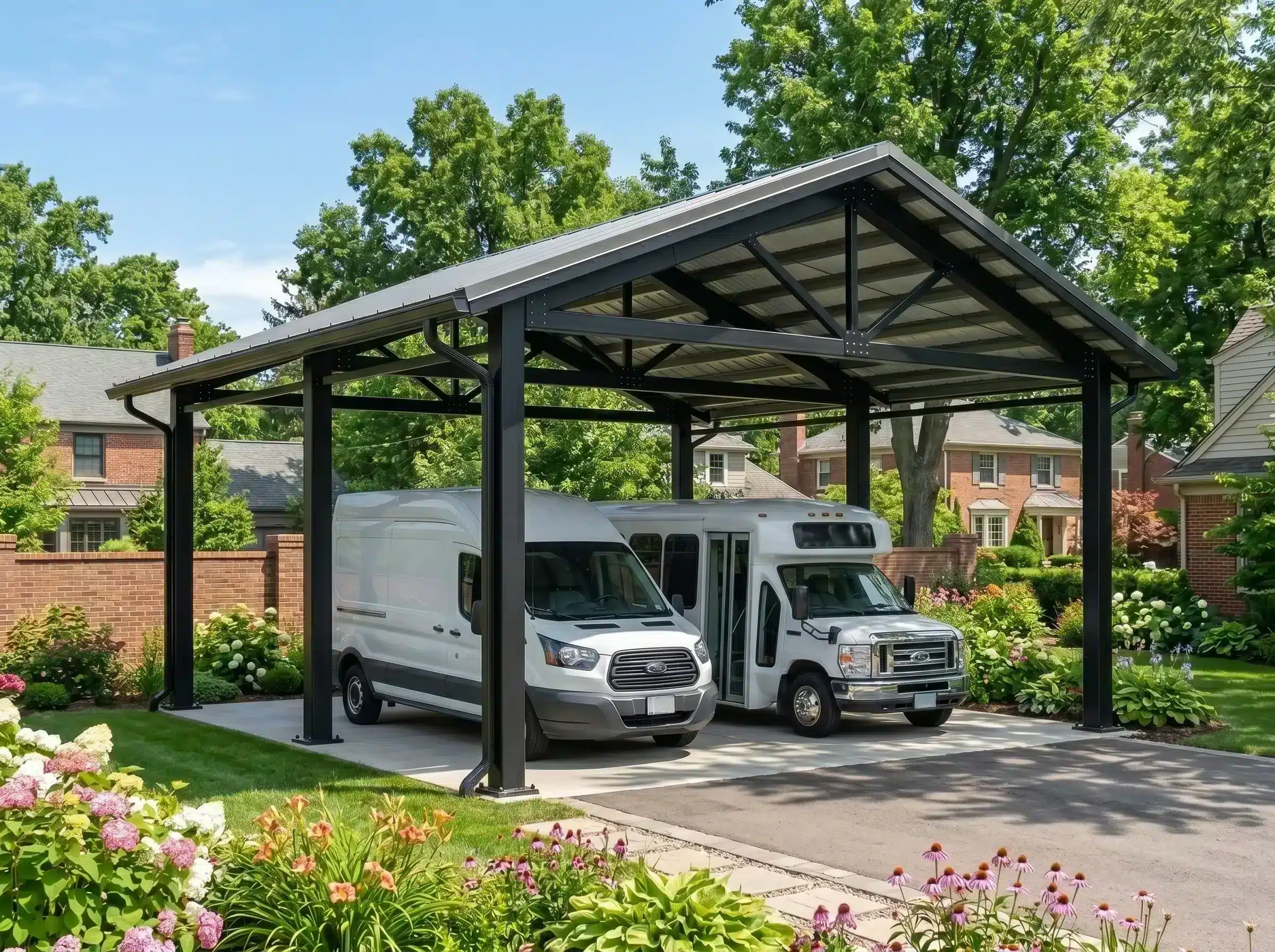
Steel Carports
A steel carport in Detroit must be treated as an engineered structure, not a light accessory. Snow loads, wind uplift, and sustained winter exposure all impose real structural demands on a carport that generic or lightly framed products are not reliably designed to handle. Properly engineered steel carports provide durable, low-maintenance protection for vehicles, trailers, RVs, and equipment in Detroit’s full range of seasonal conditions, without the ongoing maintenance demands of wood or lighter-frame alternatives.
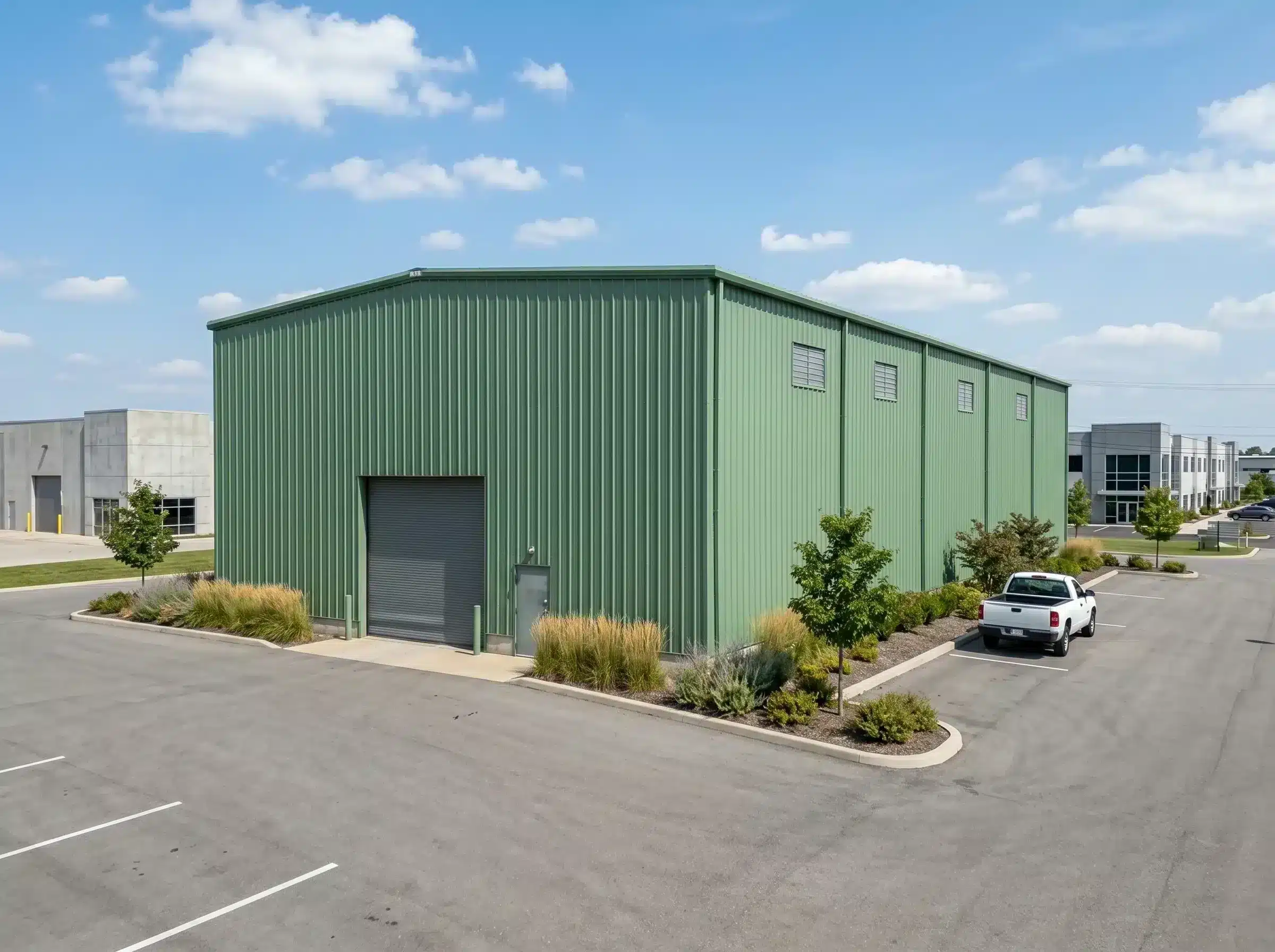
Warehouse Buildings
Detroit warehouse buildings need to support storage volume, equipment movement, loading access, and operational efficiency without structural limitations that reduce the space’s effective use. Steel clear-span framing, large framed openings for loading access, and practical interior layouts make it possible to plan the warehouse around the actual demands of the operation rather than around what the structural system happens to allow.
Steel Building Systems Available in Detroit
Detroit projects vary too widely in span, occupancy, and structural demand to be served by a single default system. Snow loads, wind exposure, framed opening requirements, and long-term operational demands all factor into which structural system actually fits the project. Toro offers three systems, each suited to a different range of project requirements.
- Red Iron Straight-Wall Systems: Red iron is the appropriate choice when the project demands it. Large clear spans, significant wall height, heavy framed openings for overhead doors and equipment access, and demanding structural loads under Detroit’s snow and wind conditions all point toward red iron. It is the standard structural system for commercial warehouses, industrial facilities, large agricultural buildings, and any project where structural rigidity and long-term load-carrying capacity are non-negotiable requirements.
- Cold-Formed Straight-Wall Systems: Cold-formed steel provides a structurally sound and cost-efficient solution for smaller and mid-sized projects where the loading demands do not require the heavier red iron frame. Garages, workshops, storage buildings, and lighter commercial applications are well-suited to cold-formed systems when the span, wall height, and opening configuration fall within its structural range. The framing is precise, the construction process is efficient, and the result is a durable building tailored to the project’s actual demands.
- Arch-Style Quonset Systems: Quonset arch systems deliver efficient, clear-span interior space through a curved structural profile that handles Detroit’s snow loads effectively by shedding accumulation across the arch rather than allowing it to build up at flat spans. They are a practical fit for storage buildings, garages, workshops, and utility-focused applications where open interior space, structural simplicity, and low long-term maintenance are the primary priorities.
Selecting the right system at the start of the project is one of the most consequential engineering decisions a Detroit buyer makes. A system matched to the actual span, use, and site conditions performs reliably over the long term. One forced into a project it was not designed for creates structural and operational problems that are far more difficult to address after the building is in place.
Want to explore your options before requesting a quote? Start designing your building with our 3D Builder below.
Steel Building Kits Detroit Buyers Can Customize
Detroit buyers searching for steel buildings are rarely looking for a fixed off-the-shelf configuration. They need a building that fits the property, performs through Detroit’s demanding conditions, and supports the intended use over a long service life. A properly planned steel building kit can be configured around the overall footprint and wall height the project requires, the roof shape and slope best suited to Detroit’s snow and moisture conditions, framed opening locations and sizes that support practical operational access, insulation and ventilation specifications appropriate for the climate and occupancy, exterior trim and finish selections, interior layout priorities, and future expansion potential.
A garage, workshop, warehouse, and commercial structure may all use steel framing, but they carry very different layout priorities, structural requirements, and performance expectations. Toro works through those project-specific inputs from the start rather than applying a standard kit configuration and adjusting from there.
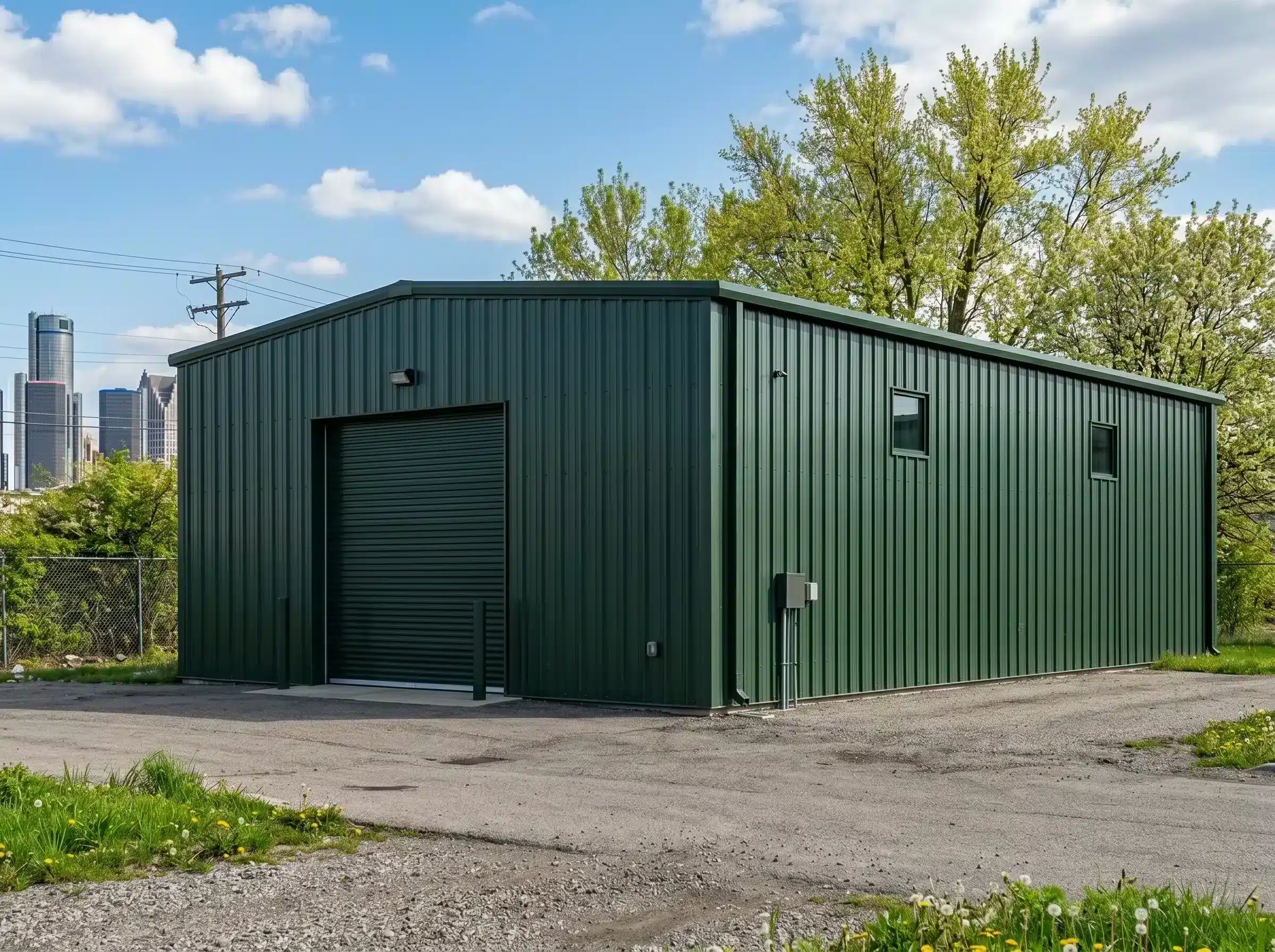
Building Codes in Detroit
Steel building projects in Detroit are governed by a defined and recently updated code framework. The City of Detroit operates under the 2021 Michigan Building Code, the 2015 Michigan Residential Code, the 2021 Michigan Rehabilitation Code for Existing Buildings, and applicable Detroit municipal ordinances. Michigan’s 2021 Building Code became effective April 9, 2025. That updated framework carries direct implications for structural design requirements, occupancy classification, energy compliance documentation, and the permit submission process for steel building projects in Detroit.
Code compliance, structural engineering documentation, occupancy requirements, and permitting need to be part of the project from the beginning of the design process. Buyers who treat those requirements as a later administrative step regularly incur redesign costs, permit delays, and project setbacks that proper upfront planning can avoid. Toro incorporates Detroit’s applicable building code requirements into the engineering and design process from the outset, so the project moves through permitting without unnecessary interruption.
What to Look for in Metal Building Companies in Detroit
Evaluating steel building suppliers in Detroit requires looking past polished marketing materials and broad capability claims. The questions that reveal a supplier’s actual technical capability are the ones that ask for specific, verifiable answers about how the project will be engineered and delivered.
This technical clarity is what separates a properly engineered building from a package that looks acceptable on paper but underperforms in the field.
Start Your Detroit Steel Building Project with Toro
Toro Steel Buildings brings the engineering depth, manufacturing capacity, and project experience required to support Detroit builds across every scale and application. From the first technical conversation through final fabrication, every project is developed around the site conditions, intended occupancy, and structural demands the building will face over its full service life in Detroit’s demanding climate. Whether the project is a residential garage, an agricultural structure, a commercial facility, a warehouse, or a large-scale industrial building, the process begins with a direct conversation about what the project actually requires rather than what fits a standard package. Reach out online or call 1-877-870-8676 to speak with a building specialist and receive a quote developed around your specific project.