

Metal buildings in Louisiana follow the statewide Louisiana State Uniform Construction Code, based on the 2021 IBC and IRC since January 1, 2023. Wind controls the design: Denham Springs uses 130 mph with no snow load, and wind-borne debris rules apply at 140 mph, or at 130 mph within a mile of the coast.
Key takeaways
- One statewide code. The Louisiana State Uniform Construction Code applies in every parish and municipality.
- Wind drives the design. Design wind speeds rise toward the coast, with 130 mph in Denham Springs.
- Debris rules near the coast. Wind-borne debris rules apply at 140 mph, or 130 mph within a mile of the coast.
- Toro handles the engineering. Your kit ships with stamped drawings and the structural reactions your contractor needs.
Building codes for metal buildings in Louisiana
Louisiana has a statewide code, the Louisiana State Uniform Construction Code (LSUCC), adopted by the Louisiana State Uniform Construction Code Council. Since January 1, 2023 it has been based on the 2021 International Building Code and International Residential Code with Louisiana amendments, and the 2021 International Energy Conservation Code applies statewide.
Parishes and municipalities enforce the code through certified building officials or third-party providers. Flood elevation rules also matter in much of the state, so ask about your site's flood zone early.
Toro's in-house engineers design your building for the wind and other loads at your address and stamp the drawings. Learn more about how Toro engineers each building, or compare states on our building codes by state page.
Sources: Louisiana State Uniform Construction Code Council · City of Denham Springs design criteria.
Wind, flood and other loads in Louisiana
Hurricane wind sets the design in most of Louisiana. Here's what applies:
| Location or rule | Design wind speed | Ground snow load | Other criteria | Source |
|---|---|---|---|---|
| City of Denham Springs (Livingston Parish) | 130 mph | 0 psf | Seismic category A · 0 in. frost | Denham Springs design criteria |
| Wind-borne debris region (any location) | 140 mph or higher | n/a | Protected openings required | IBC and IRC definition |
| Wind-borne debris region (coastal) | 130 mph or higher, within 1 mile of the coast | n/a | Protected openings required | IBC and IRC definition |
Design wind speeds rise toward the Gulf Coast; your parish or municipality has the final say, and Toro's engineers use the values for your exact address.
Hurricane wind
Louisiana design wind speeds rise from the north toward the Gulf Coast. At these speeds, every connection matters: the frame, the purlins and girts, the fasteners and the anchors to the foundation are all engineered together. Large doors are a key weak point, so your engineer designs the framed openings for the wind pressure at your site.
Wind-borne debris regions
Where the design wind speed is 140 mph or more, or 130 mph or more within one mile of the coast, the code treats the area as a wind-borne debris region, and openings must be protected from flying debris. Your building specialist and engineer will tell you if your site is in one.
Flood, heat and foundations
Snow isn't a factor, and frost depth is 0 inches in Denham Springs, but flood elevation often is. Toro doesn't supply foundations, but every building comes with the structural reactions your contractor needs to build one to spec. See our guides to steel building foundations and container cover foundations. In high-wind areas, those reactions include the uplift forces your anchors and foundation must resist.
How to get a permit
Permits come from your parish or municipality, through its certified building official or third-party provider. In flood zones, ask about elevation requirements before you design.
- Call your parish or municipality Ask about permits, the design wind speed for your site, and whether you're in a wind-borne debris region or flood zone.
- Check flood and zoning rules Confirm flood elevation requirements, setbacks and land use for your property.
- Design your building Design it in the free 3D designer, on your own or with a building specialist. Toro requires a 25% deposit before your order goes to engineering.
- We engineer it and stamp the drawings Toro's in-house engineers check your design against your site's loads and local code, then prepare engineer-stamped drawings for your permit application.
- Pour the foundation and assemble Your contractor builds the foundation to Toro's structural reactions. Delivery usually takes 2 to 8 weeks, and every kit bolts together on site.
Want the full checklist? Read our steel building planning guide and how to build a steel building.
Get a Louisiana quote
Tell us your size, address and how you'll use the building, and a building specialist will send a quote engineered for your local loads. Pricing starts at US$19 per sq ft; your final price depends on size, options and the loads at your site.
Toro buildings in Louisiana
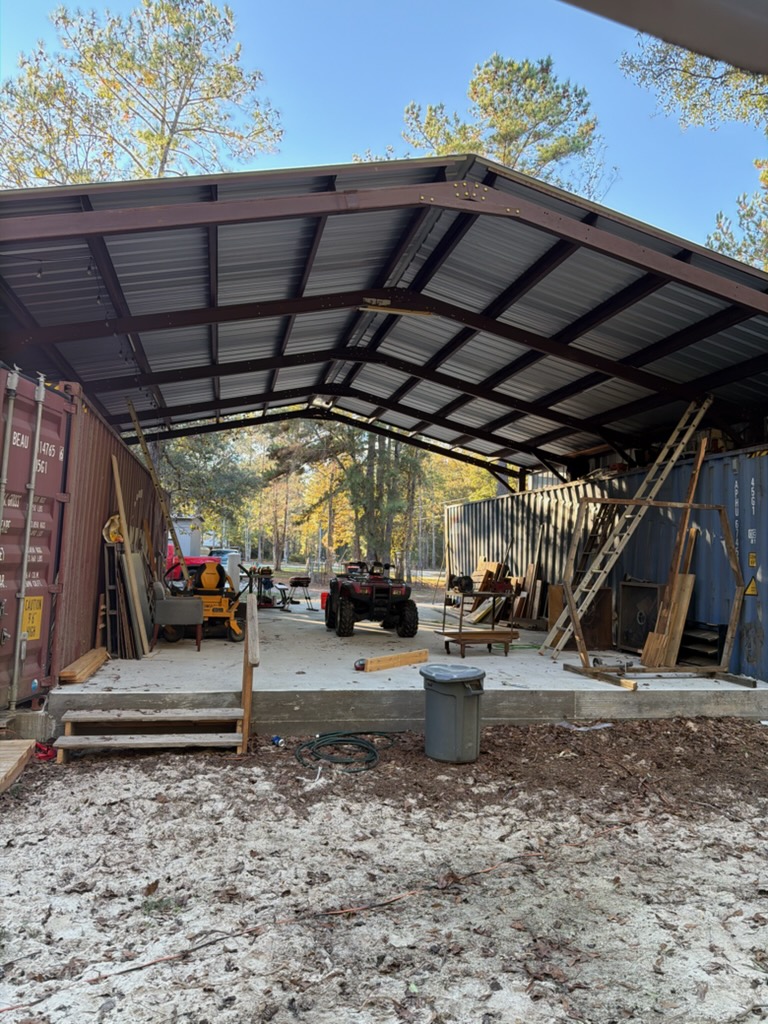
From a church in Alexandria to container covers in Bush and Holden, these are real Toro buildings in Louisiana.
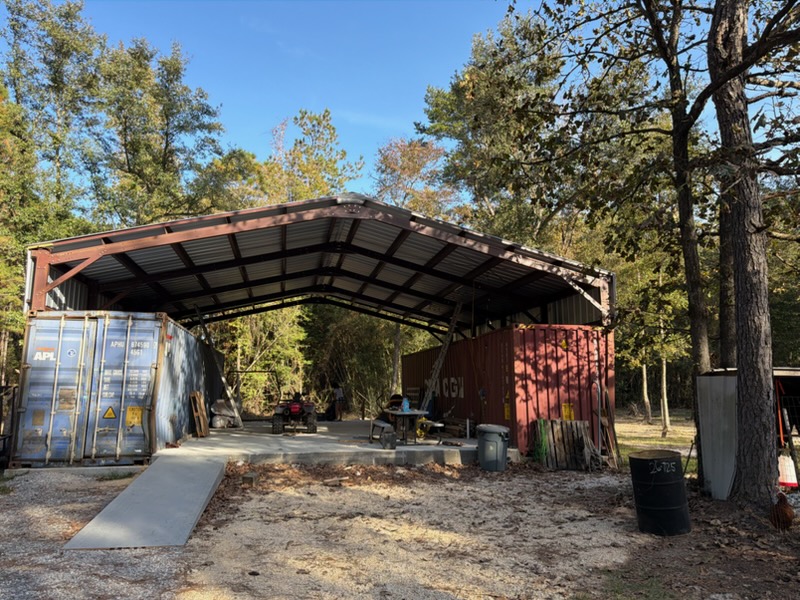 40x40x4 container cover Bush, LA · 1,600 sq ft of covered space · See the project
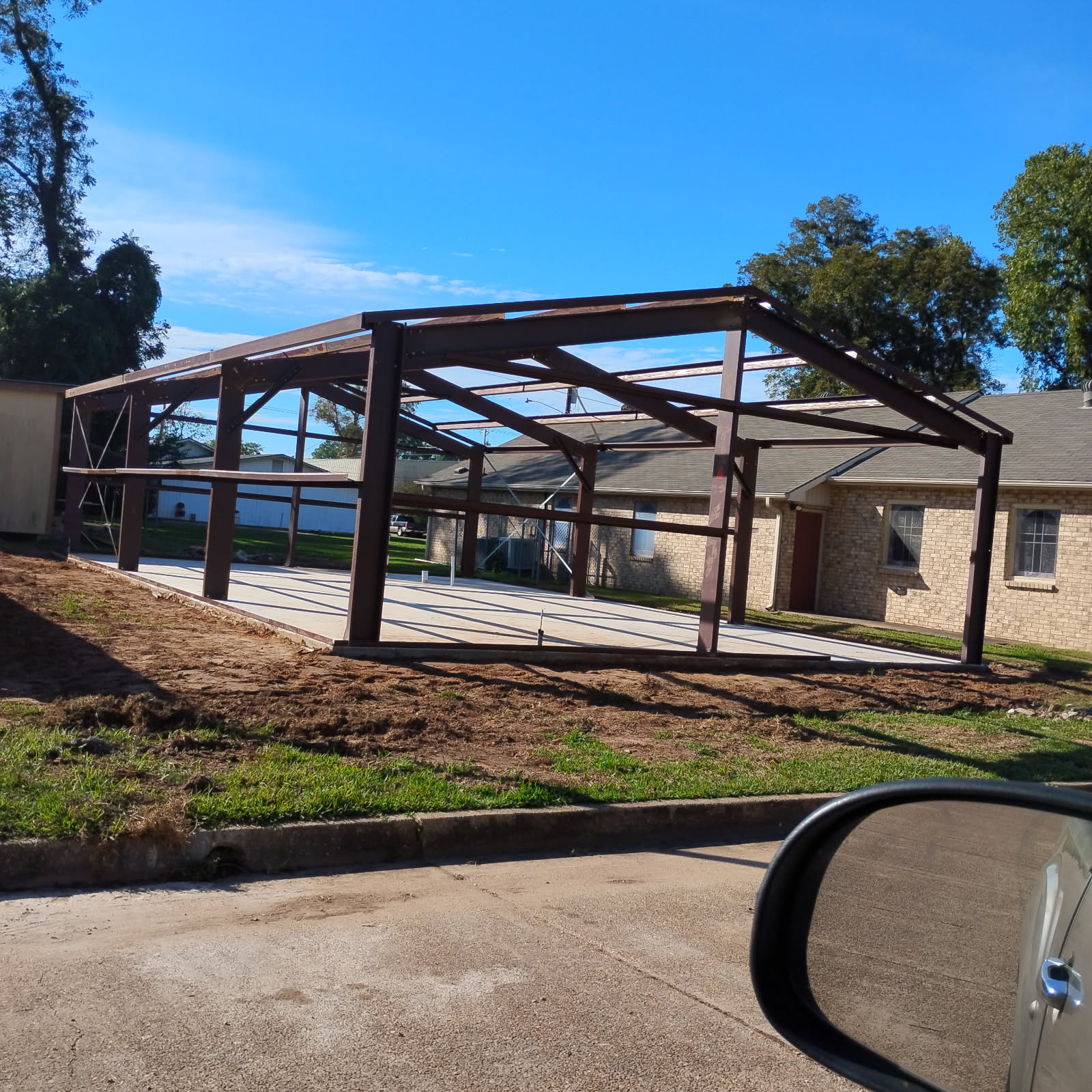 30x46x10 church building Alexandria, LA · Insulated, clear span · See the project
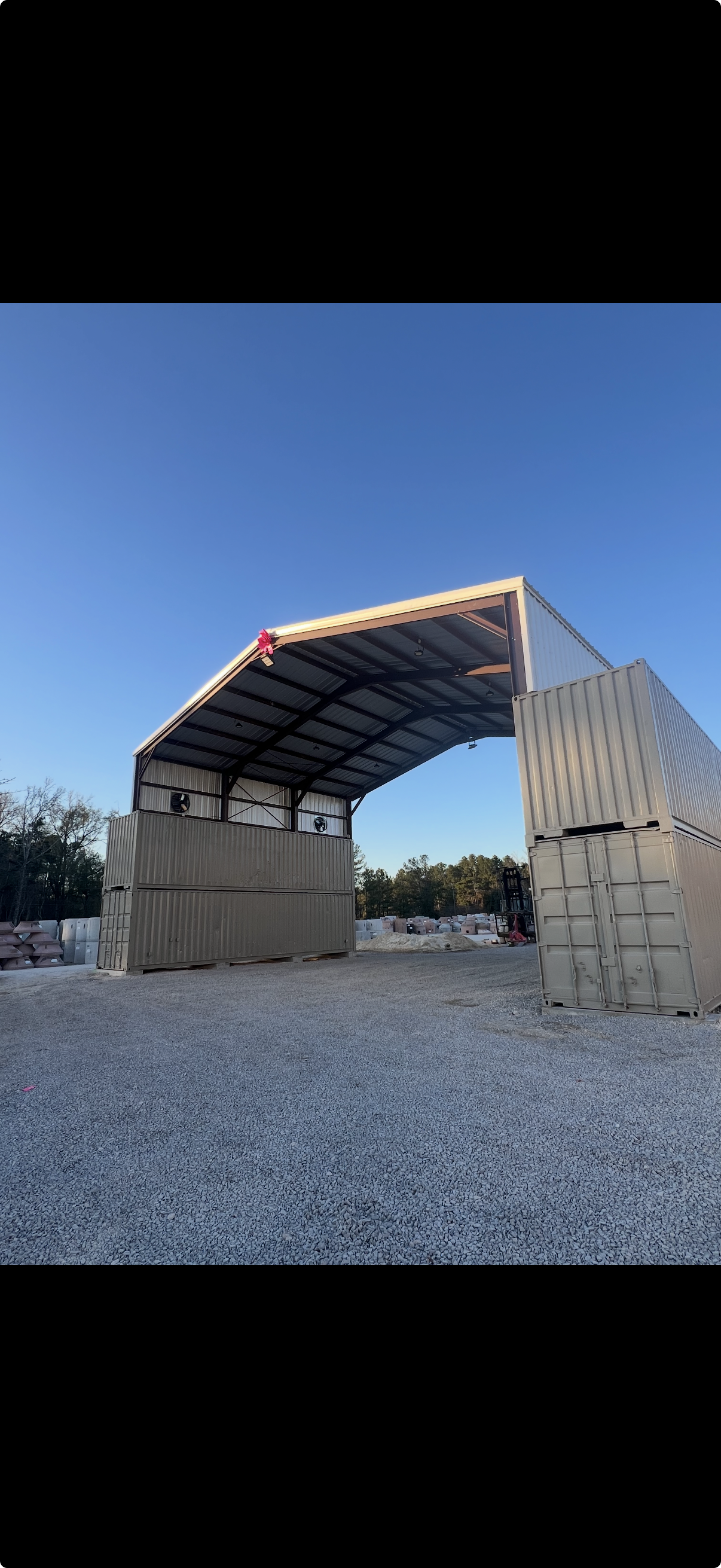 53x40x8 container cover Holden, LA · 8-foot knee wall for extra clearance · See the project
See more customer builds on our projects page, read Mark and Sarah's steel barndominium story from Texas, or compare with our guide to metal buildings in Alabama.
Watch a Toro building go up
 M-Model container cover Product overview · Watch the video
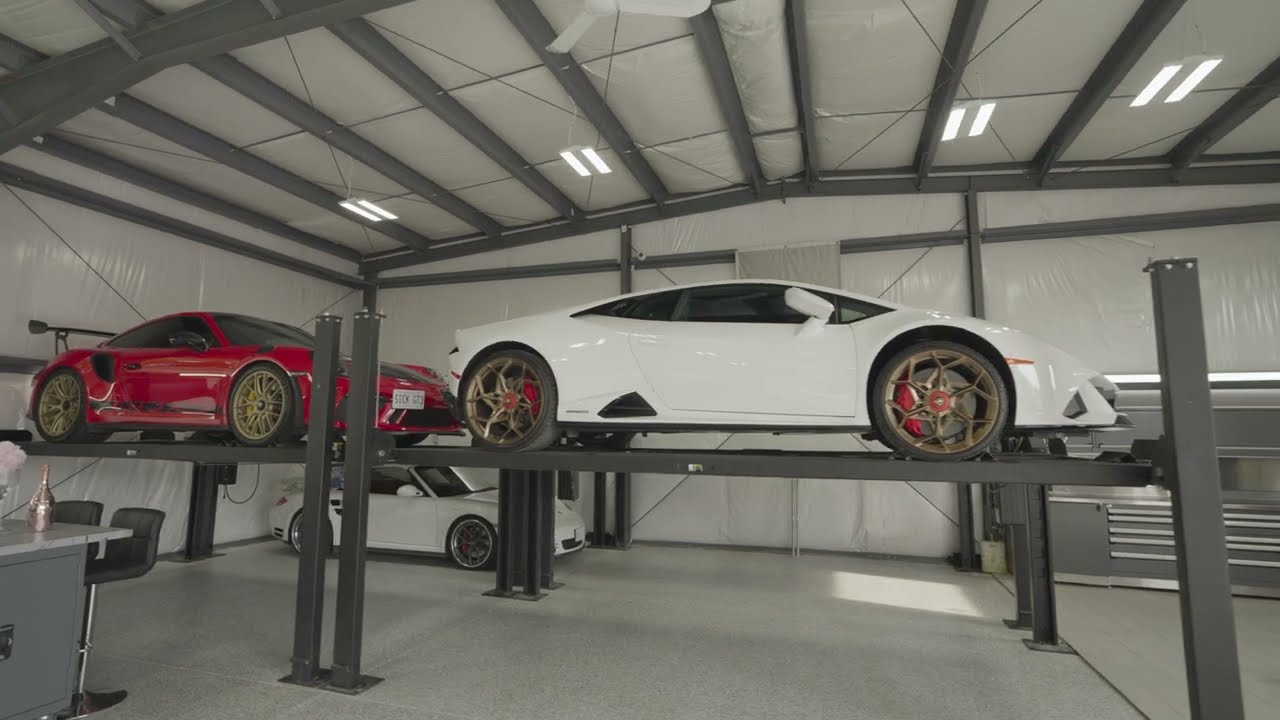 50x60x16 auto shop review Red iron customer review · Watch the video
 20x24 M-Model garage Customer review, Mississippi · Watch the video
Browse every build, review and time-lapse in our video library.
Building for Louisiana's weather
Heat, humidity and storms
Louisiana's heat and humidity are hard on wood, and steel won't rot or attract termites. Toro buildings use Galvalume Plus steel, and straight-wall buildings carry a 25–40-year paint warranty depending on panel and finish (see our warranty). Plan ventilation and read our tips for keeping a steel building cool in summer.
Insurance and storm recovery
Steel buildings resist fire, pests and rot. Read why insuring a steel building can cost less.
Choosing the right building
Choose a straight-wall building, either cold-formed (M-Model) or red iron, or a container cover for a fast covered work area; our guide to steel container covers explains the options. Read the guide to pre-engineered metal buildings and check current U.S. steel building prices. Planning a garage? See our steel garage kits, two-car garage dimensions and carport kits.
Keep reading: real projects, videos and guides
Need a building sooner?
Toro makes 500+ buildings a month, and about 10% are never delivered because a customer's plans change. These clearance buildings are offered at a discount, re-engineered for your site if needed and come with stamped drawings. Inventory changes daily, so the fastest way to see what's available is to call, or browse current U.S. clearance inventory.
Frequently asked questions
Still have questions about building in Louisiana? Price your building and a building specialist will walk you through it.
Does Louisiana have a statewide building code?
Yes. The Louisiana State Uniform Construction Code applies statewide and has been based on the 2021 International Building and Residential Codes since January 1, 2023. Parishes and municipalities enforce it.
What wind speed do buildings need to meet in Louisiana?
It depends on your location. Denham Springs, in Livingston Parish, uses 130 mph, and speeds rise toward the coast. Toro's engineers design your building for the wind speed at your exact address.
What is a wind-borne debris region?
It's an area where the design wind speed is 140 mph or more, or 130 mph or more within one mile of the coast. Buildings there need openings protected from flying debris.
Does Toro install buildings in Louisiana?
No. Toro designs, engineers and ships pre-engineered steel building kits. You assemble the kit yourself or hire a local contractor, using the stamped drawings and structural reactions we provide.
How much does a metal building cost in Louisiana?
Toro pricing starts at US$19 per square foot. Your final price depends on size, framing, options and the loads at your site, so a building specialist confirms it with a quote.
How long does delivery to Louisiana take?
Delivery usually takes 2 to 8 weeks, and your building specialist confirms timing for your order. You handle unloading on site, and our operations team keeps you updated along the way.
Related building types
Steel garages | Workshops | Agricultural buildings | Storage buildings | Carport kits | Container covers
Get a steel building quote for your Louisiana project
Tell us what you're building and where, and Toro Steel Buildings will send a quote engineered for your local snow, wind and seismic loads.