


To keep a steel farm building cool in summer, combine insulation to slow heat coming through the roof and walls, ventilation to move hot air out, a reflective roof surface, shade from landscaping, and fans where animals or people spend time. Steel’s reflective Galvalume finish already turns away much of the sun’s heat, but in hot climates these extra steps keep livestock comfortable, workers safe, and stored feed and equipment protected. Here are seven practical ways to keep a farm building cool when summer heat arrives.
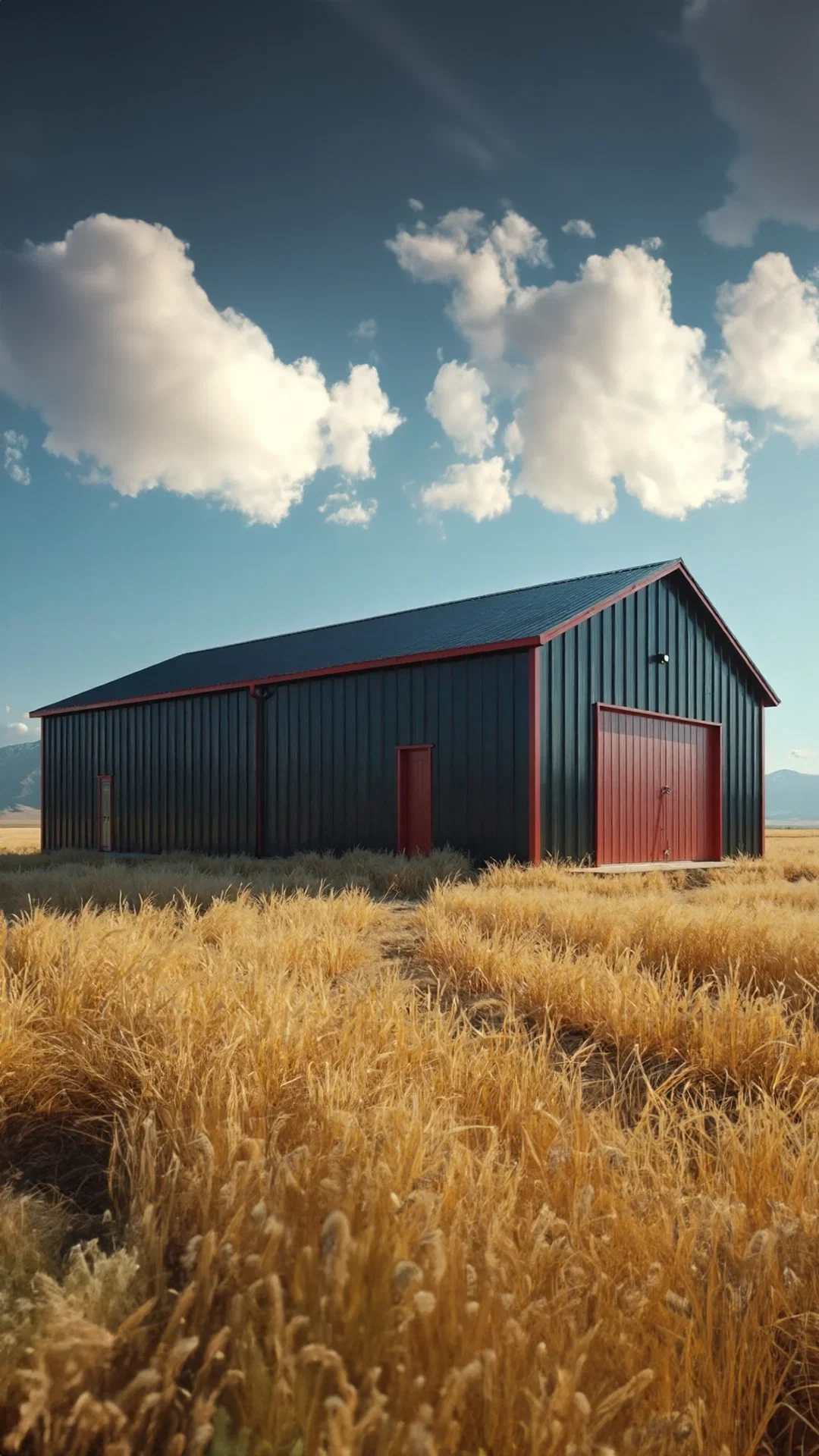
How Heat Gets Into a Steel Building
Understanding how heat moves helps you choose the right fixes. It travels three ways:
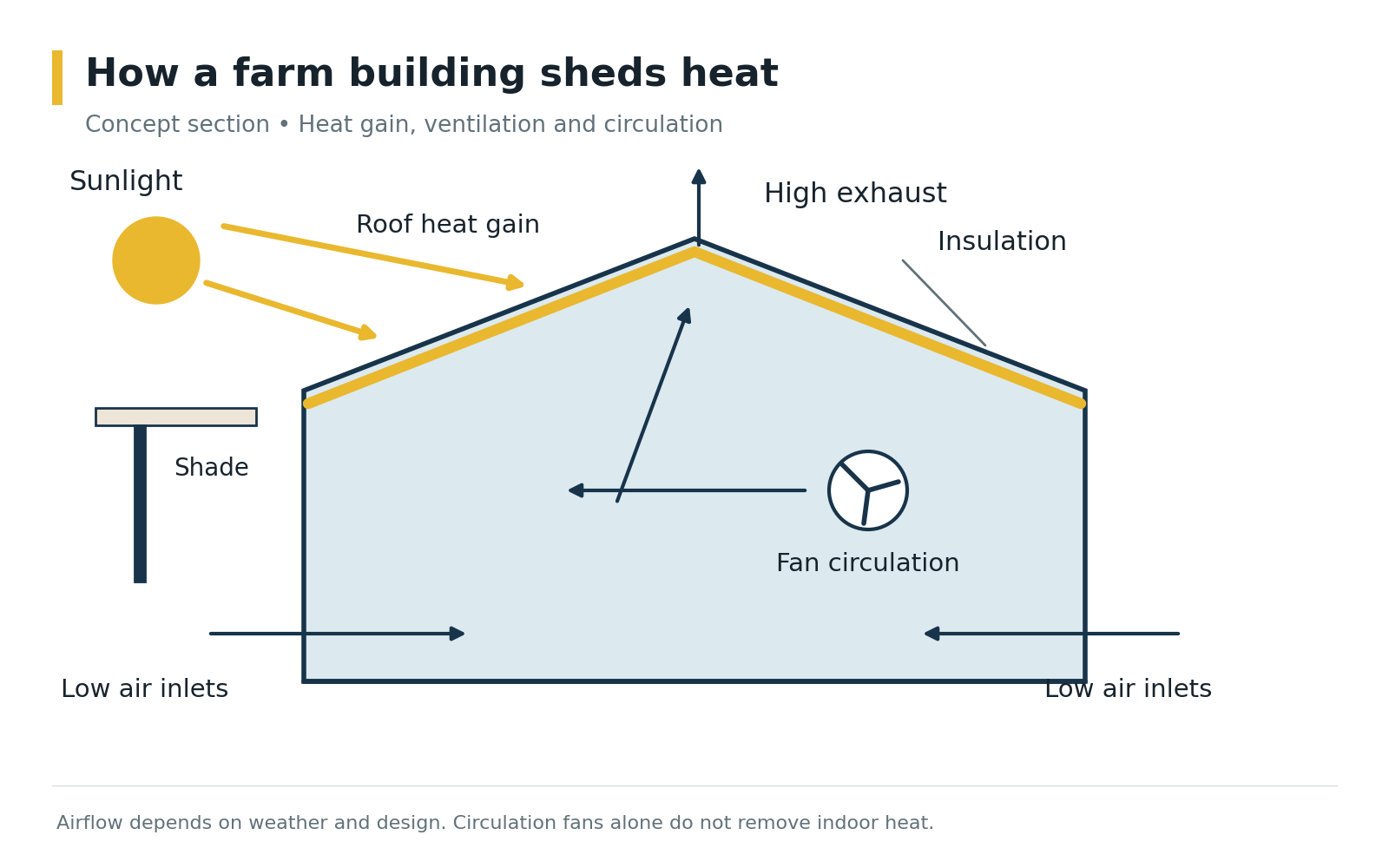
- Radiation: Sunlight strikes the roof and walls. A reflective surface turns much of it away, but some is absorbed and heats the panels.
- Conduction: Heat absorbed by the steel moves through the panel from the hot outer face to the inner face. Steel conducts heat readily, which is why insulation matters.
- Convection: Warm air rises and circulates, carrying heat throughout the building and collecting at the peak if it has nowhere to go.
Ways to Keep Your Farm Building Cool
1. Insulate the Roof and Walls
Insulation slows the conduction of heat through the panels — keeping the interior cooler in summer and warmer in winter. It also keeps cooled air in if you run fans or air conditioning, and it prevents condensation. The roof matters most, since it takes the most direct sun.
2. Ventilate — Especially Up High
Ventilation is the single most important cooling measure in a farm building. Ridge vents let rising hot air escape at the peak, while eave, wall, and door openings bring in cooler air low down. In livestock buildings, steady airflow also clears the moisture and ammonia animals produce. Exhaust fans and circulation fans add airflow on the hottest days.
3. Seal Gaps Where You Don’t Want Air
Close unintended gaps around doors, trim, and penetrations with weatherstripping, caulk, or foam so hot outside air and pests don’t leak in, and so any conditioned spaces hold their temperature. In an animal building, do this without cutting off the planned ventilation openings — you want control over where air moves, not a sealed box.
4. Choose a Reflective Surface
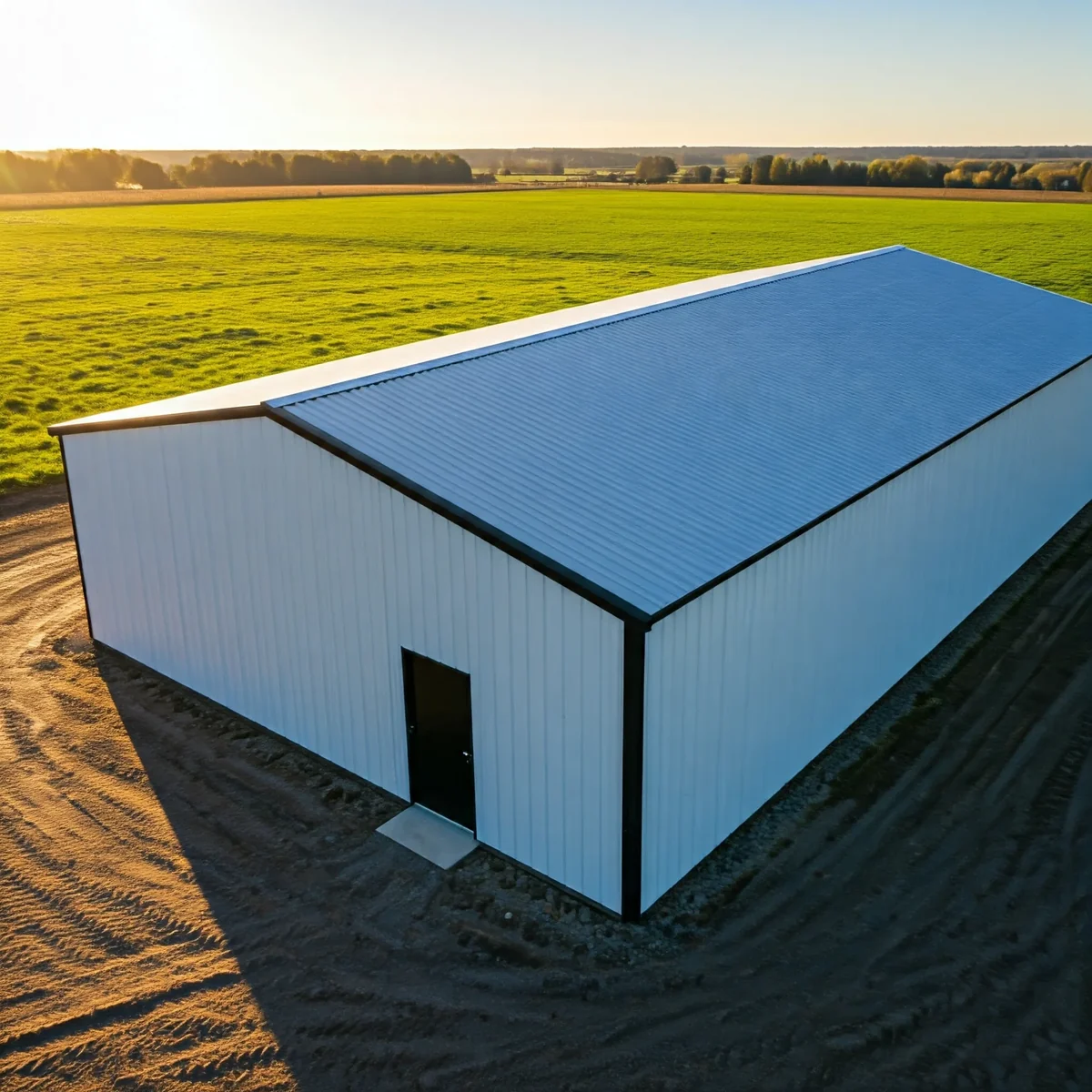
Galvalume’s high reflectance already helps. Light-coloured painted panels, or specialized reflective roof coatings, can reflect even more of the sun’s energy, especially on the roof.
5. Use Landscaping for Shade
Trees on the south and west sides shade walls from the strongest afternoon sun, and vegetation around the building keeps the ground cooler than bare gravel or pavement. Keep trees far enough back that branches don’t overhang the roof.
6. Add Fans for Animals and Workers
Heat stress affects livestock productivity and health. Circulation fans over stalls, pens, and work areas help animals and people stay cooler, and misting systems can help in dry climates where suitable for the species.
7. Plan Orientation and Openings
When designing a new building, orient it to take advantage of prevailing summer breezes, and place large doors and openings to encourage cross-ventilation. Overhangs and canopies shade doorways and windows.
Plan Cooling Into the Design
Insulation, ridge vents, wall openings, and fan locations are all easier to get right before your building is manufactured. Tell your Building Specialist how the building will be used — livestock, feed storage, equipment, or a workshop — and your climate, so ventilation and insulation are sized properly.
Permits, Codes & Engineering
Design loads follow the ASCE 7 standard from the American Society of Civil Engineers, referenced by the International Code Council‘s International Building Code, or the National Building Code of Canada. Toro’s in-house engineering team calculates your building’s loads for its specific address before it ships.
Related Building Types
Agricultural Buildings | How to Insulate a Steel Building | How to Ventilate a Metal Building
Build a Cooler Farm Building With Toro
Toro Steel Buildings engineers every farm building to your climate and your site. Request a free quote to get started.