

Steel buildings in Nunavut are built to the National Building Code of Canada, adopted with Nunavut modifications under the territory's Building Code Act. Arctic sites add strong winds, drifting snow and permafrost, so foundations and insulation matter as much as the frame. Toro has supplied insulated buildings to Gjoa Haven and Grise Fiord.
Key takeaways
- The national code applies, with changes. Nunavut adopts the National Building Code of Canada with territorial modifications.
- Permafrost shapes the foundation. Many Arctic buildings sit on engineered platforms or piles instead of a standard slab.
- Plan around the sealift. Most heavy freight arrives by summer sealift, so order early.
- We've built in the Arctic. Toro buildings stand in Gjoa Haven and Grise Fiord, including an insulated design used in several communities.
Building codes for steel buildings in Nunavut
Nunavut's Building Code Act lets the territory adopt the National Building Code of Canada by regulation, with modifications for Nunavut. The territory's Building Code Regulations adopt the national code along with the National Plumbing Code and National Fire Code, each modified for Nunavut.
Permits are issued under the Building Code Act, which also sets up a chief building official for the territory. Community land and municipal approvals can apply too, so start with your hamlet or municipal office.
Toro's in-house engineers design every building to the code and loads that apply at your site, and every building comes with CSA-approved, engineer-stamped drawings. Learn more about how Toro engineers each building and why it pays to choose a Canadian steel building supplier.
Sources: Nunavut Building Code Act · NRC: code adoption across Canada.
Wind, snow and permafrost in Nunavut
The National Building Code lists climatic design values for communities across Canada, and Arctic sites add permafrost to the list. Here's what each one means for your building:
| Design value | What it covers | Where it comes from |
|---|---|---|
| Ground snow load (Ss) | The 1-in-50-year snow on the ground at your location | NBC climatic data (Appendix C) |
| Rain-on-snow load (Sr) | Rain soaking into the snowpack on your roof | NBC climatic data (Appendix C) |
| Hourly wind pressure | The 1-in-50-year wind pressure your frame and cladding must resist | NBC climatic data (Appendix C) |
| Permafrost and ground conditions | How the building is supported without thawing frozen ground | Site investigation and your foundation designer |
Canadian loads are in kilopascals (kPa); 1 kPa is about 20.9 psf. Toro's engineers use the values for your exact community and site.
Wind and drifting snow
Arctic snowfall totals are often lower than in southern Canada, but strong winds pack and drift the snow against walls and onto roofs. Wind pressure on the frame and cladding is a major design load. Roof shape, building orientation and door placement all affect how snow drifts, and your engineer designs for the loads at your site.
Permafrost foundations
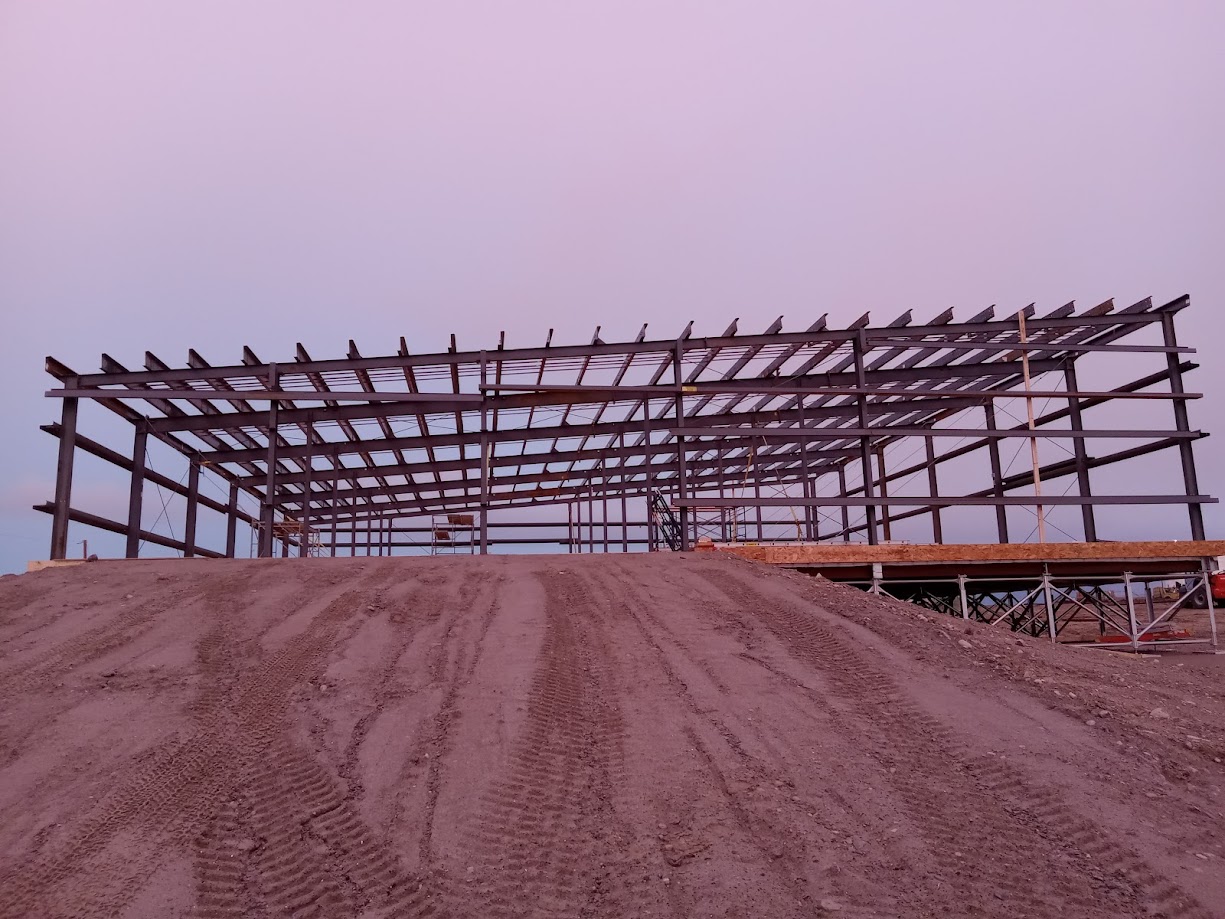
Heat from a building can thaw the permafrost beneath it, so many Arctic buildings sit on engineered platforms, piles or pads rather than a standard slab. Toro's 73x73 building in Gjoa Haven sits on a specialty platform. Toro doesn't supply foundations, but every building comes with the structural reactions your foundation designer needs.
Insulation and condensation
A heated building in the Arctic needs a complete insulation and vapour control plan. Toro's insulated building in Grise Fiord uses R19/R20 insulation, and the same custom design has been used in several Nunavut communities. See our insulation options and our guide to insulating a steel building.
How to get a permit
Start with your hamlet or municipal office for land and local approvals, then apply for your building permit under the territory's Building Code Act.
- Talk to your community office Confirm land use, lot approval and any local rules before you design.
- Plan the foundation early Arrange a site investigation and a foundation design suited to the ground conditions, especially permafrost.
- Design your building Design it in the free 3D designer, on your own or with a building specialist. Toro requires a 25% deposit before your order goes to engineering.
- We engineer it and stamp the drawings Toro's in-house engineers check your design against your site's loads and the code, then prepare CSA-approved, engineer-stamped drawings for your permit.
- Ship it and assemble Plan delivery around sealift or other freight schedules for your community. Every kit bolts together on site, and your building specialist and our operations team keep you updated on timing.
Want the full checklist? Read our steel building planning guide and how to build a steel building.
Get a Nunavut quote
Tell us your size, address and how you'll use the building, and a building specialist will send a quote engineered for your local loads. Pricing starts at CDN$26 per sq ft; your final price depends on size, options and the loads at your site.
Toro buildings in Nunavut
These are real Toro buildings standing in Nunavut today, from a 73x73 garage on a specialty platform to an insulated building in Canada's northernmost community.
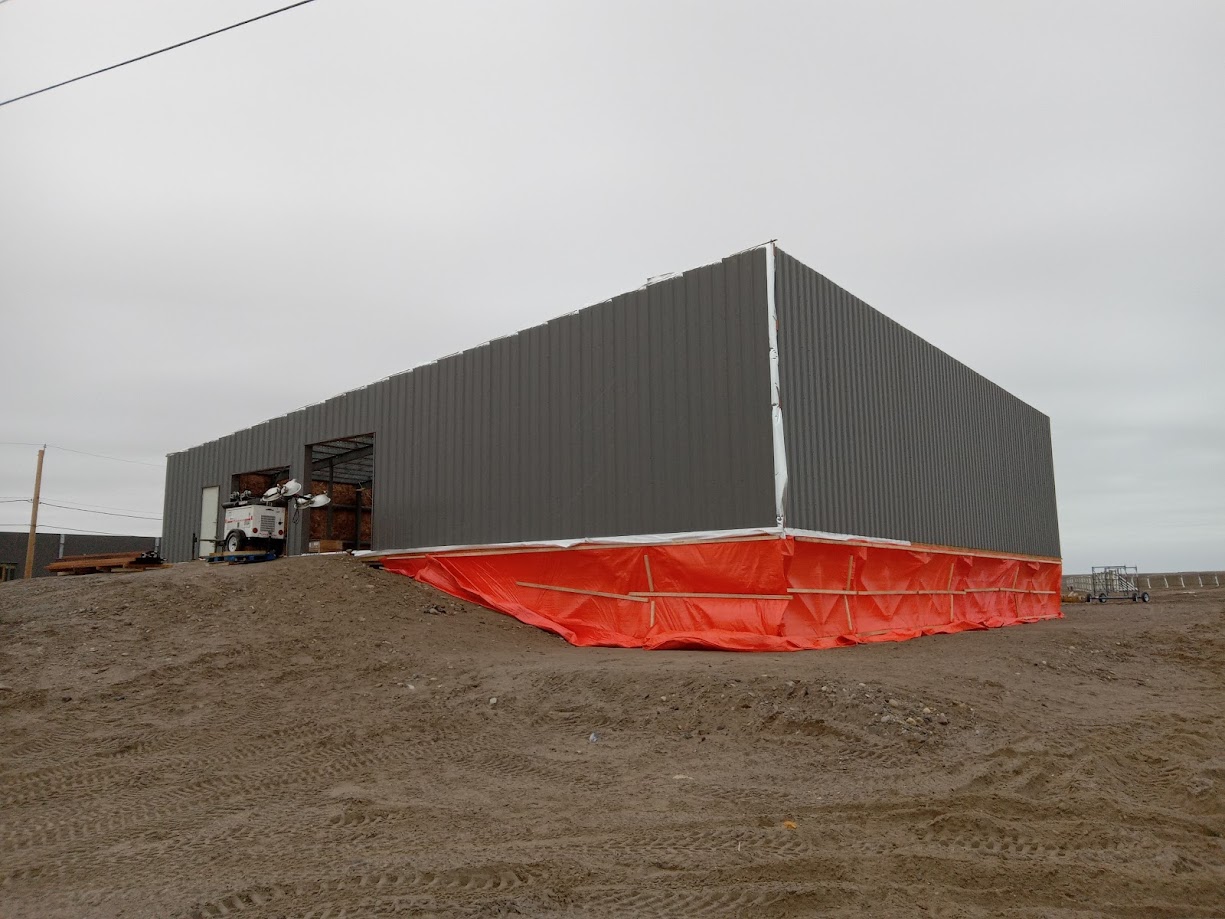 73x73x17 garage and storage Gjoa Haven, NU · On a specialty platform · See the project
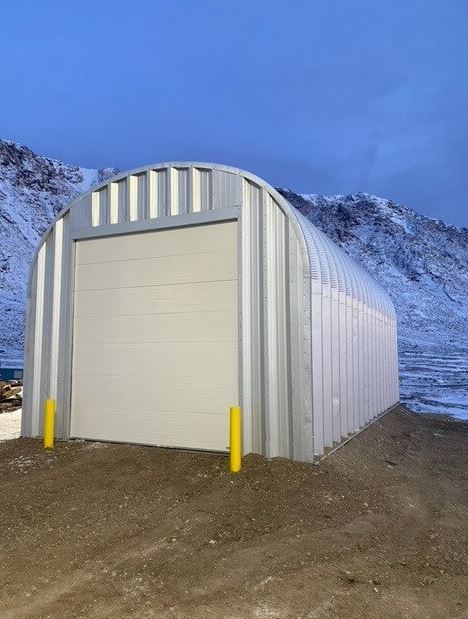 20x36x17 insulated building Grise Fiord, NU · R19/R20 insulation · See the project
Read the full story of the 73x73 insulated building in Gjoa Haven, see an 80x100 welding shop in Thunder Bay, or browse more builds on our projects page.
Watch a Toro building go up
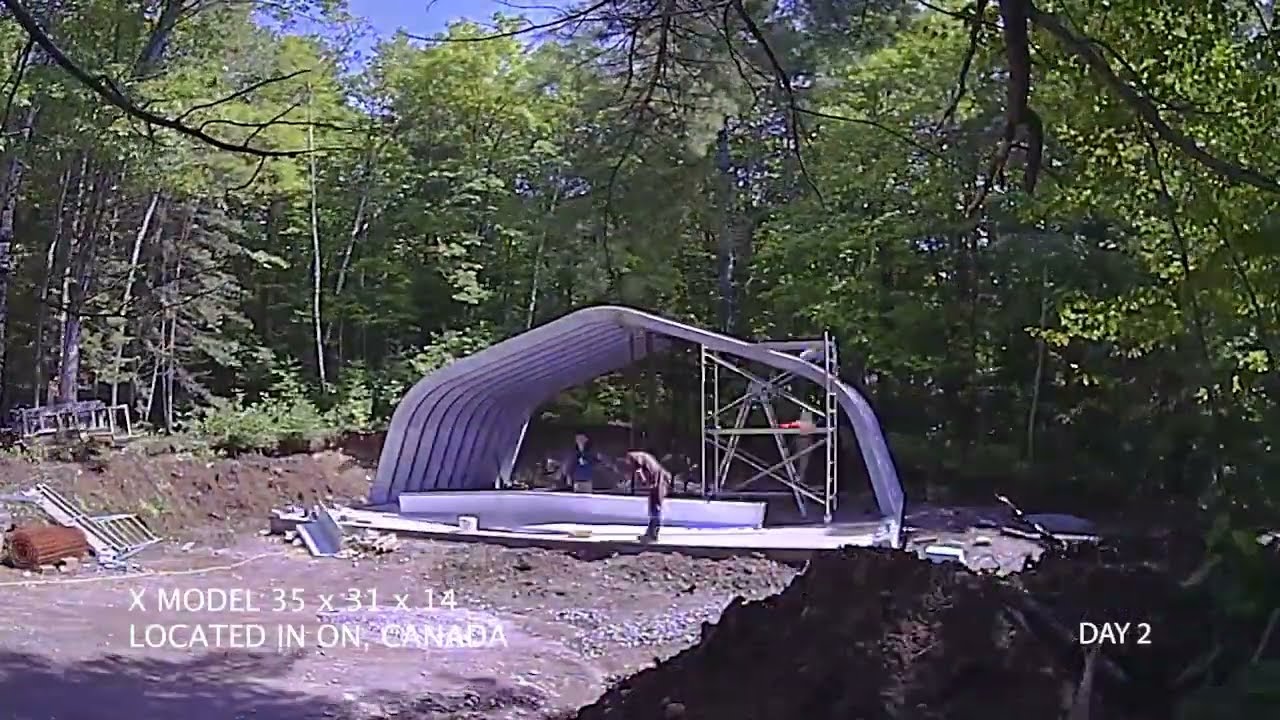 35x31x14 X-Model assembly Arch building in 4 days · Watch the video
 How to assemble a Quonset hut Four-step overview · Watch the video
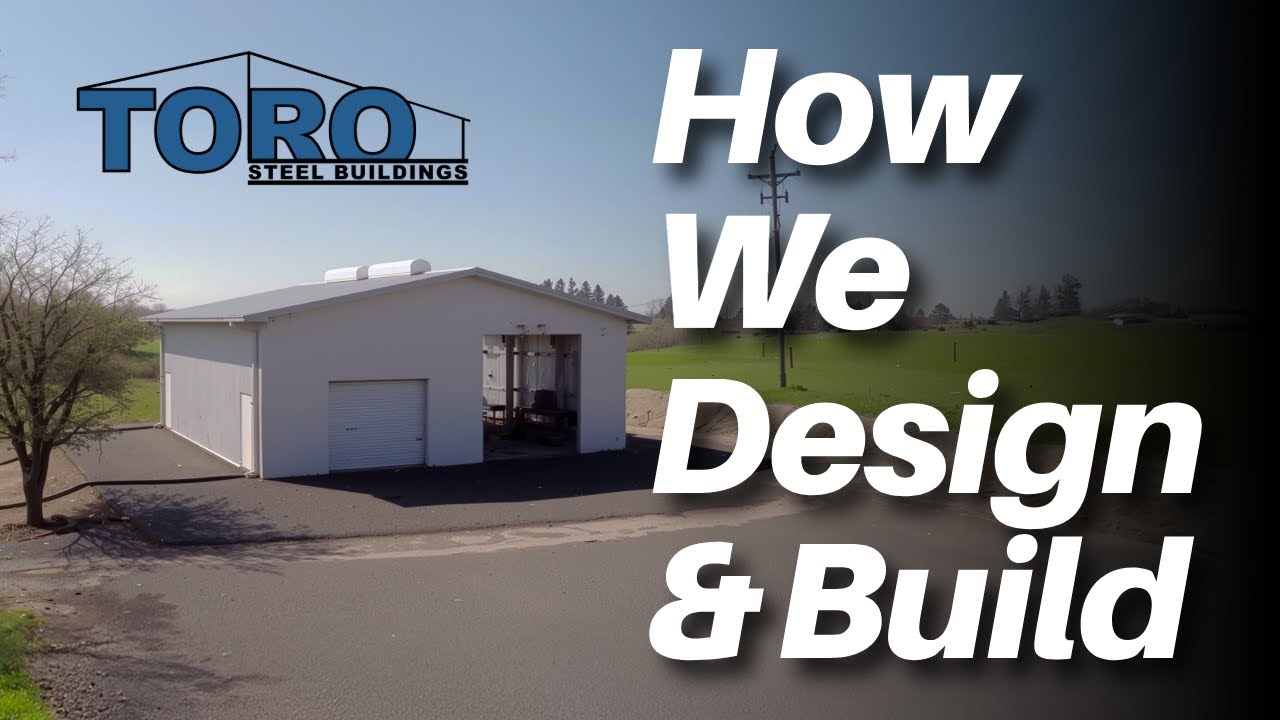 How Toro buildings are made From engineering to laser-cut steel · Watch the video
Browse every build, review and time-lapse in our video library.
Building for the Arctic
Extreme cold and wind
Arctic cold, wind and blowing snow are hard on any building. Toro buildings use Galvalume Plus steel; arch buildings carry a 50-year rust perforation warranty, and straight-wall buildings a 25–40-year paint warranty depending on panel and finish (see our warranty). Steel doesn't rot, and a kit that bolts together is practical where skilled trades and building materials are hard to bring in.
Storage, garages and community buildings
Nunavut customers use Toro buildings for vehicle and equipment storage, garages and institutional buildings. Compare arch-style vs straight-wall buildings and read our guide to insulating a steel building.
Choosing the right building
Choose an arch-style Quonset building or a straight-wall building, either cold-formed (M-Model) or red iron. Read our guide to garage kits in Canada and check current Canadian steel building prices.
Keep reading: real projects, videos and guides
Need a building sooner?
Toro makes 500+ buildings a month, and about 10% are never delivered because a customer's plans change. These clearance buildings are offered at a discount, re-engineered for your site if needed and come with stamped drawings. Inventory changes daily, so the fastest way to see what's available is to call, or browse current Canadian clearance inventory.
Frequently asked questions
Still have questions about building in Nunavut? Price your building and a building specialist will walk you through it.
Which building code applies in Nunavut?
Nunavut adopts the National Building Code of Canada under its Building Code Act, with modifications for Nunavut set out in the territory's Building Code Regulations.
Can a steel building be built on permafrost?
Yes, with the right foundation. Many Arctic buildings sit on engineered platforms, piles or pads that keep the ground frozen. Toro's 73x73 building in Gjoa Haven sits on a specialty platform, and Toro provides the structural reactions your foundation designer needs.
How do Toro buildings get to Nunavut?
Most heavy freight reaches Nunavut communities by summer sealift, so plan your order around your community's shipping schedule. Your building specialist and our operations team keep you updated on timing.
Does Toro install buildings in Nunavut?
No. Toro designs, engineers and ships pre-engineered steel building kits. You assemble the kit yourself or hire a local contractor, using the stamped drawings and structural reactions we provide.
How much does a steel building cost in Nunavut?
Toro pricing starts at CDN$26 per square foot. Your final price depends on size, framing, options and the loads at your site, so a building specialist confirms it with a quote.
How long does delivery to Nunavut take?
Timing depends on your community's sealift or freight schedule, so order well ahead of the shipping season. Your building specialist confirms timing for your order.
Related building types
Garage kits in Canada | Workshops | Agricultural buildings | Quonset huts | Container covers
Get a steel building quote for your Nunavut project
Tell us what you're building and where, and Toro Steel Buildings will send a quote engineered for your local snow, wind and seismic loads.