


What do you need to know about steel buildings in Nova Scotia? Nova Scotia adopted the National Building Code of Canada 2020 effective April 1, 2025, with energy tiers phasing in through 2029. Design loads come from the code's climatic data for your community: a ground snow load plus a rain-on-snow load and a wind pressure, all based on 1-in-50-year values. Coastal sites get wet, heavy snow and strong winds. Every Toro steel building comes with CSA-approved, engineer-stamped drawings for your exact site.
Key takeaways
- The 2020 national code applies. Nova Scotia's building code regulations adopted the NBC 2020 on April 1, 2025.
- Rain on snow adds weight. Canadian codes add a rain-on-snow load to the ground snow load, and it's higher in coastal communities.
- Wind is a coastal design load. Exposed coastal and headland sites see more wind pressure than sheltered inland sites.
- Toro handles the engineering. Your kit ships with stamped drawings and the structural reactions your contractor needs.
Building codes for steel buildings in Nova Scotia
Nova Scotia's Building Code Regulations adopt the National Building Code of Canada (NBC) 2020, in force since April 1, 2025. The province is phasing in the code's energy tiers: Tier 1 started April 1, 2025, Tier 2 of the building code on April 1, 2026, and higher tiers follow in 2027 and 2029.
Building permits and inspections are handled by your municipality's building officials. The energy tiers mostly affect heated buildings, so an unheated storage building or garage is typically simpler than a heated shop.
Toro's in-house engineers design every building to the code and loads that apply at your address, and every building comes with CSA-approved, engineer-stamped drawings. Learn more about how Toro engineers each building and why it pays to choose a Canadian steel building supplier.
Sources: Nova Scotia: adoption of the 2020 national codes · Nova Scotia Building Code Regulations.
Snow, rain and wind loads in Nova Scotia
The National Building Code lists climatic design values for communities across Canada. Here's what each one means for your building:
| Design value | What it covers | Where it comes from |
|---|---|---|
| Ground snow load (Ss) | The 1-in-50-year snow on the ground at your location | NBC 2020, Appendix C, Table C-2 |
| Rain-on-snow load (Sr) | Rain soaking into the snowpack on your roof; higher on the coast | NBC 2020, Appendix C, Table C-2 |
| Hourly wind pressure | The 1-in-50-year wind pressure your frame and cladding must resist | NBC 2020, Appendix C, Table C-2 |
| Seismic data | Earthquake design values for your site | NBC 2020 seismic hazard values |
| Frost depth | How deep footings must go | Your municipality's building official |
Canadian loads are in kilopascals (kPa); 1 kPa is about 20.9 psf. Toro's engineers use the values for your exact community and site.
Wet, heavy snow
In Canada, your roof snow load combines the ground snow load with a rain-on-snow load, because rain falling on a snowpack makes it much heavier. Coastal communities like Nova Scotia's carry higher rain-on-snow values than dry inland regions. Roof pitch, purlin spacing and panel gauge are designed around those numbers, and drifts against taller walls add load in specific spots.
Coastal wind and storms
Nova Scotia's coastline is exposed to Atlantic storms and post-tropical systems. Exposed sites on headlands and open shoreline see more wind pressure than sheltered valleys. Your engineer designs the frame, connections and framed openings for your site's exposure.
Arch or straight-wall?
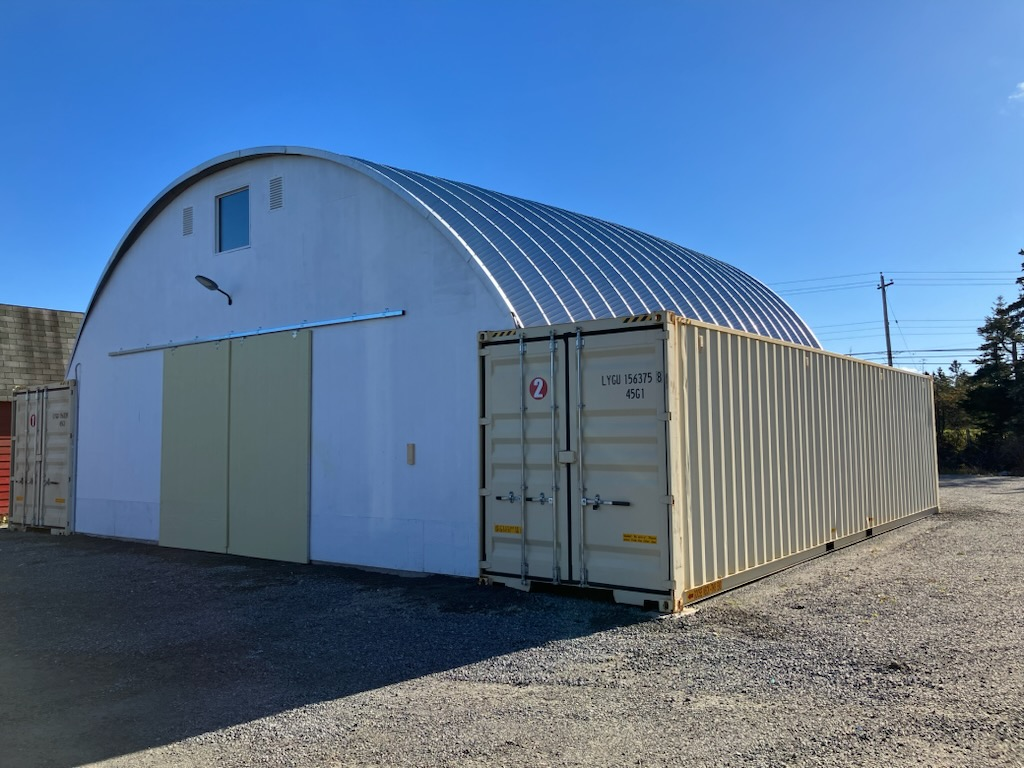
Arch-style buildings shed snow and present a rounded profile to the wind, which is why so many of our Nova Scotia customers choose them for storage, boats and RVs. Straight-wall buildings perform just as well when engineered for the site. Compare arch-style vs straight-wall buildings.
Foundations
Toro doesn't supply foundations, but every building comes with the structural reactions your contractor needs. Ask your building official about frost depth. See our guide to steel building foundations.
How to get a building permit
Building permits in Nova Scotia come from your municipality. Check zoning and setbacks first, then apply with your engineer-stamped drawings.
- Call your municipalityAsk whether a permit is required, what setbacks apply and what frost depth to design footings for.
- Confirm your design loadsYour building is designed for the NBC climatic values for your community; your Toro building specialist can confirm them with you.
- Design and order your buildingDesign it in the free 3D designer or with a building specialist. Toro requires a 25% deposit before your order goes to engineering.
- Submit the stamped drawingsToro's engineers prepare CSA-approved, engineer-stamped drawings for your site, which you submit with your permit application.
- Pour the foundation and assembleYour contractor builds the foundation to Toro's structural reactions. Delivery usually takes 2 to 8 weeks, and every kit bolts together on site.
Want the full checklist? Read our steel building planning guide and how to build a steel building.
Get a Nova Scotia quote
Tell us your size, address and how you'll use the building, and a building specialist will send a quote engineered for your local loads. Pricing starts at CDN$26 per sq ft; your final price depends on size, options and the loads at your site.
Toro buildings in Nova Scotia
From a 70x220 red iron vehicle storage building to arch garages with custom front walls, these are real Toro buildings across Nova Scotia.
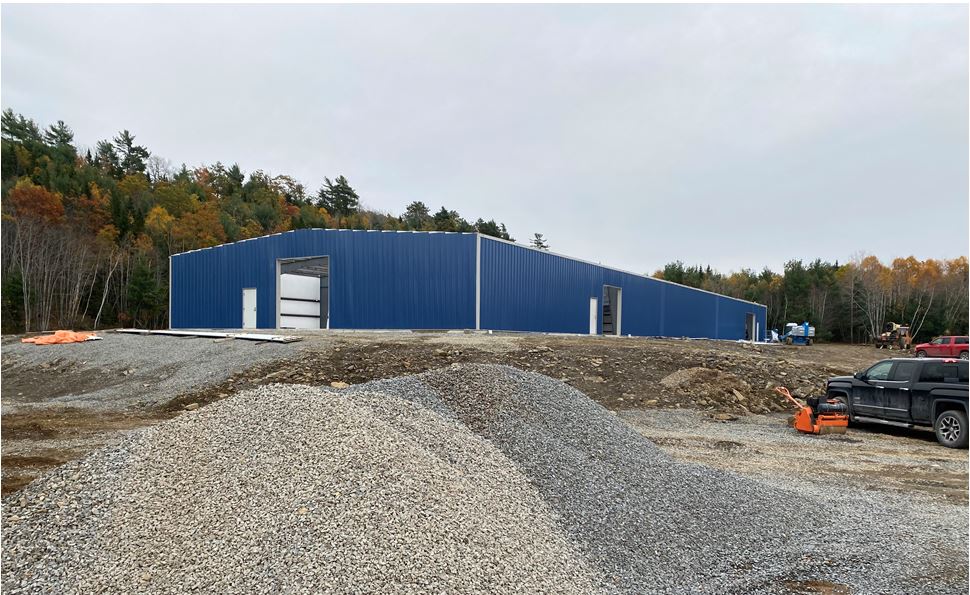 70x220x14 vehicle storageBlockhouse, NS · Red iron, returning client · See the project
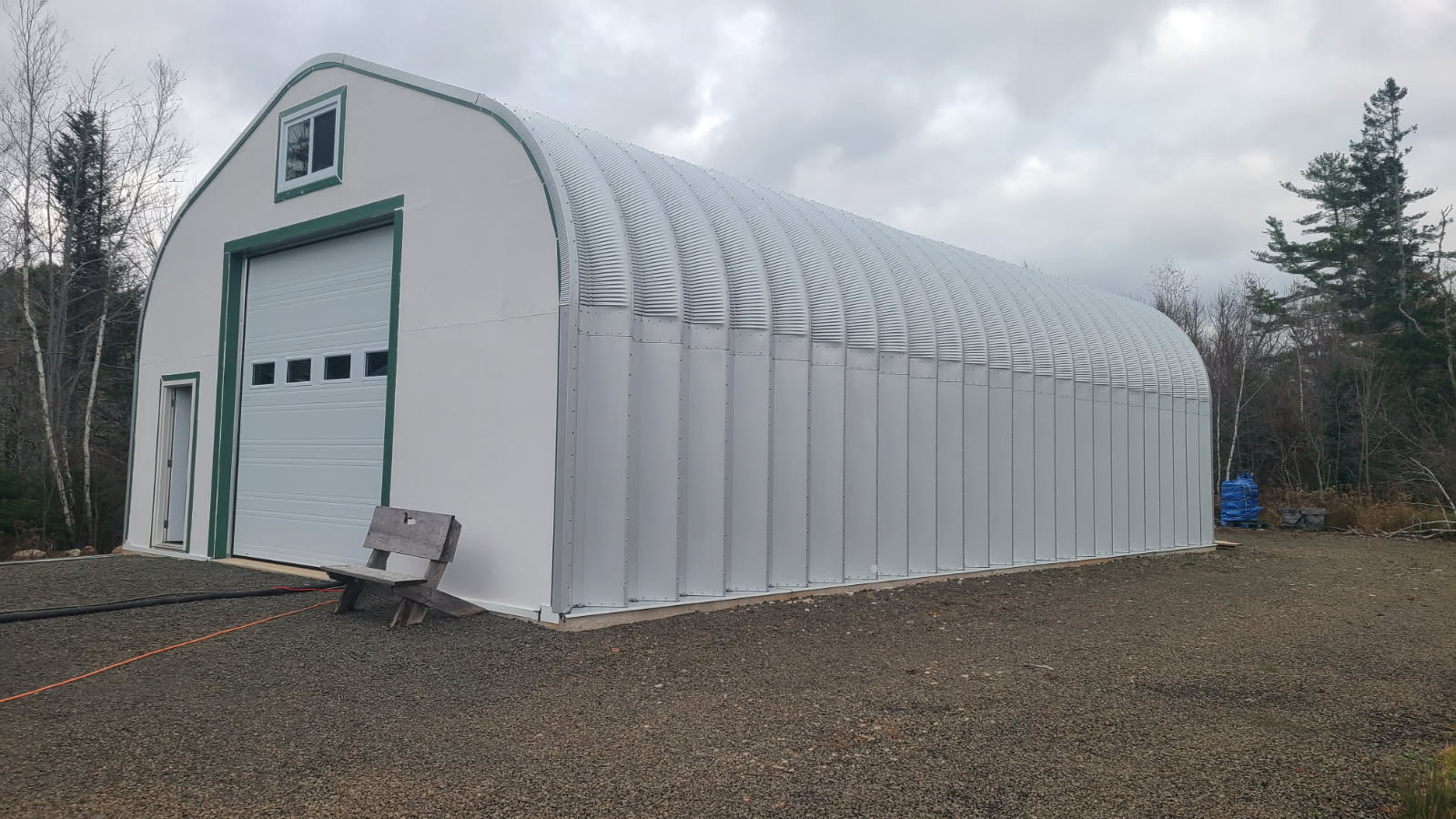 30x48x18 A-Model garageAnnapolis Royal, NS · Boat and RV storage · See the project
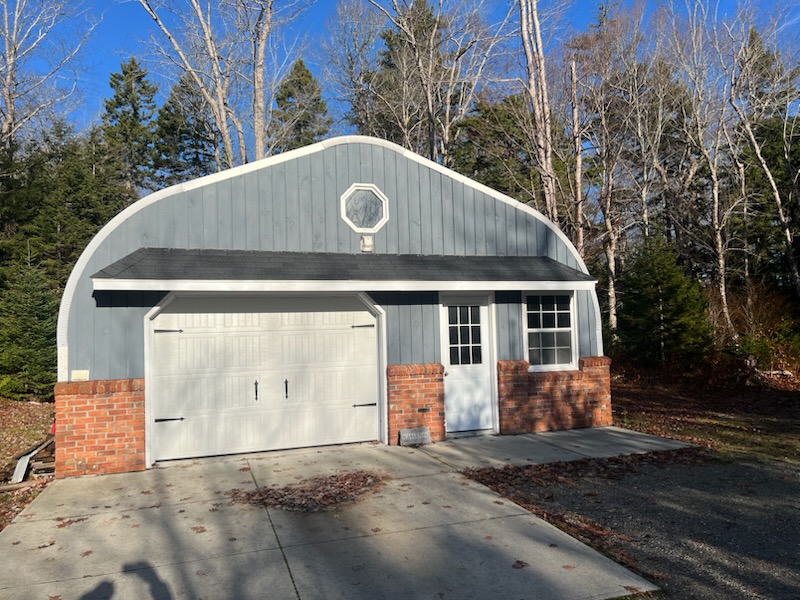 25x30x13 A-Model storageCarleton, NS · Custom front wall · See the project
See more customer builds, including Barss Corner and North East Point, on our projects page, or read how a customer built an 80x100 welding shop in Thunder Bay.
Watch a Toro building go up
 How to assemble a Quonset hutFour-step overview · Watch the video
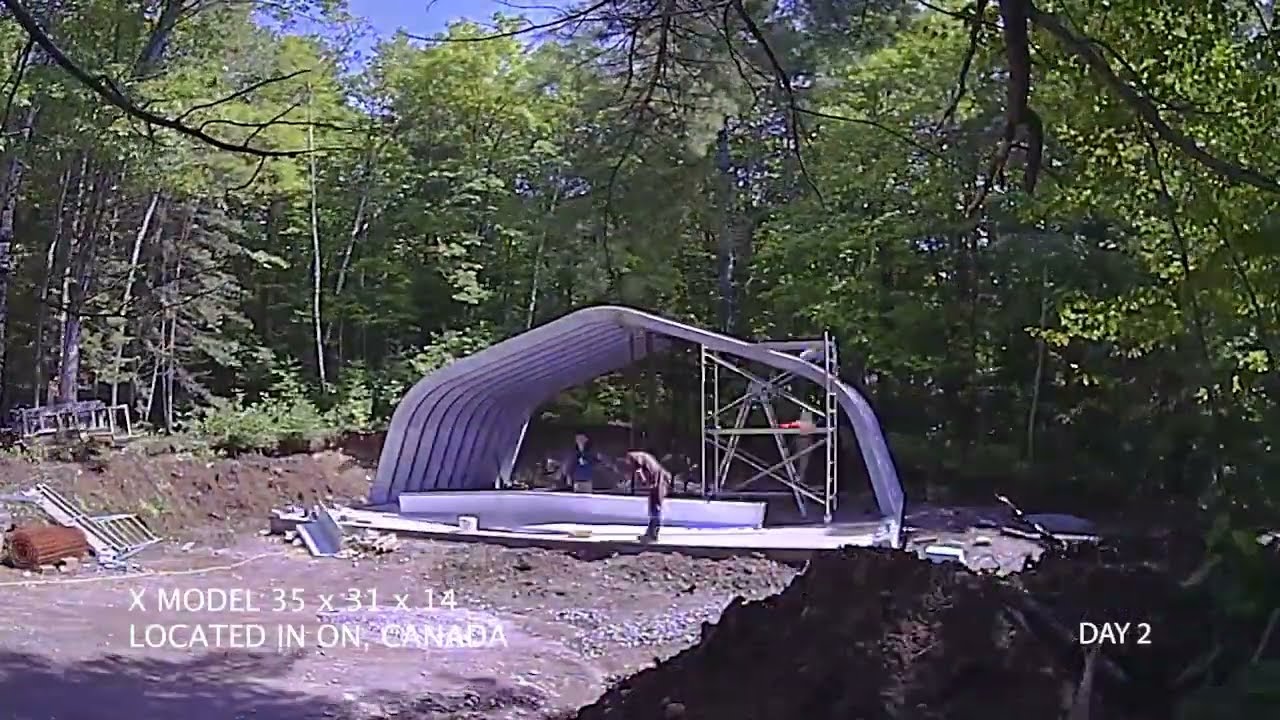 35x31x14 X-Model assemblyArch building in 4 days · Watch the video
 35x70 winter build10-day time-lapse · Watch the video
Browse every build, review and time-lapse in our video library.
Building for the Atlantic climate
Salt air and wet winters
Coastal salt air and wet winters are hard on wood and untreated metal. Toro buildings use Galvalume Plus steel; arch buildings carry a 50-year rust perforation warranty, and straight-wall buildings a 25–40-year paint warranty depending on panel and finish (see our warranty). For a heated shop, add insulation to control condensation.
Boats, RVs and fishing gear
Covered storage for boats, RVs and gear is one of the most common uses in Nova Scotia. Read our guides to steel boat storage for winter and covered RV storage.
Choosing the right building
Choose an arch-style Quonset building or a straight-wall building, either cold-formed (M-Model) or red iron. Read our guide to garage kits in Canada and check current Canadian steel building prices.
Need a building sooner?
Toro makes 500+ buildings a month, and about 10% are never delivered because a customer's plans change. These clearance buildings are offered at a discount, re-engineered for your site if needed and come with stamped drawings. Inventory changes daily, so the fastest way to see what's available is to call, or browse current Canadian clearance inventory.
Frequently asked questions
Still have questions about building in Nova Scotia? Price your building and a building specialist will walk you through it.
Which building code applies in Nova Scotia?
Nova Scotia adopted the National Building Code of Canada 2020, in force since April 1, 2025, with energy tiers phasing in through 2029. Your municipality's building officials enforce it.
Do I need a building permit for a steel building in Nova Scotia?
In most cases, yes. Building permits come from your municipality. Check zoning and setbacks first, then apply with the CSA-approved, engineer-stamped drawings Toro supplies.
What snow load does a steel building need in Nova Scotia?
It depends on your community. The National Building Code lists a ground snow load and a rain-on-snow load for each location, and coastal sites carry higher rain-on-snow values. Toro's engineers design your building for the values at your exact site.
Does Toro install buildings in Nova Scotia?
No. Toro designs, engineers and ships pre-engineered steel building kits. You assemble the kit yourself or hire a local contractor, using the stamped drawings and structural reactions we provide.
How much does a steel building cost in Nova Scotia?
Toro pricing starts at CDN$26 per square foot. Your final price depends on size, framing, options and the loads at your site, so a building specialist confirms it with a quote.
How long does delivery to Nova Scotia take?
Delivery usually takes 2 to 8 weeks, and your building specialist confirms timing for your order. You handle unloading on site, and our operations team keeps you updated along the way.
Related building types
Garage kits in Canada | Workshops | Agricultural buildings | Quonset huts | Container covers
Get a steel building quote for your Nova Scotia project
Tell us what you're building and where, and Toro Steel Buildings will send a quote engineered for your local snow, wind and seismic loads.