


A steel woodworking shop gives you an open, column-free space for stationary tools, lumber storage, and assembly, in a building that won’t rot, warp, or attract pests. The keys to a good woodworking shop are the right size, an open layout, plenty of well-placed power, strong lighting, dust collection, and humidity control that keeps your lumber stable.
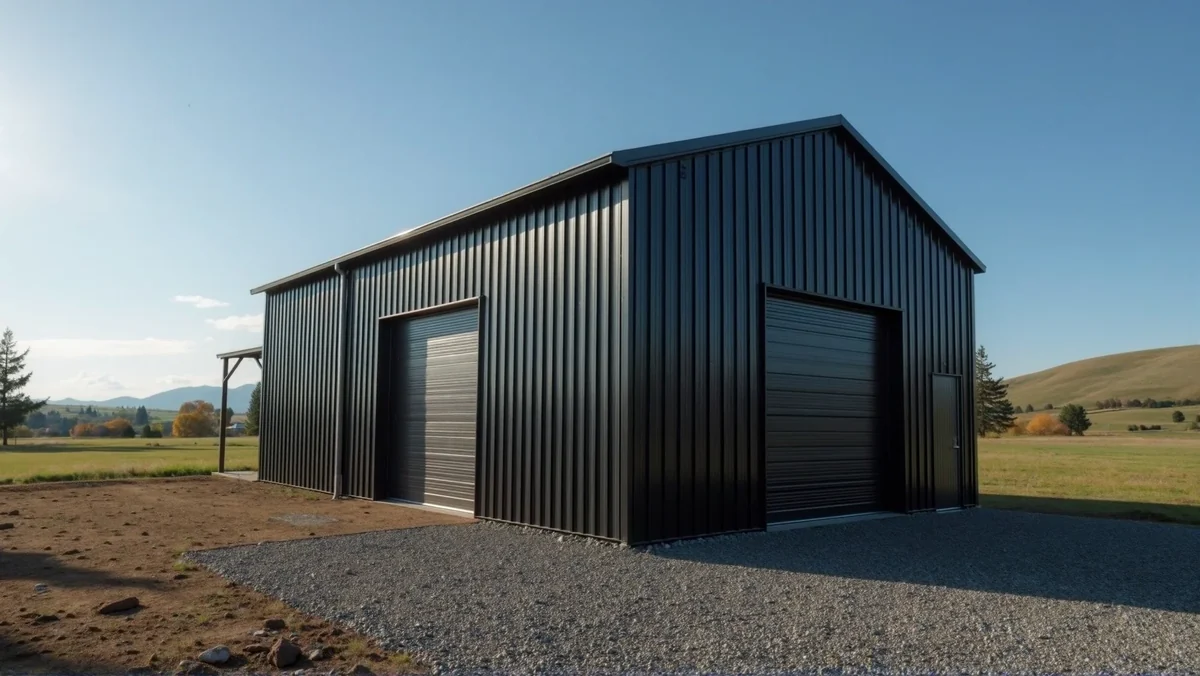
Size: Room for Tools, Lumber, and Movement
Your shop needs space for every tool plus clearance to feed long boards through a table saw or planer and walk around without tripping over equipment. Many serious hobby and small professional shops fall around 1,500 to 1,800 square feet, though any size can work depending on how much equipment you have. Plan for infeed and outfeed space around each machine, a dedicated lumber rack, an assembly table, and room to grow — tool collections rarely shrink.
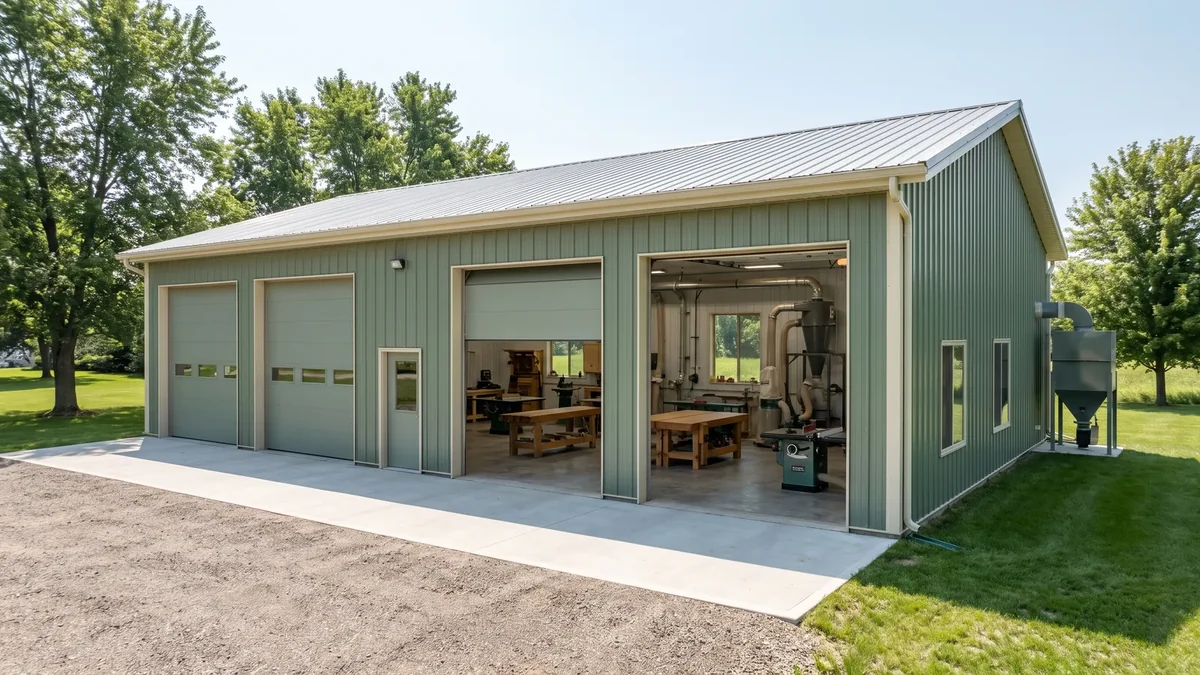
Layout: Keep It Open
The fewer interior walls, the better. An open, clear-span layout lets you arrange and rearrange machinery as your projects change, and it keeps the space from feeling cramped. Arrange stations in the order work moves — rough lumber storage, milling, cutting, joinery, assembly, and finishing — so material flows through the shop without backtracking. Mobile bases on larger tools add even more flexibility.
Electrical: More Outlets Than You Think
Sketch a general layout of where each tool will go before you plan the electrical, then place outlets to match. Most woodworkers want more outlets than they first expect, and many table saws, planers, and dust collectors need dedicated 240-volt circuits. Ceiling-mounted drops and floor outlets keep cords off the walkways — tripping over a cord near a spinning blade is a hazard you don’t want. Plan all of this before the walls are finished, when adding circuits is easiest.
Lighting: Bright and Even
Good lighting is a safety and quality issue. Combine natural light from windows and skylights with bright, even overhead fixtures. Many craftspeople prefer daylight-balanced light in the 5000K to 6500K range, which makes wood tones and finish colours easier to judge. Try a few options at a local hardware store before you commit, and add task lighting at your main work stations.
Dust Collection
Fine wood dust is a health hazard and makes a mess of everything in the shop. Plan a central dust collection system or dedicated collectors for your biggest dust producers — table saw, planer, jointer, and sanders — along with ambient air filtration for the fine particles that escape. Position the collector and duct runs during the layout stage, since they affect where your tools go.
Humidity Control Protects Your Lumber
Wood moves as it gains and loses moisture, which can warp boards, open glue joints, and ruin finished projects. Insulating your steel shop keeps temperature and humidity much steadier, and prevents condensation from forming on the interior. Many woodworkers add a dehumidifier or climate control to keep lumber at a stable moisture content year-round.
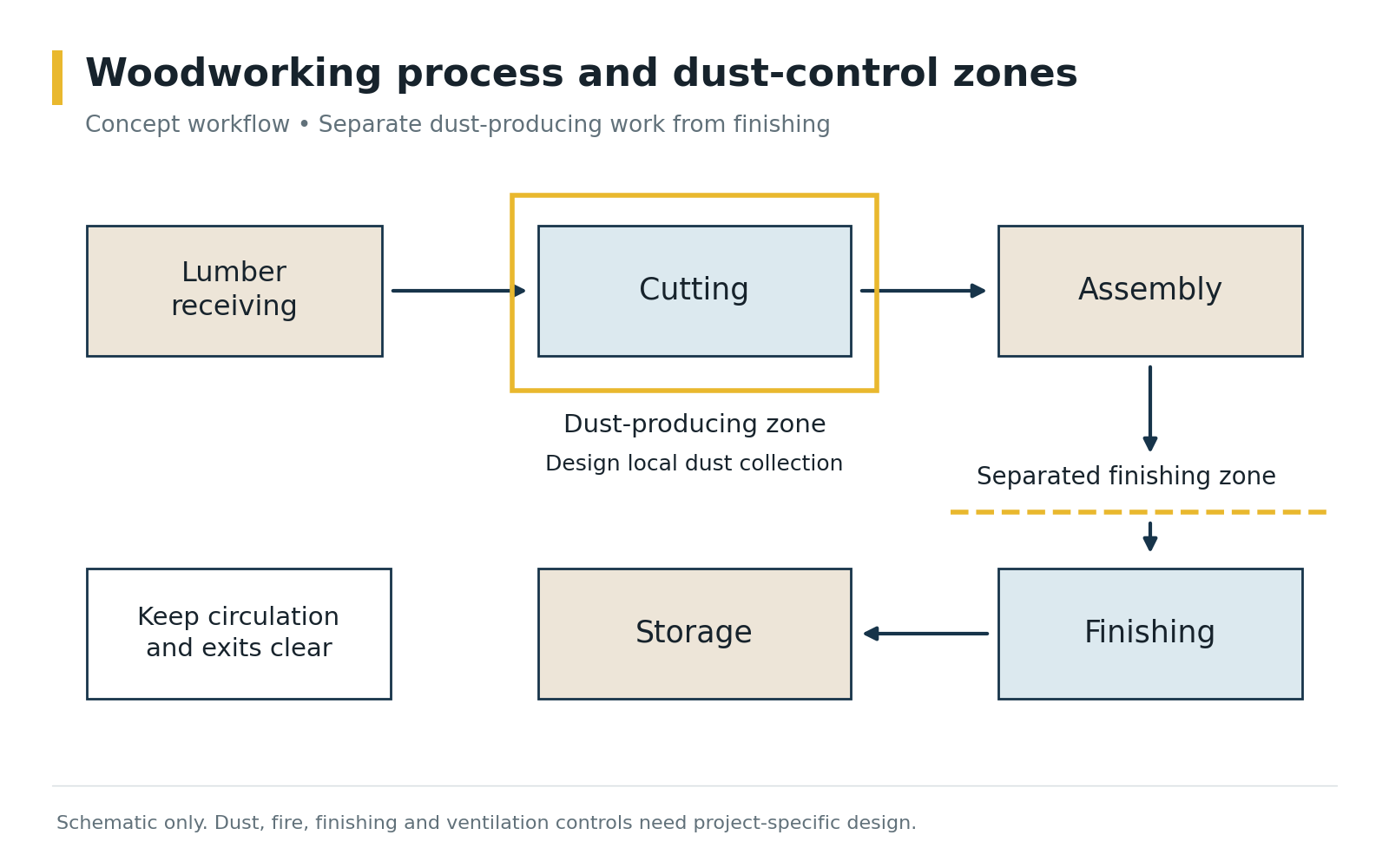
A Ventilated Finishing Area
Stains, lacquers, and other finishes release fumes, and they need a relatively dust-free space to cure. If you finish in the shop, set aside a separate area with good ventilation — exhaust fans and ridge or wall vents — away from your dust-producing tools.
Plumbing: A Worthwhile Extra
Plumbing isn’t essential, but many woodworkers appreciate a utility sink for cleaning brushes and glue-ups, and a washroom makes the shop far more practical for long working days. If it fits the budget, plan the plumbing into the design from the start.
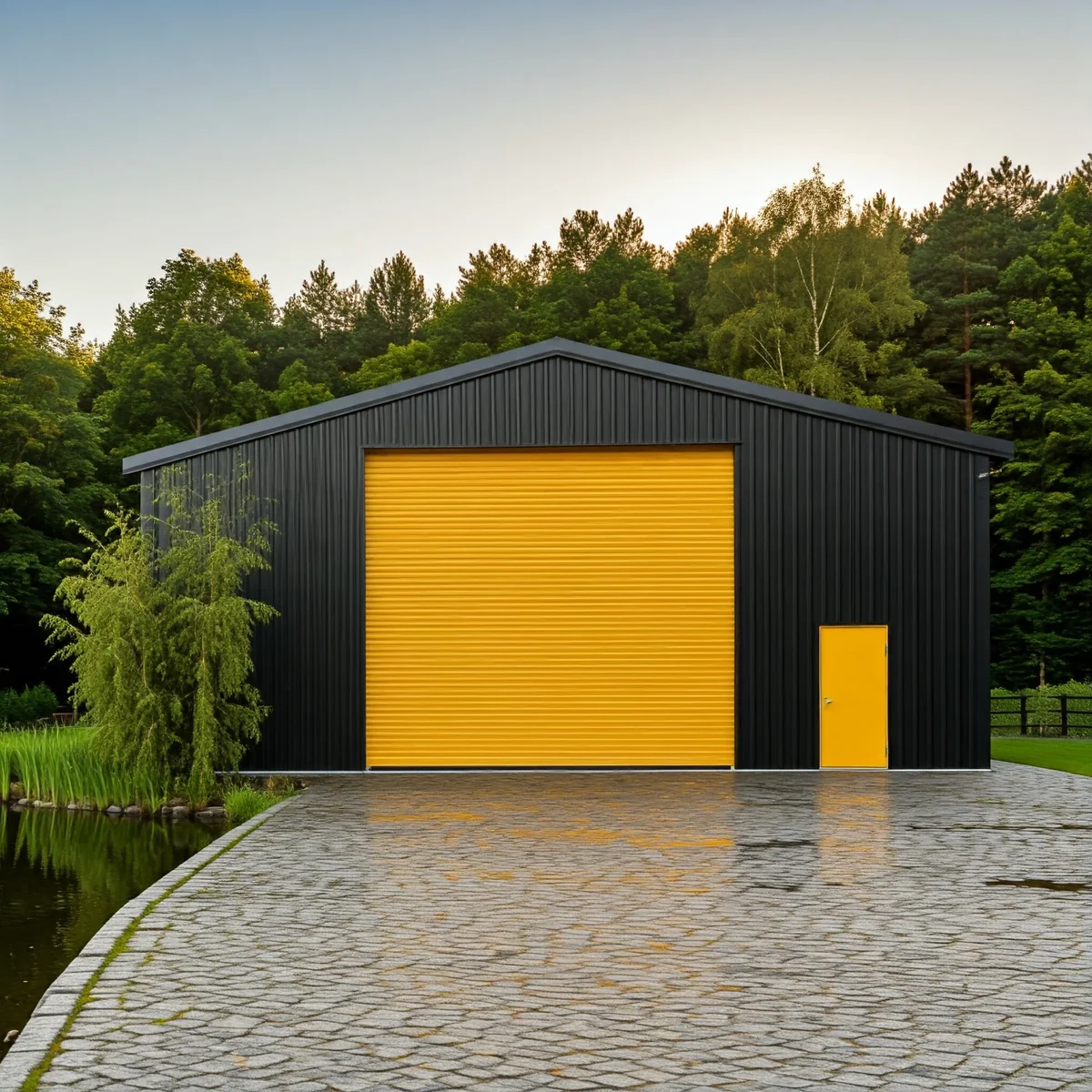
Why Steel for a Woodworking Shop?
Steel framing is non-combustible — an important advantage in a building full of sawdust and wood — and it won’t rot, warp, or attract termites the way a wood-framed shop can. It also needs very little maintenance, so your time goes into projects rather than upkeep. Think of the shop as a long-term investment: a well-built woodworking shop supports years of quality work and adds to your property’s value.
What Does a Steel Woodworking Shop Cost?
Toro’s steel building kits start at $19 to $26 per square foot for the shell. Where your shop lands in that range depends mainly on your site’s snow, wind, and seismic requirements, along with size, doors, and accessories. Foundation, assembly, electrical, and interior finishing are separate costs.
Permits, Codes & Engineering
Check permit and zoning requirements with your municipality, especially if you plan to run a business from the shop. Design loads follow the ASCE 7 standard from the American Society of Civil Engineers, referenced by the International Code Council‘s International Building Code, or the National Building Code of Canada. Toro’s in-house engineering team calculates your shop’s loads for its specific address before it ships; you or your local contractor handle the foundation and assembly.
Related Building Types
Workshops | Designing a Metal Workshop Building | How to Insulate a Steel Building
Build Your Woodworking Shop with Toro
Toro Steel Buildings engineers every woodworking shop to your tools and your site. Request a free quote to get started.