

Trust in a Steel Airplane Hangar for your Aircraft and Aviation Equipment
Metal has become the industry standard for airplane hangars. The reason for this is simply because there is no other sensible material available on the market with the same level of strength or customizability. The United States Navy, Air force, and National Guard have experimented with many different materials and designs, but always resort back to steel construction due to its sheer strength and efficient attributes.
The number one reason that aircraft owners decide on steel construction is because of its durability. Steel can withstand extreme loads from garage doors, snow accumulation, high winds – virtually all natural elements.
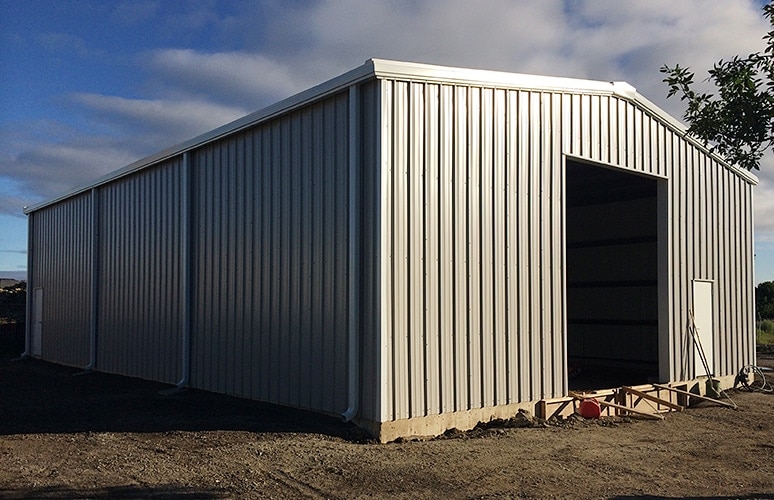
 From a design standpoint, the most common (and our overall favourite) style of airplane hangar is the Straight wall design. These steel airplane hangars are extremely flexible in design, with high ceilings and widths as large as 150 feet long. The amount of flexibility in design allows for us to build an airplane hangar best suited for your needs. Whether you need to store a small, single engine airplane or large twin engine jet, straight wall hangars can be built for your unique aviation needs
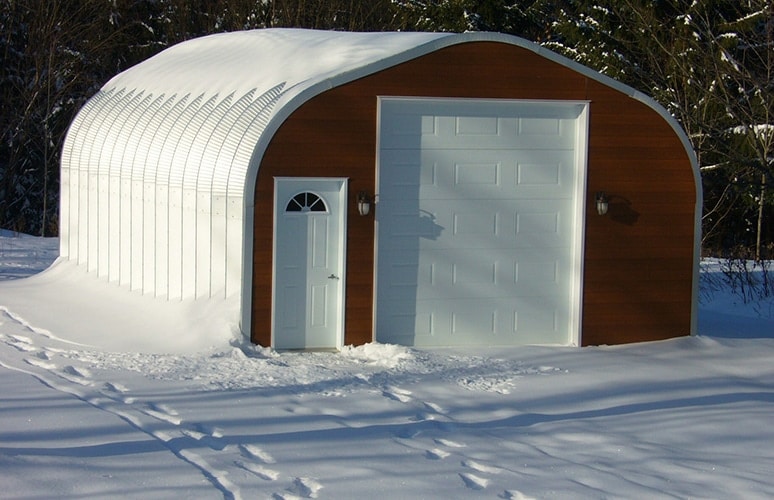
Straight wall hangars also allow for the most storage possible. All of your aviation equipment, tools, parts, and accessories can easily be stored along the walls of your building, protecting them from the outdoors and allowing for convenient access. We highly recommend this type of steel construction compared to a Quonset style hangar. The sheer customizability, and overall efficiency of straight wall builds outdoes Quonset hangars every time. Whether you want bi-fold, bi-parting or stack leaf garage door designs, require multiple styles of windows, doors and lighting – we can accommodate it all.
A straight wall hangar can be built with a combination of brick and steel for an aesthetic design, with choice of multiple colours to match the existing buildings on your property. These steel buildings can be insulated to keep your airplane hangar at ideal storage temperatures, and can be designed with many ventilation options to keep air flowing and clean. Also, many opt to add office space into their airplane hangar to accommodate the needs of their aviation business.
Regardless of the aircraft, whether for business use or pleasure, Toro Steel can design the hangar that meets your every need! Contact one of our knowledgeable team members today for more information on our many airplane hangar options and designs, and receive a free quote today!
Related Post