


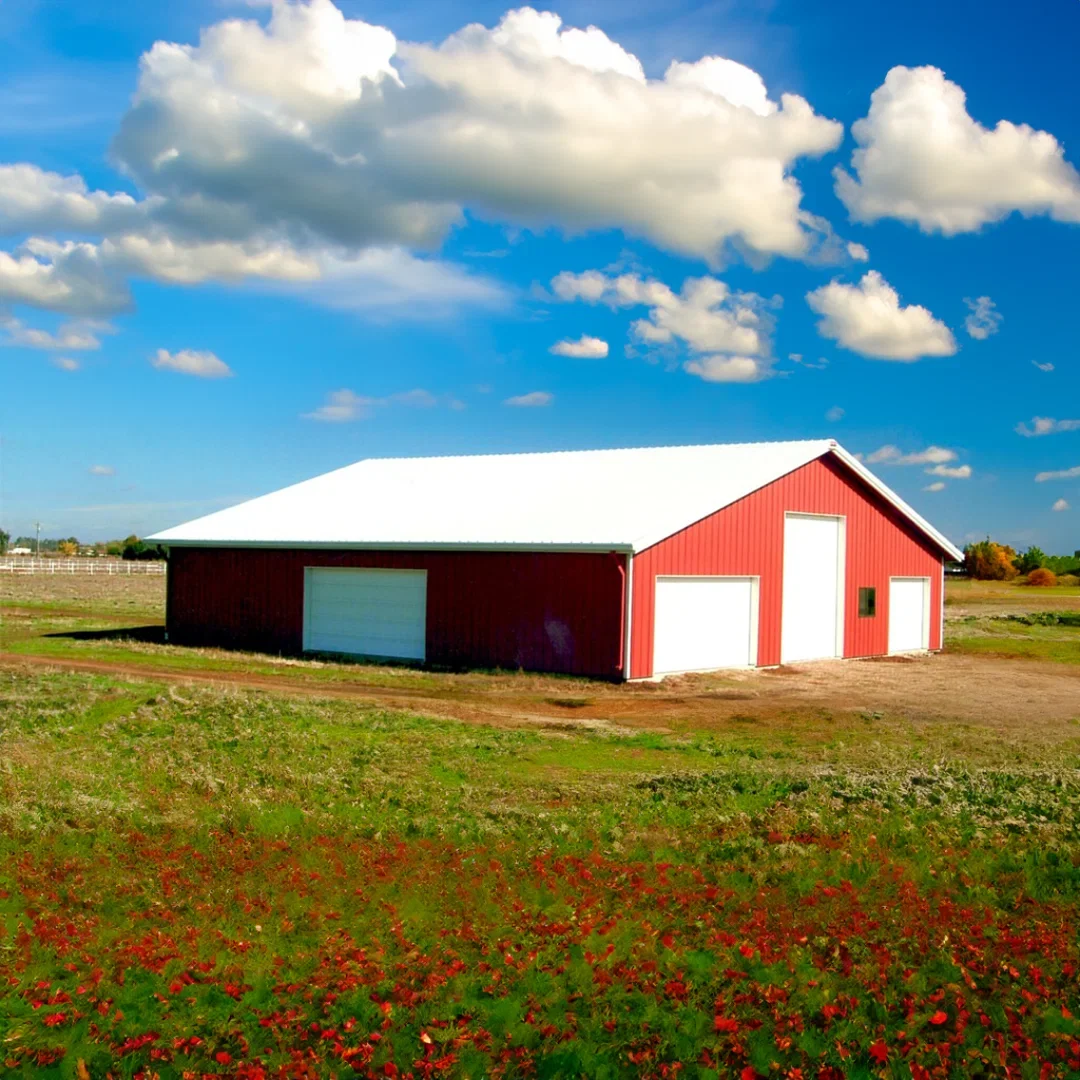
A steel horse shelter is a prefabricated steel building that protects horses from weather — anything from a simple run-in shelter to a fully enclosed stable with stalls, feed storage, and a tack room. Pole barns were the traditional choice, but a steel shelter is just as easy to put up, lasts decades longer, and resists rot, pests, fire, and moisture far better than wood.
Why Choose Steel for a Horse Shelter?
- Durability: Steel shelters last decades longer than wood, with no rot, warping, or termite damage.
- More usable space: Clear-span framing means no interior columns or load-bearing walls eating into stall and aisle space.
- Any size: From a small shelter for one or two horses to a stable for many, plus room for feed, hay, and equipment under the same roof.
- Easy to insulate: Insulation keeps temperatures steadier and protects horses from extreme heat and cold.
- Moisture control: With insulation and ventilation, a steel shelter limits the condensation and humidity that can leave horses damp in summer and frosted in winter.
- Weather resistance: Engineered for your site’s snow and wind loads, from cold northern climates to hot, humid ones.
- Fire safety: Steel framing is non-combustible — an important advantage in a building full of hay and bedding.
Run-In Shelter or Enclosed Stable?
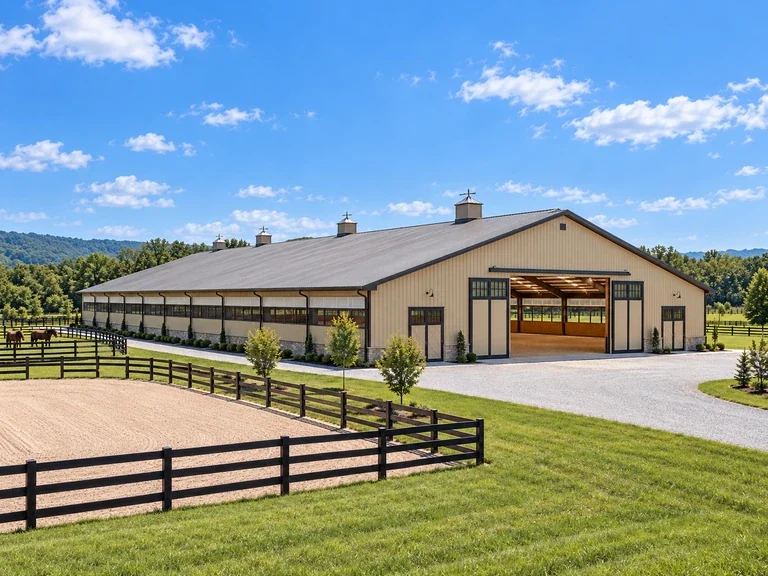
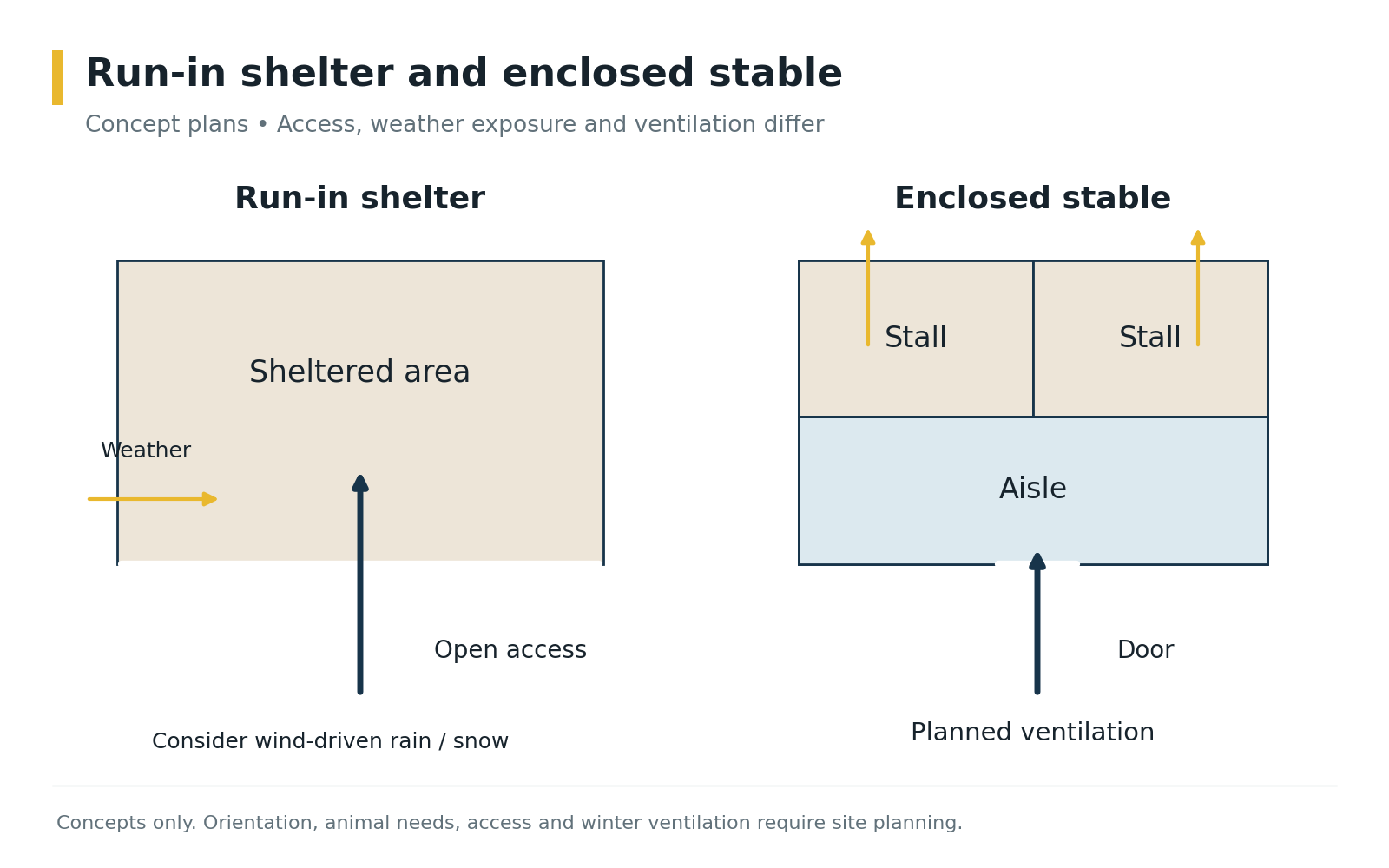
A run-in shelter is open on one side, letting horses come and go from pasture as they please. It’s simple, economical, and ideal for horses that live mostly outdoors. An enclosed stable adds walls, doors, and stalls, giving you more control over climate and care, plus secure storage for feed and tack. Many owners start with a shelter and later expand to a full stable — worth planning for from the start.
Sizing Your Horse Shelter
As a common guideline, a 12′ x 12′ stall suits an average-sized horse, larger breeds do better with 12′ x 14′ or more, and ponies can use about 10′ x 10′. Aisles are typically 10 to 12 feet wide so horses can be led and turned safely, and ceilings should be tall enough that a horse can raise its head without risk. Add space for a tack room, a feed and hay area, and a wash or grooming area if you need one. Your Building Specialist can help translate your herd size into a footprint.
How to Build a Steel Horse Shelter
1. Choose the Right Site
Pick flat, well-drained ground that isn’t at risk of flooding or standing water, with enough room for the building and safe access for horses, trailers, and feed deliveries.
2. Prepare the Foundation
Most steel shelters rest on a concrete perimeter footing or slab, built to the specifications in your engineered drawings. You or your local contractor handle this step.
3. Assemble the Frame and Panels
Components arrive pre-cut and pre-drilled. Arch-style buildings are assembled on the ground in sections, with overlapping panels that form a watertight seal, then raised into place with very little force and no heavy equipment. Straight-wall buildings bolt together frame by frame, following the kit’s instructions.
4. Secure It and Add the Finishing Touches
Anchor the structure to the foundation, then add end walls, doors, and any accessories, and tighten all bolts. For stables, finish with kickboards on the lower walls, stall partitions, lighting, and ventilation.
Design Details That Keep Horses Healthy
Good ventilation is essential — ridge and wall vents move fresh air through the building, clearing ammonia and dust and reducing condensation. Skylights and windows add natural light. Kickboards protect horses from striking the steel framing. And wide sliding or dutch doors make daily movement in and out safer and easier.
Cost of a Steel Horse Shelter
Toro’s steel building kits start at $19 to $26 per square foot for the shell, with the final price depending mainly on your site’s snow, wind, and seismic requirements, plus size and accessories. Foundation, assembly, and interior fittings like stalls are separate costs.
Permits, Codes & Engineering
Agricultural buildings still need to meet real structural requirements. Design loads follow the ASCE 7 standard from the American Society of Civil Engineers, referenced by the International Code Council‘s International Building Code, or the National Building Code of Canada. Toro’s in-house engineering team — backed by 40+ years in business and AISC accreditation — calculates your shelter’s loads for its specific address before it ships.
Related Building Types
Agricultural Buildings | Indoor Riding Arenas | Pole Barn vs. Steel Barn
Build Your Horse Shelter with Toro
Toro Steel Buildings engineers every horse shelter and stable to your herd and your site. Request a free quote to get started.