


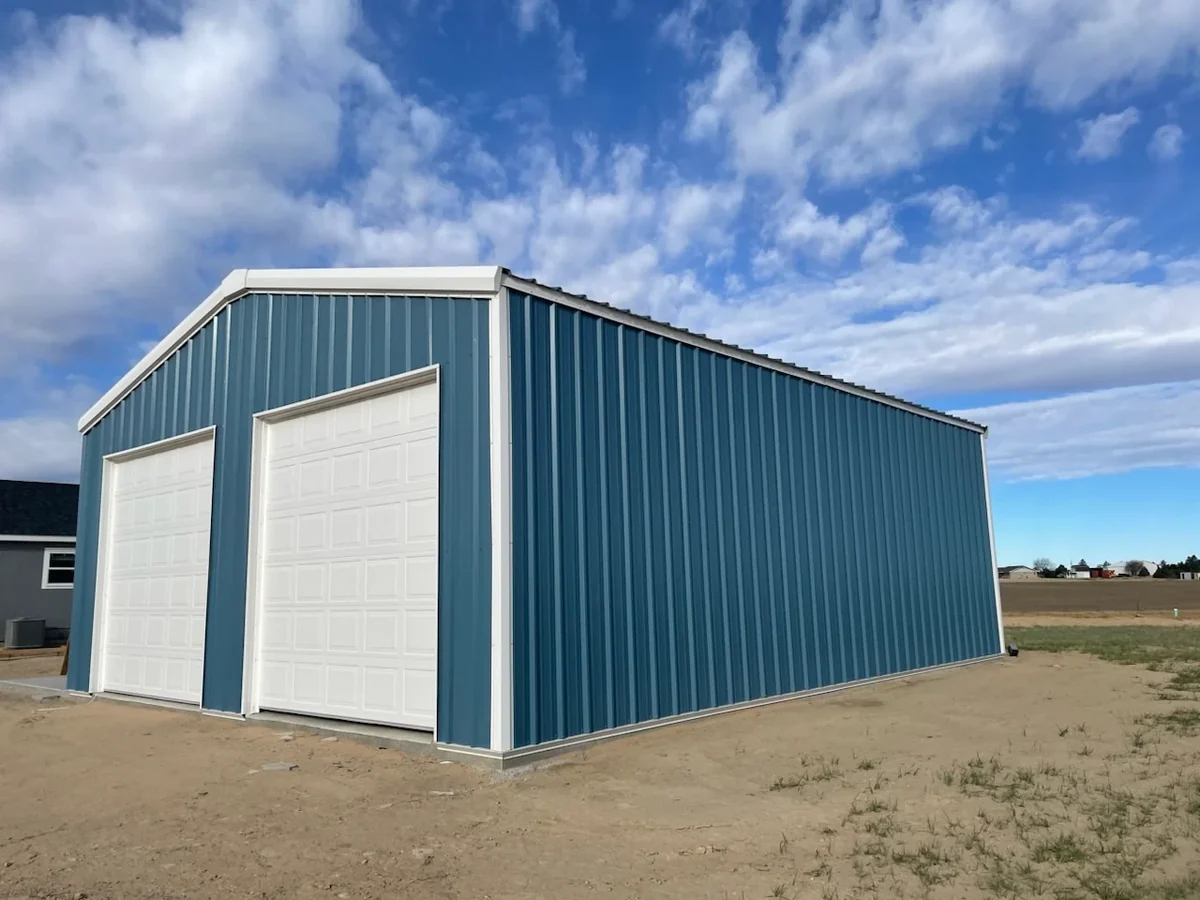
Before a metal garage goes up, you need to confirm local regulations, get a permit, plan the building site, and prepare a foundation. Requirements vary by municipality and even by neighbourhood, so start with your homeowners’ association rules and your local building department, then plan the site and foundation around what they require. This guide covers each step; our companion guide to buying a metal garage covers sizing and features. Here’s how metal garage permits, zoning, and site planning work, step by step.
Understand the Regulations First
Regulations are the rules your local government and community set for new structures, and they vary from state to state, province to province, county to county, and city to city. Check two sets of rules before you order:
1. Community Rules and HOA Covenants
Many neighbourhoods and homeowners’ associations have covenants, conditions, and restrictions that govern what you can build — the type of garage, its size, height, materials, and even colours. Confirm these first, since they can rule out a design before you’ve spent anything on it.
2. Government Regulations
Zoning bylaws, building codes, and fire codes govern how close the garage can be to your home, other buildings, and property lines, how tall it can be, and what it must be built to withstand. Contact your municipal planning or building department for the exact requirements at your address.
Plan Your Building Site
Step 1: Find a Level Spot
Choose a level area large enough for the garage and its setbacks. If there’s no naturally level spot, you may need to bring in and compact fill to create one.
Step 2: Look Overhead
Keep the site clear of overhead power lines, tree limbs, and anything that could interfere with assembly or the finished building. Check your local utility’s clearance requirements for power lines, and trim or remove branches that will overhang the roof.
Step 3: Mark the Corners and Check Setbacks
Stake the building’s corners and measure from your property lines to confirm you meet setback requirements. Know your exact property boundaries before you do — a survey is worth it if you’re unsure.
Step 4: Check Underground
Before any digging, have buried utilities located and marked. Contact your local utility locate service, and check for septic systems, drainage lines, or other obstructions.
Plan and Price Your Foundation
- Existing foundation: If you already have a concrete slab or suitable base, you may save money by using it — but confirm it meets local codes, fits the building, and matches the specifications in your engineered drawings.
- Pricing a new slab: Give your contractor the specifications from your drawings: slab thickness, footing details, size, slope, edge details, anchor bolt locations, and whether you want a gravel base, vapour barrier, or concrete apron.
- Doing it yourself: Pouring your own foundation can save labour costs, but mistakes are expensive to fix and compromise the building’s stability. For most owners, this step is best left to an experienced contractor.
Get Your Permit
Most metal garages need a building permit before work begins. Applications typically require:
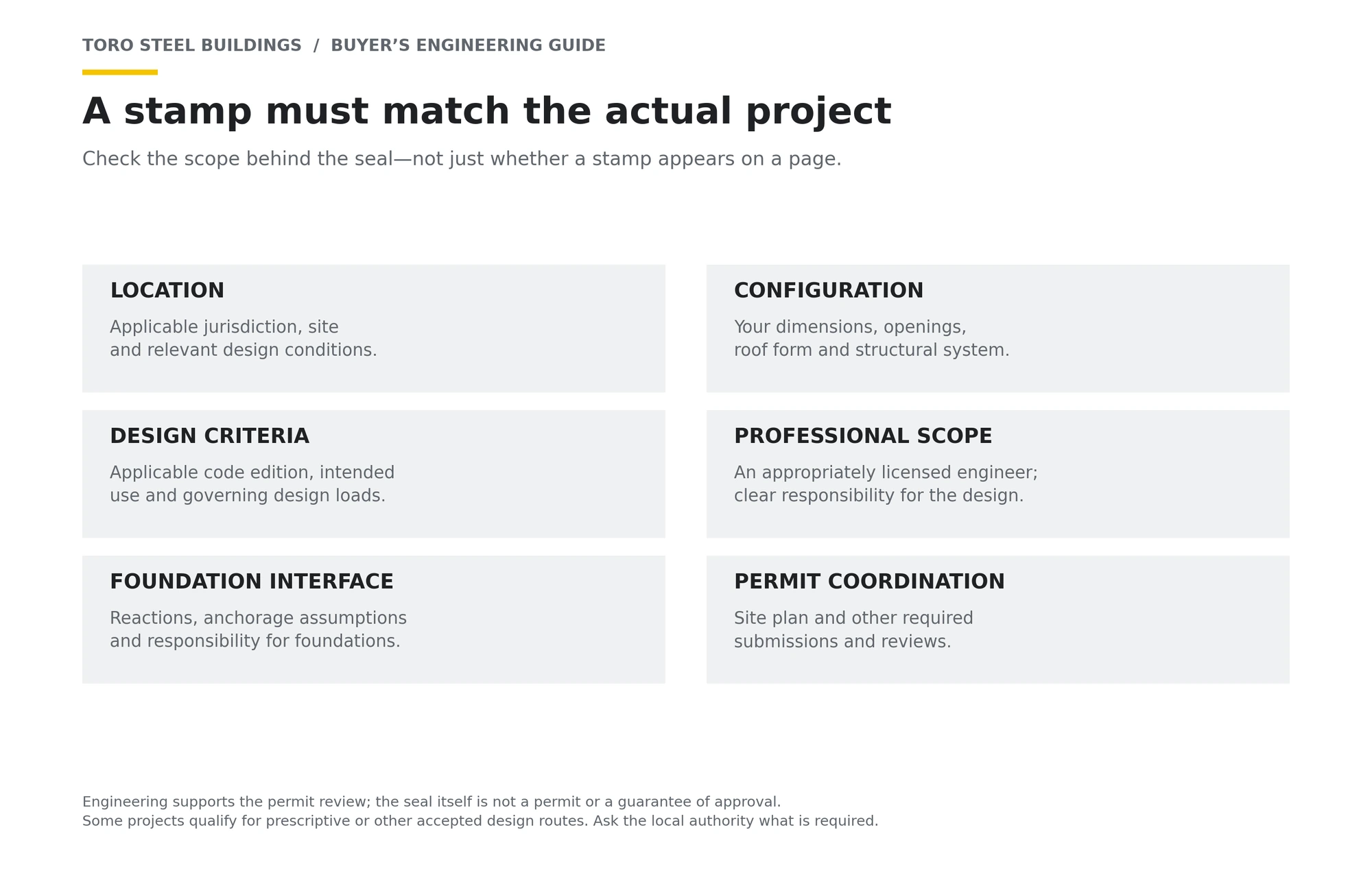
- Engineered plans: Toro provides engineer-stamped drawings for your specific building and location, showing the design loads and specifications your building department needs to see.
- A site plan: A drawing of your property showing the garage’s location, dimensions, and distances to property lines and other buildings.
Order your building only once your permit path is clear, and prepare the foundation only once your design is final, since anchor bolt locations depend on the final drawings.
Complete Site Prep and Foundation
- Gravel or ground base: For buildings designed for a gravel base, clear debris, level, and compact the area, including the setback zone.
- Pouring a slab: Build forms, place reinforcement and anchor bolts exactly as your drawings specify, then pour and finish the concrete.
- Curing the slab: Concrete needs time to gain strength. A common practice is to keep the slab moist for about the first week, and full strength develops over roughly four weeks. Protect it from debris and follow your contractor’s guidance on when assembly can begin.
Schedule Your Assembly
Once the foundation is ready, you can schedule assembly. Many smaller Toro garages and storage buildings are straightforward to assemble without a large crew, using the detailed instructions included with your kit. For larger buildings, or if you’re unsure, a local contractor can handle the assembly. Toro designs, engineers, manufactures, and ships the kit; the foundation and assembly are handled by you or your contractor.
Permits, Codes & Engineering
Design loads follow the ASCE 7 standard from the American Society of Civil Engineers, referenced by the International Code Council‘s International Building Code, or the National Building Code of Canada. Foundation work commonly references guidance from the American Concrete Institute. Toro’s in-house engineering team calculates your garage’s loads and foundation reactions for its specific address before it ships.
Related Building Types
Garages | Steel Building Planning Guide | How to Build a Steel Building
Plan Your Metal Garage with Toro
Toro Steel Buildings provides the engineered drawings you need for permits and your foundation. Request a free quote to get started.