


How do you install gutters on a steel building? Inspect the eave, measure and plan downspouts, mark the slope, hang the gutter, seal every joint and add downspouts that carry water away from the foundation. Gutters on a steel building collect rainwater at the eaves and protect your foundation, entrances and landscaping. The simplest approach is to order gutters and downspouts with your building kit, so they're sized and matched to the eave trim.
Key takeaways
- Gutters protect the whole building. They keep entrances dry, stop leaks at the base and protect the foundation.
- Order them with the kit if you can. Gutters matched to the eave trim give the cleanest, easiest result.
- Slope and seal are everything. A slight fall to the downspouts and sealed joints prevent most problems.
- Plan for snow. Sliding snow can tear gutters off a metal roof, so snow guards help in snow country.
Why every steel building needs gutters
Controlling water is far cheaper than repairing what it damages.
- Dry entrances: without gutters, rain pours off the roof edge in a sheet right over your doors.
- Leak prevention: water running down the walls finds its way into gaps around doors, windows and the base of the walls.
- Foundation protection: water pooling at the base can erode soil, crack a slab and undermine the foundation over time.
- Landscape protection: directing water away prevents soggy ground, erosion and damaged plantings.
- Lower long-term costs: controlling water is far cheaper than repairing the damage it causes.
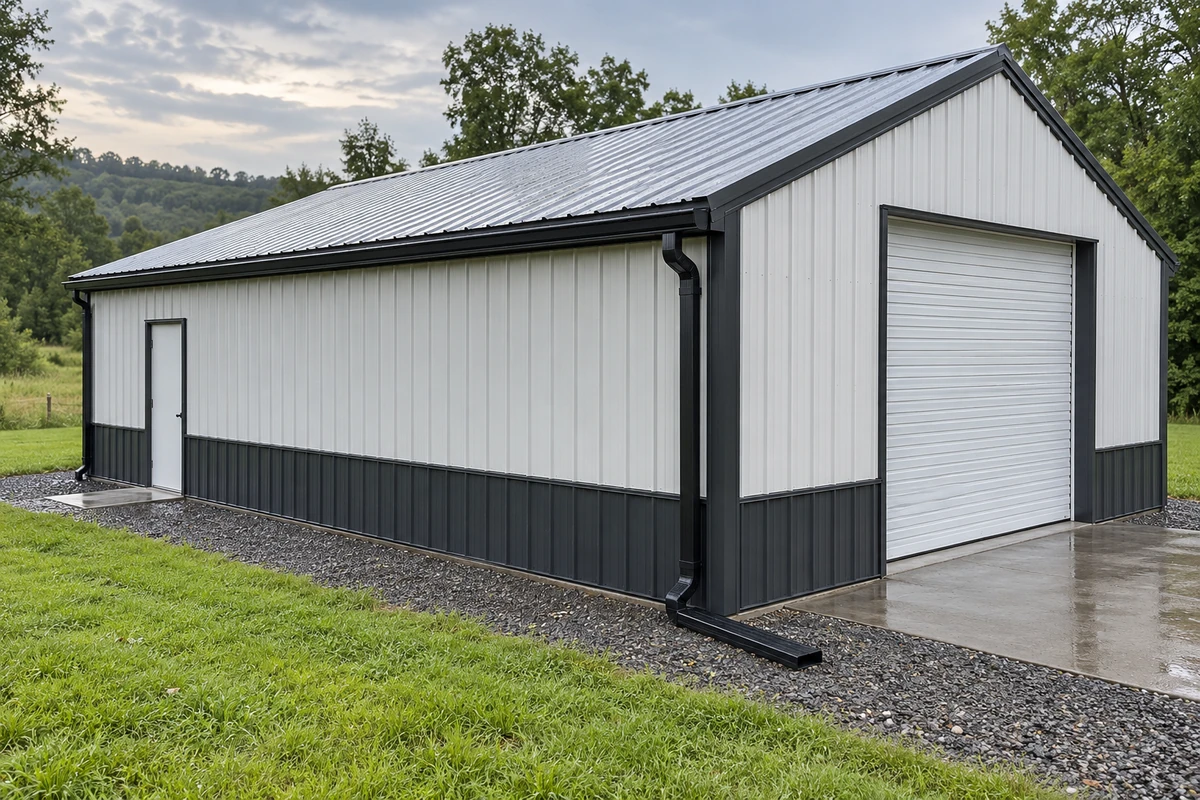
Plan gutters into your building kit
The easiest way to get a clean, integrated result.
Toro offers gutters and downspouts as part of your building's trim package, so the gutter matches the eave detail and the rest of the trim. Ordering them with the kit is the easiest way to install gutters properly, because the attachment is designed into the eave from the start rather than adapted afterward. Your building consultant can add them when you price your building.
If you're planning to install gutters later, tell your building consultant anyway. They can confirm the eave trim profile, so you can buy compatible gutters and hangers and avoid modifying the trim on site.
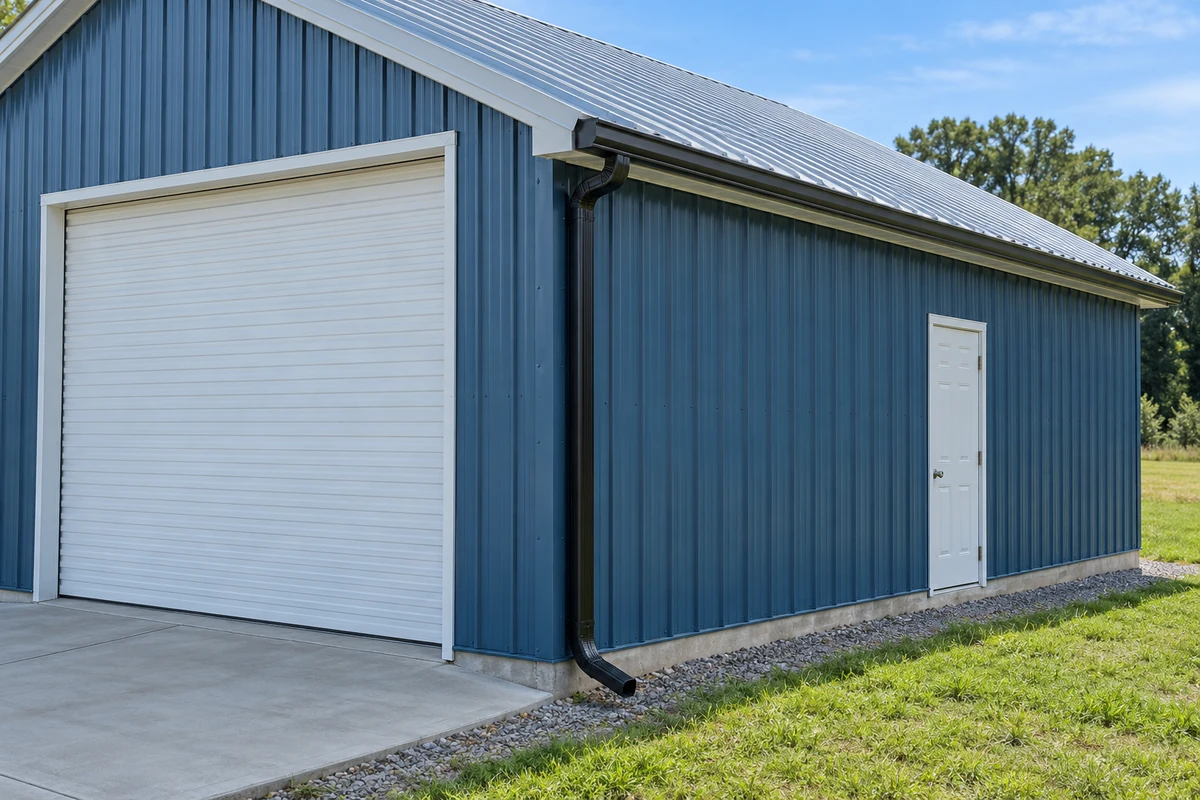
Choosing the right gutter size
Before you install gutters, match the size to how much water your roof sheds.
Gutter size should match the amount of water your roof sheds. Larger roofs, steeper pitches and high-rainfall regions all push more water into the gutter at once. An undersized gutter overflows during heavy storms, sending water right back down the walls, so if you're between sizes, go larger. Wide buildings and commercial structures often need larger gutters and more downspouts than a typical home.
| Factor | Effect on gutter sizing |
|---|---|
| Roof area draining to the gutter | More area means more water per storm |
| Roof pitch | Steeper roofs send water faster |
| Local rainfall intensity | Heavy downpours need more capacity |
| Number of downspouts | More downspouts let a gutter drain faster |
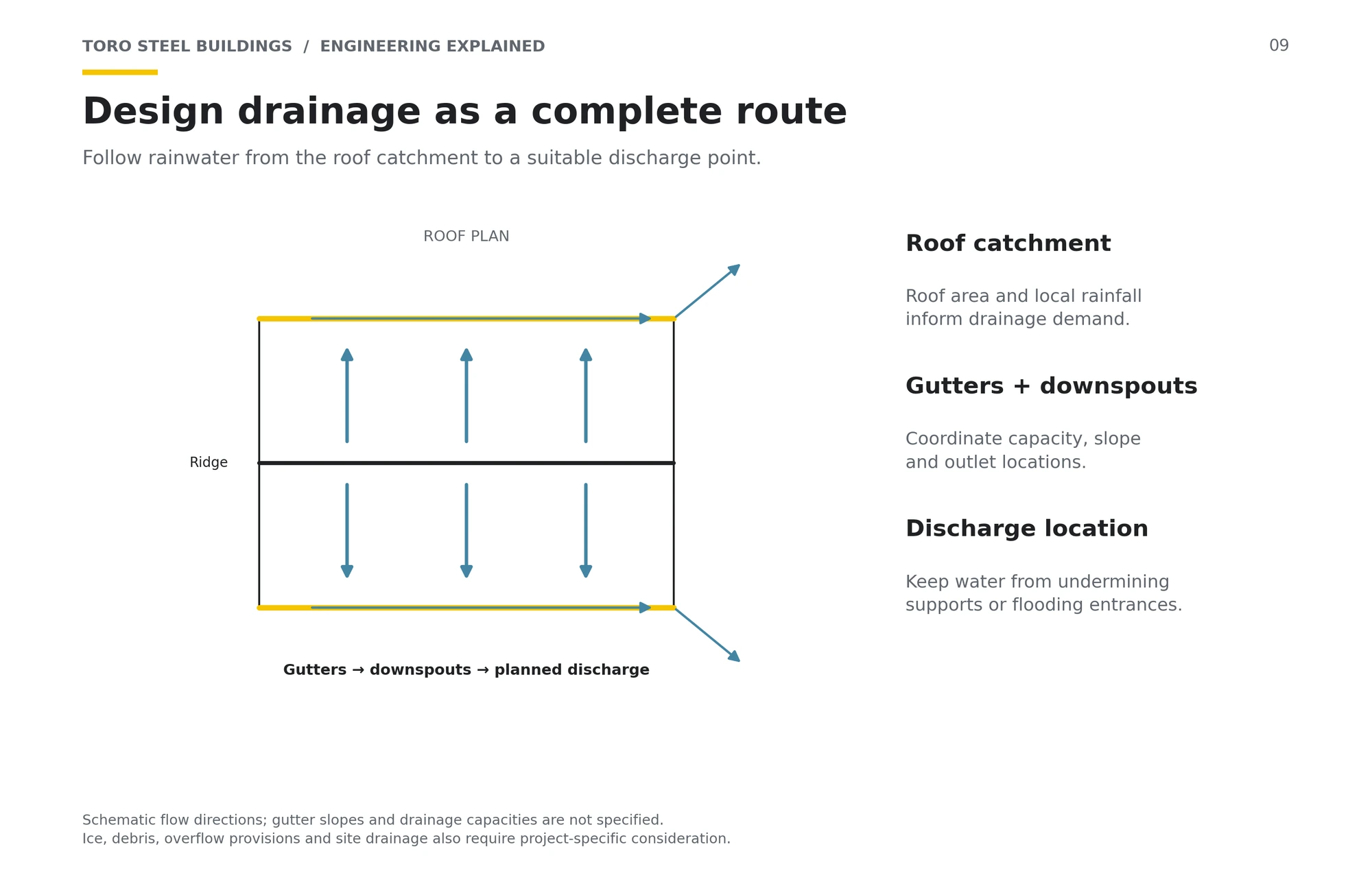
How to install gutters on a steel building in 6 steps
If you're adding gutters yourself, follow the gutter manufacturer's instructions for your system.
- Inspect the eaveCheck the eave where the wall meets the roof: the eave trim and the structural eave member are what the gutter attaches to.
- Measure and planMeasure the full length of each eave and the roof overhang.
- Mark the slopeGutters need a slight fall toward the downspouts so water doesn't sit in them.
- Hang the gutterAttach the hangers to the building's structure along your chalk line, typically every 24 to 36 inches, closer together in heavy-snow regions.
- Join and sealConnect gutter sections, end caps and outlets, and seal every seam with a sealant made for metal gutters.
- Add the downspoutsAttach the downspouts at each outlet and fasten them to the wall.
1. Inspect the eave
Check the eave where the wall meets the roof: the eave trim and the structural eave member are what the gutter attaches to. Make sure everything is sound and straight before you start.
2. Measure and plan
Measure the full length of each eave and the roof overhang. Plan downspout locations first, since they decide which way each gutter run slopes. As a common guideline, allow at least one downspout for every 30 to 40 feet of gutter, with more on large roofs.
3. Mark the slope
Gutters need a slight fall toward the downspouts so water doesn't sit in them. A widely used guideline is about 1/4 inch of drop for every 10 feet of gutter. Snap a chalk line along the eave to mark the slope before hanging anything.
4. Hang the gutter
Attach the hangers to the building's structure along your chalk line, typically every 24 to 36 inches, closer together in heavy-snow regions. Use corrosion-resistant fasteners sized for the steel you're fastening into, and set the gutter so the roof panels overhang into it.
5. Join and seal
Connect gutter sections, end caps and outlets, and seal every seam with a sealant made for metal gutters. Most leaks start at the joints, so take your time here.
6. Add the downspouts
Attach the downspouts at each outlet and fasten them to the wall. Add elbows or extensions so water discharges several feet away from the foundation, onto a splash block or into a drainage system.
Add gutters to your steel building
Gutters and downspouts can be included in your building's trim package. Price your building with a building consultant, with a quote within 1 business day.
Tools and materials you'll need
Gather everything before you install gutters.
- Gutter sections, end caps, outlets, corners and downspouts
- Hangers and corrosion-resistant fasteners
- Gutter sealant made for metal
- Tape measure, level, chalk line and marker
- Drill or impact driver, tin snips and a hacksaw for cutting gutter
- A sturdy ladder or lift, plus gloves and eye protection
On a tall building, a lift is safer and faster than ladders. Never work on the roof edge in wet, icy or windy weather.
Where to put downspouts
Downspouts decide how well the whole system works.
Place downspouts at the corners and at regular intervals along long runs, avoiding doorways, walkways and parking areas where water would freeze or splash. Each downspout should discharge onto a splash block, into a drain or onto ground that slopes away from the building. On big roofs, adding downspouts is often easier than upsizing the whole gutter.
Think about where the water goes next, too. Directing it toward a ditch, swale or rain barrel keeps the ground around your foundation dry and firm, which protects the slab and keeps door aprons from icing in winter.
DIY or hire a pro?
Most owners can install gutters on a smaller building.
On a garage or small shop, many owners install gutters themselves with a helper and a weekend. Larger or taller buildings, long seamless runs and commercial projects are usually faster and safer with a gutter contractor who has the equipment to form seamless gutters on site and work at height. Either way, ordering gutters with your Toro trim package means the parts are matched to your eave before they arrive, which makes it easier to install gutters correctly whoever does the work.
Gutter materials and styles
Choose what you'll install: gutters that match your building and climate.
- Steel gutters: strong and a natural match for a steel building's trim, and the usual choice for kits.
- Aluminum gutters: light and rust-resistant, common for retrofits.
- Box gutters: a square profile often used on commercial and wide buildings for higher capacity.
- Seamless gutters: formed on site in long runs, with fewer joints to leak.
Whichever you choose, use compatible fasteners and sealants, and match colors to your trim for a finished look. If you install gutters from a different supplier, confirm they suit your eave trim profile.
Snow and metal roofs: plan for it
Sliding snow can damage gutters.
Metal roofs shed snow efficiently, which is usually a benefit, but snow and ice can slide off in large sheets and damage or tear away gutters below. In snow country, consider snow guards on the roof to hold snow in place so it melts gradually, and position gutters so sliding snow clears them rather than catching the gutter lip. Your building consultant can advise on the right approach for your region, and every Toro building is engineered for your site's design snow load.
Ice dams can also form in gutters during freeze-thaw cycles. Good attic or roof insulation and ventilation help keep the roof cold and even, which reduces melting and refreezing at the eaves. Heat cables in the gutter and downspouts are another option where ice dams are common, and keeping downspouts clear in late fall lets meltwater drain instead of freezing in place. See how to insulate a steel building.
Gutters on arch-style buildings
A different shape needs a different approach.
Arch-style (Quonset) buildings don't have a traditional eave: the curved panels run all the way to the foundation. Water and snow shed down the sides to the ground, so drainage is usually handled at the base, with grading, gravel or a drainage channel along each side to carry water away. Endwalls can have small gutters or drip edges over doors. See our Quonset hut guide and container cover foundations for drainage on arch container covers.
Watch steel buildings go up


Gutter guards and maintenance
Clear gutters keep water away from the building.
Gutter guards help keep leaves, needles and debris out of the gutter, which is especially useful for buildings near trees. Even with guards, inspect and clear your gutters and downspouts a couple of times a year and after major storms, and check seams and hangers for anything that has loosened.
- Spring: clear winter debris, check for ice damage and reseal any opened joints.
- Fall: clear leaves before freeze-up and confirm downspouts drain freely.
- After storms: look for sagging sections or loose hangers.
See our guide to maintaining your steel building for more seasonal checks.
Common gutter mistakes
Most gutter problems trace back to these.
- Too little slope: standing water leads to overflow, debris buildup and ice.
- Too few downspouts: long runs overflow in heavy rain.
- Unsealed joints: most leaks start at seams and end caps.
- Discharging at the foundation: always extend downspouts several feet away.
- Ignoring snow: sliding snow can tear gutters off; plan snow guards in snow country.
- Mismatched fasteners: use corrosion-resistant fasteners compatible with steel.
Get these right, and when you install gutters on a steel building they'll quietly protect it for decades.
Other features worth adding
Gutters are one of several upgrades that extend a building's function.
Climate control and insulation reduce energy costs and keep moisture under control, well-placed lighting makes the building safer and more usable, and solar panels can offset energy use. If you plan rooftop solar, tell Toro before your building is designed so the roof is engineered for the added load. See custom steel building options.
Need a building sooner, or for less?
Toro makes 500+ buildings a month, and about 10% are never delivered because a customer's plans change. These clearance buildings are offered at a discount, re-engineered for your site if needed and come with stamped drawings. Inventory changes daily and not every building is listed online, so call to ask about unlisted clearance inventory for your project.
Permits, codes and engineering
Check where roof drainage can discharge.
Some municipalities regulate where roof drainage can discharge, particularly near property lines or into storm systems, so check local rules. Design loads follow the ASCE 7 standard from the American Society of Civil Engineers, referenced by the International Code Council's International Building Code, or the National Building Code of Canada. Toro's in-house engineering team calculates your building's loads for its specific address before it ships.
Frequently asked questions
Still planning your gutters? Price your building and a building consultant will walk you through it.
Do steel buildings need gutters?
Most do. Gutters keep entrances dry, prevent leaks at the base and protect the foundation and landscaping.
Can I order gutters with my Toro building?
Yes. Gutters and downspouts can be included in your building's trim package, matched to the eave.
How much slope should a gutter have?
A common guideline is about 1/4 inch of drop for every 10 feet of gutter, toward the downspouts.
How many downspouts do I need?
As a guideline, at least one for every 30 to 40 feet of gutter, with more on large roofs.
How do I stop snow from tearing off gutters?
Use snow guards on the roof so snow melts gradually, and position gutters so sliding snow clears them.
Do arch buildings need gutters?
Usually not along the sides. Arch panels shed water to the ground, so drainage is handled at the base with grading or a drainage channel.
Keep reading
Related building types
Garages | Workshops | Commercial buildings | Agricultural buildings | Straight-wall buildings
Add gutters to your steel building
Toro Steel Buildings can include gutters and downspouts in your building's trim package, with a quote within 1 business day.