


Ventilating a metal garage shop means giving air a path in and a path out: intake openings like doors, windows, and louvred wall vents low on the building, and exhaust through roof vents or exhaust fans high up, where warm, humid, and fume-laden air collects. Good ventilation keeps the shop safer to work in, more comfortable in summer, and free of the condensation and mould that damage tools and stored equipment. Here’s how to ventilate a metal garage shop the right way.
Why Airflow Matters in a Metal Building
If you use your building for anything beyond storage, ventilation is essential. Vehicles, fuel, solvents, paint, welding, and cutting all release fumes or fine particles that build up in a closed space. Heat and humidity build up too — steel buildings can get uncomfortably hot in summer without airflow, and warm, moist air meeting cold steel surfaces causes condensation that leads to rust and mould. Moving air evens out temperatures, clears heat, humidity, and fumes, and keeps the shop healthier and more comfortable year-round.
The Basic Principle: Low In, High Out
Warm air rises. The most effective natural ventilation brings cooler fresh air in low on the walls and lets warm air escape high on the roof, so the building’s own heat drives a steady flow. Placing intakes and exhausts on opposite sides of the building adds cross-ventilation, especially when the wind helps. Every exhaust needs a matching intake; without one, vents and fans can’t move much air.
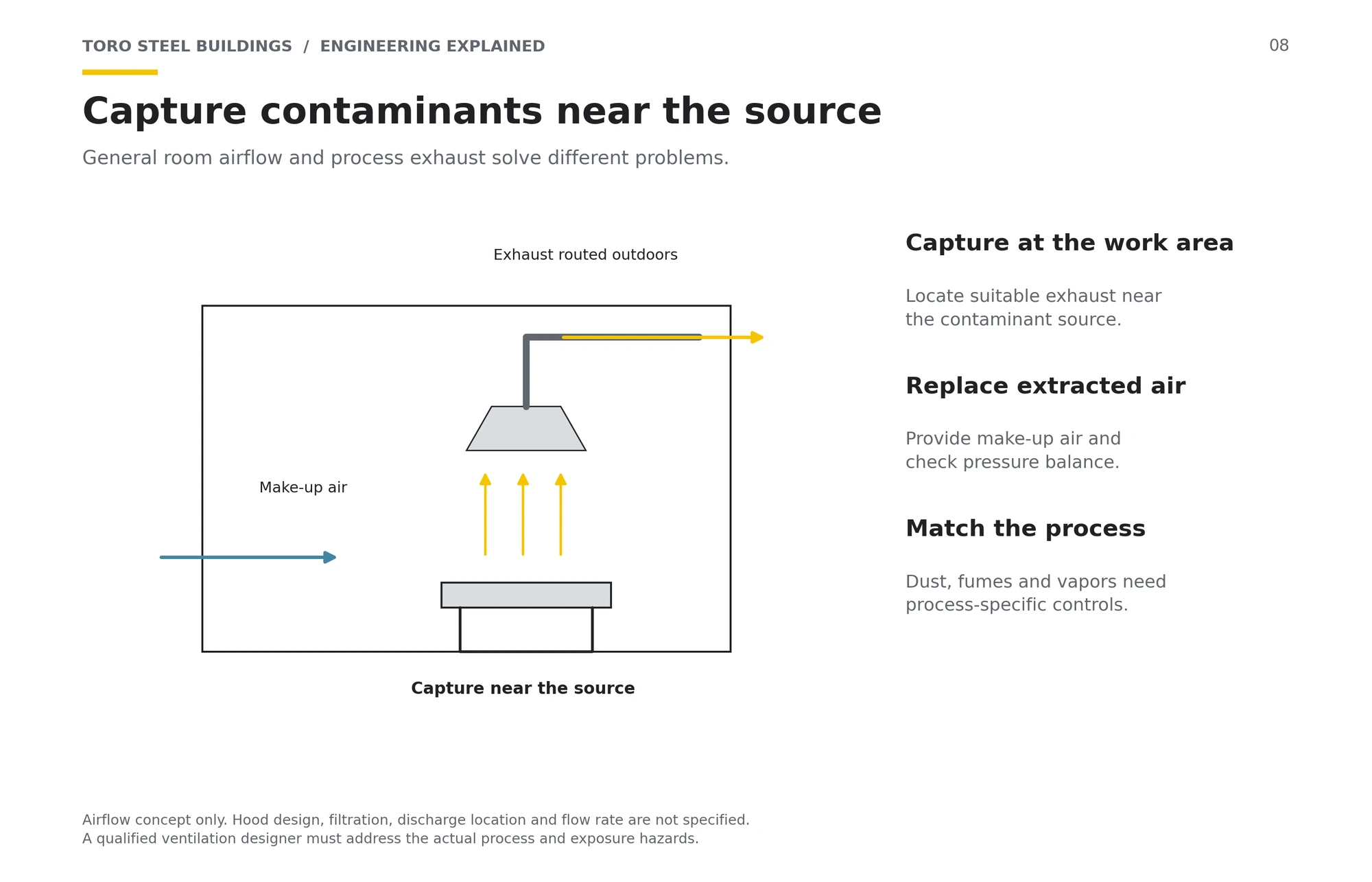
General ventilation dilutes the air, but it doesn’t make every task safe. Welding, cutting, painting, and running engines indoors need local exhaust that captures fumes at the source and vents them outdoors, sized for the process and the products you use.
Intake Options
- Doors: Overhead and walk-in doors are the biggest air intakes when open.
- Windows: Operable windows provide natural ventilation and daylight — the more you have, the more airflow you can get.
- Louvred wall vents: Fixed louvres let air in while their angled blades shed rain, providing ventilation even with doors and windows closed.
- Garage door vents: Vents mounted in or on overhead door panels add intake air and help reduce humidity.
Exhaust Options
- Ridge vents: Continuous vents along the roof peak let rising warm air escape along the full length of the building.
- Roof vents: Gravity-type roof vents such as monovents, and univents suited to continuous runs, are available with or without dampers, so you can close them in cold weather to hold heat in.
- Turbine vents: Wind-driven turbines spin as air passes over them, drawing air out of the building without power.
- Exhaust fans: Powered fans pull fumes and heat out on demand. Place them near the work areas that generate the most fumes, such as a welding bench, paint area, or engine bay.
Moving Air Inside the Shop
Circulation fans — floor fans, wall-mounted fans, or ceiling fans — keep air moving through the space and help prevent hot spots and stagnant corners. They don’t replace intake and exhaust, but they make both work better and keep you cooler while you work.
Heating, Cooling, and HVAC
For a shop you use year-round, an HVAC system or ductless mini-split gives you control over temperature and humidity, and dehumidification protects tools and materials. Pair any mechanical system with insulation — it keeps conditioned air in, reduces energy costs, and is the most effective way to prevent condensation on the steel.
Safety Considerations
- Carbon monoxide: Never run engines, generators, or fuel-burning heaters without adequate ventilation, and install a carbon monoxide detector in any shop where engines run.
- Welding and cutting: Use local exhaust at the work station, not just general ventilation.
- Painting and finishing: Spray painting generates flammable vapours; follow local fire codes and product instructions, and use a properly ventilated area.
- Dust: Woodworking and grinding need dust collection in addition to ventilation.
Plan Ventilation Into the Design
Ventilation is easiest and cheapest to get right before your building is manufactured, since roof vents, wall louvres, and framed openings for fans are built into the design. Tell your Building Specialist how you’ll use the shop — vehicles, welding, woodworking, painting, or storage — so the ventilation is sized for the real work.
Permits, Codes & Engineering
Commercial shops, spray finishing, and fuel-burning equipment can carry specific ventilation and fire-code requirements; confirm them locally. Design loads follow the ASCE 7 standard from the American Society of Civil Engineers, referenced by the International Code Council‘s International Building Code, or the National Building Code of Canada. Toro’s in-house engineering team calculates your building’s loads for its specific address before it ships.
Related Building Types
Preventing Condensation in Steel Buildings | How to Insulate a Steel Building | Choosing the Right Metal Shop Kit
Get a Well-Ventilated Garage Shop
Toro Steel Buildings can plan vents, louvres, and openings into your building from the start. Request a free quote to get started.