


Steel Buildings Quebec
Quebec Steel Buildings Backed by 40+ Years of Experience & 85,000+ Customers Served
Why Quebec Buyers Choose Toro Steel Buildings
A garage has to handle vehicles, equipment, and brutal winters. A workshop has to support real fabrication work, not occasional use. Storage buildings need to secure heavy machinery and seasonal inventory without compromising access or structural integrity. Commercial, agricultural, and industrial structures have to perform through decades of Quebec weather without flinching.
That’s why the steel buildings Quebec buyers keep coming back to are the ones designed around their actual property, not forced into a one-size-fits-all package.
At Toro Steel Buildings, we bring 40+ years of experience, have served 85,000+ customers, and have an in-house design and engineering team backed by 30+ manufacturing facilities across North America. That means we’re not just selling you a kit. We’re matching a building to your site, your intended use, and the long-term load your project will carry.
From backyard garages to large-scale agricultural and industrial structures, Quebec buyers work with us because their buildings are engineered right the first time.
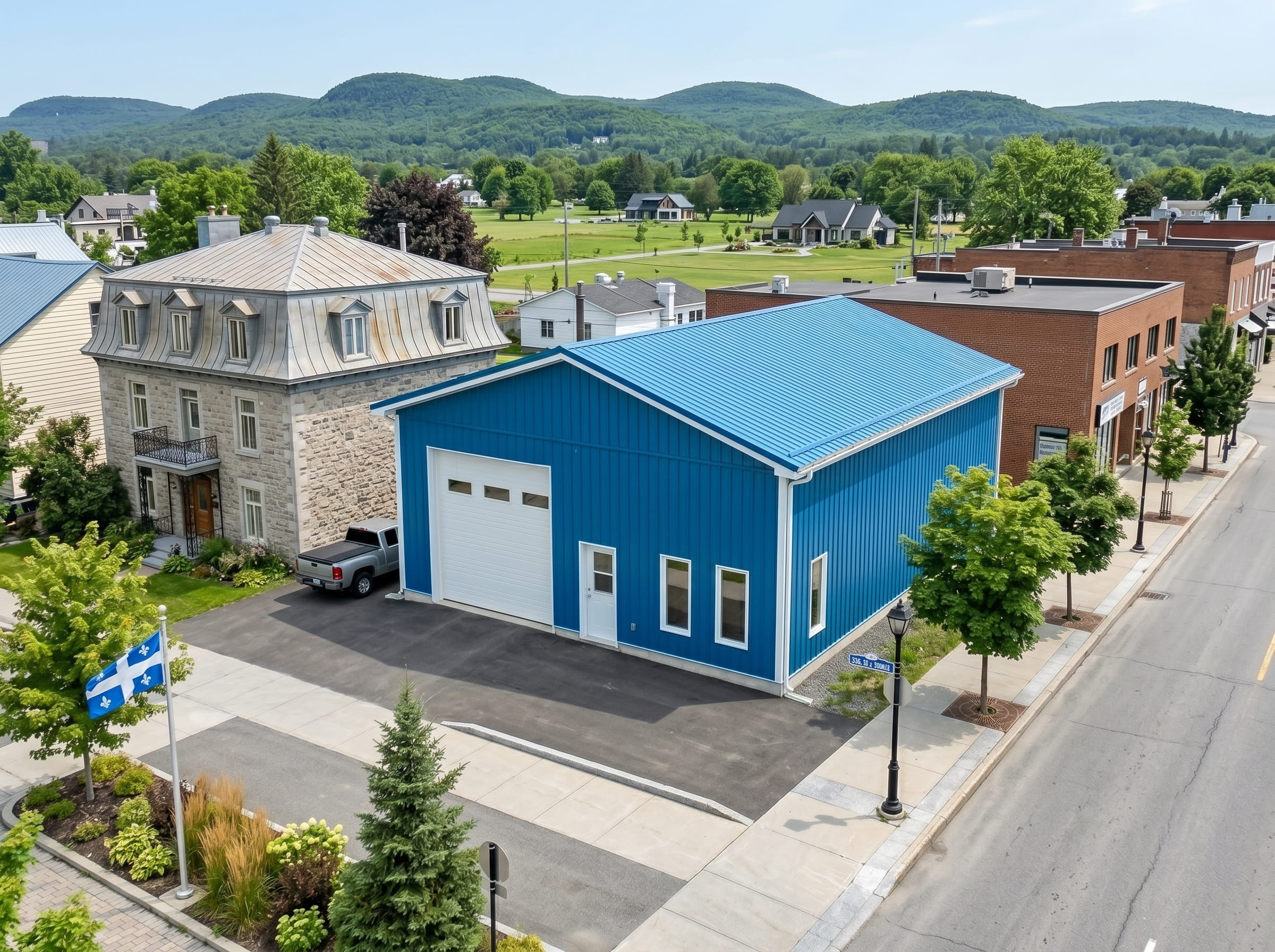
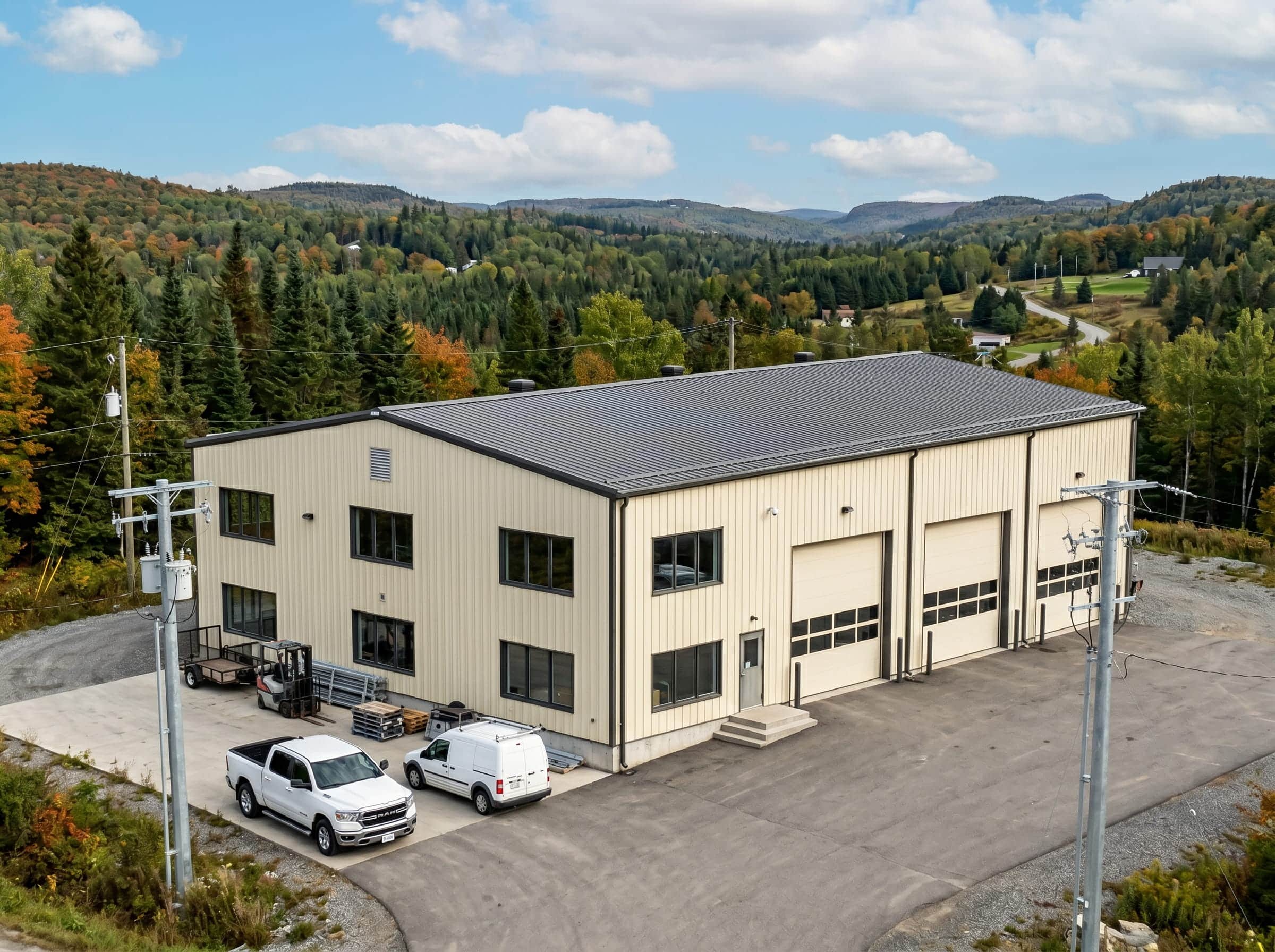
Why Steel Works Well in Quebec
Quebec’s climate is not a single condition. It is a seasonal sequence of demands: heavy snow loads, freezing rain, sustained cold, significant temperature cycling, and the structural stress that comes with all of it compounding over decades. A building that performs here has to be engineered around those realities from the start, not adjusted for them after the fact.
Steel holds up under those conditions because its structural properties can be calculated and specified precisely for the site. Span lengths, load ratings, wall heights, and framing configurations are not estimated. They are engineered to the actual project location, intended use, and the loads the building will carry across its service life. That level of precision is harder to achieve with conventional wood-frame construction, which is inherently vulnerable to moisture infiltration, pest damage, warping, and long-term dimensional change. Steel eliminates those variables.
The material also gives buyers meaningful flexibility in how a building is configured. Clear-span framing removes interior columns, which matters for workshops, equipment storage, agricultural operations, and commercial use where unobstructed floor space drives function. Wall heights, bay spacing, door openings, and future expansion can all be built into the original design rather than worked around later.
For Quebec buyers evaluating garages, workshops, storage structures, agricultural buildings, or commercial and industrial facilities, steel consistently performs on the criteria that matter most: structural integrity under load, resistance to long-term environmental degradation, and the ability to be designed around the actual demands of the project rather than a generic regional assumption.
Common Uses of Steel Buildings in Quebec
At Toro Steel Buildings, we offer various steel building kits specifically tailored for Quebec’s climate:
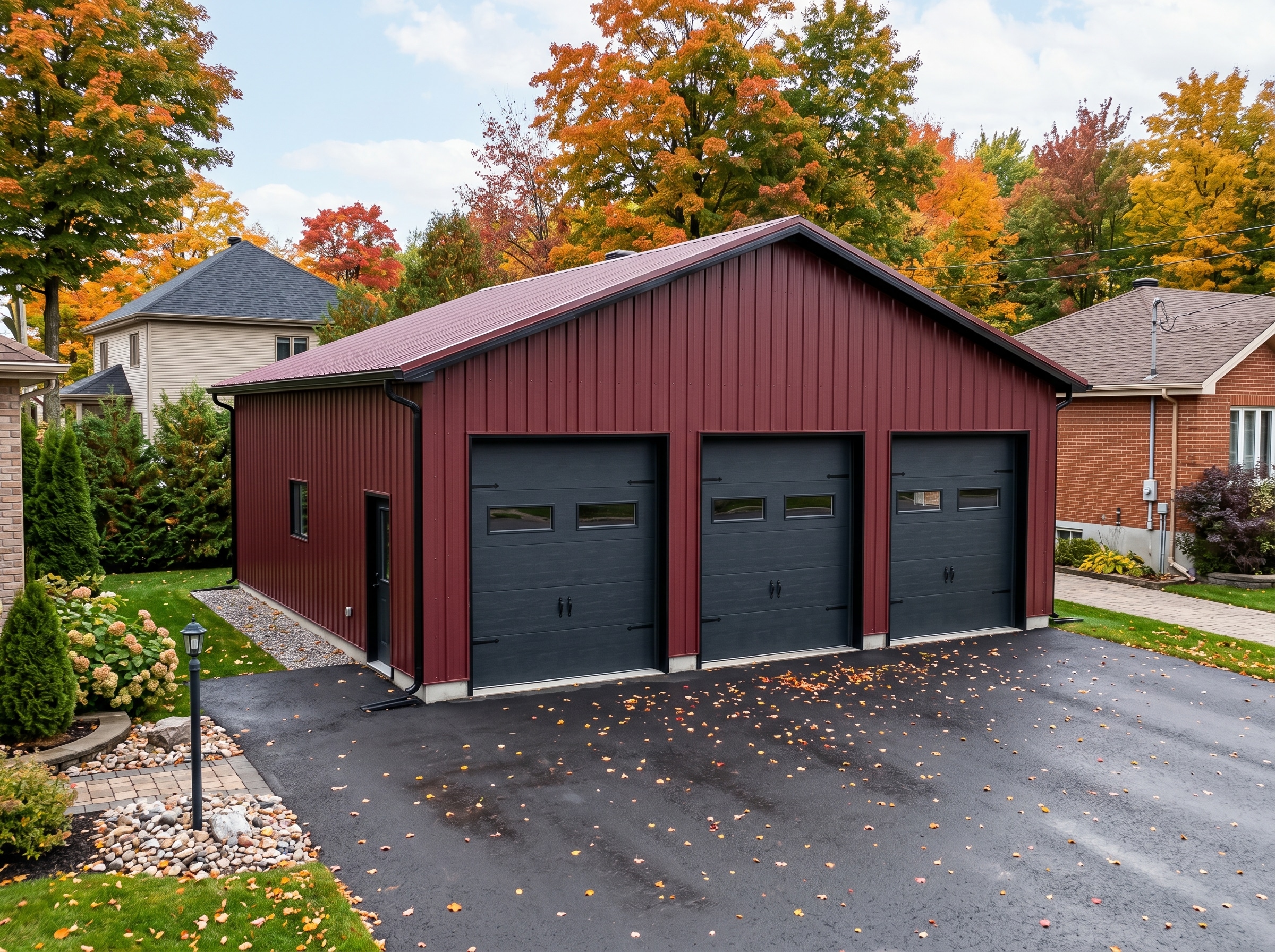
Steel Garages
A steel garage is a structural investment that has to perform across decades of Quebec winters, not just provide overhead cover. It needs to handle vehicle storage, tool and equipment organization, seasonal overflow, and day-to-day property demands without creating maintenance problems along the way. Clear-span framing allows interior layouts to be arranged around actual use rather than being worked around column placement. Single-bay and multi-bay configurations can both be engineered to the site, the intended load, and the property’s access requirements from the outset.
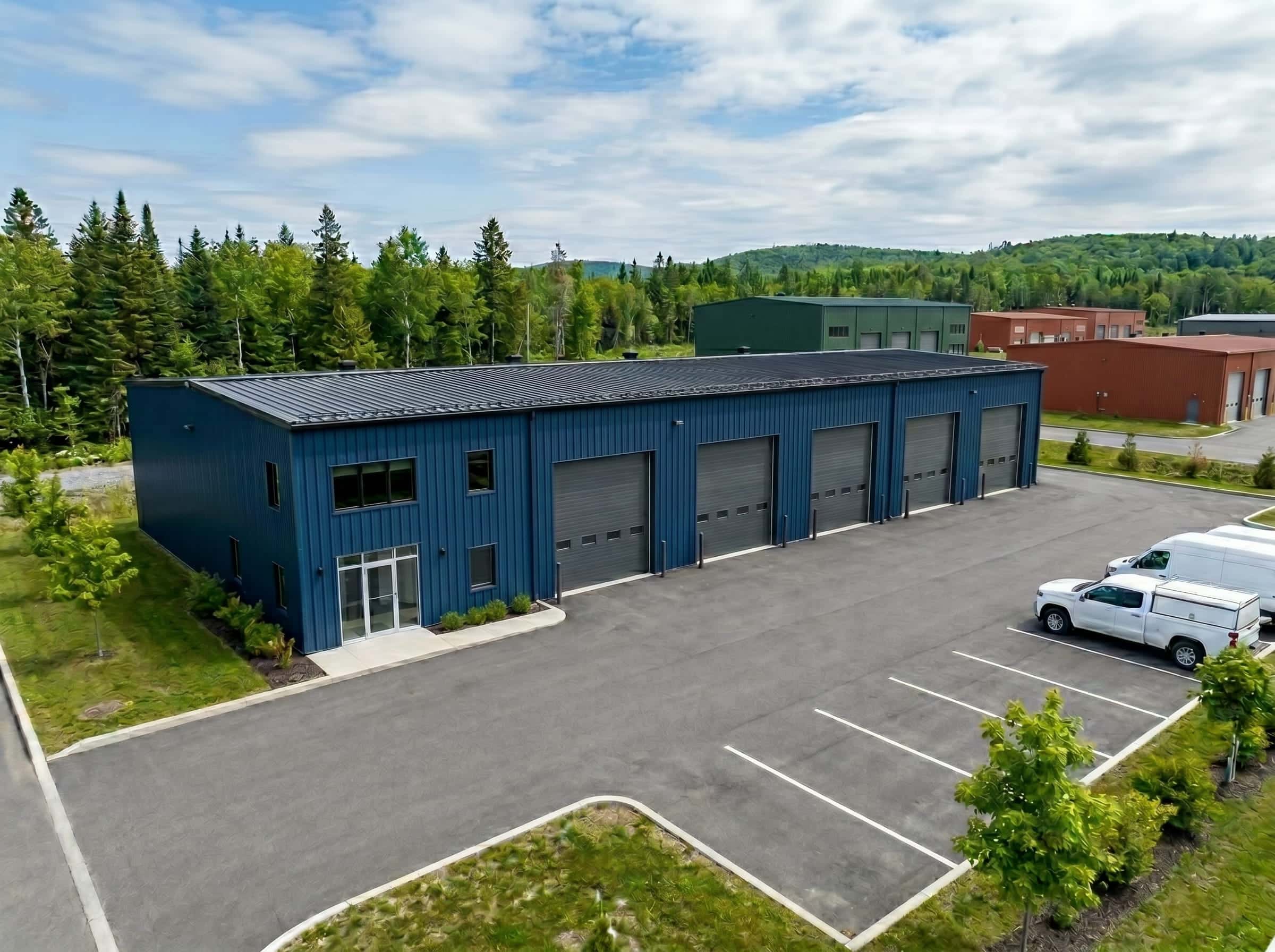
Workshop Buildings
A workshop building has to be designed around how work actually gets done, not around what fits a standard package. Steel allows for open interior spans that support bench layout, equipment placement, material handling, and workflow without interior columns consuming usable floor area. Wall heights and door openings can be specified to accommodate the tools, vehicles, or equipment the space needs to serve. For fabrication, repairs, woodworking, and general utility work, that structural flexibility is what makes a steel workshop a dependable long-term solution in Quebec.
Storage Buildings
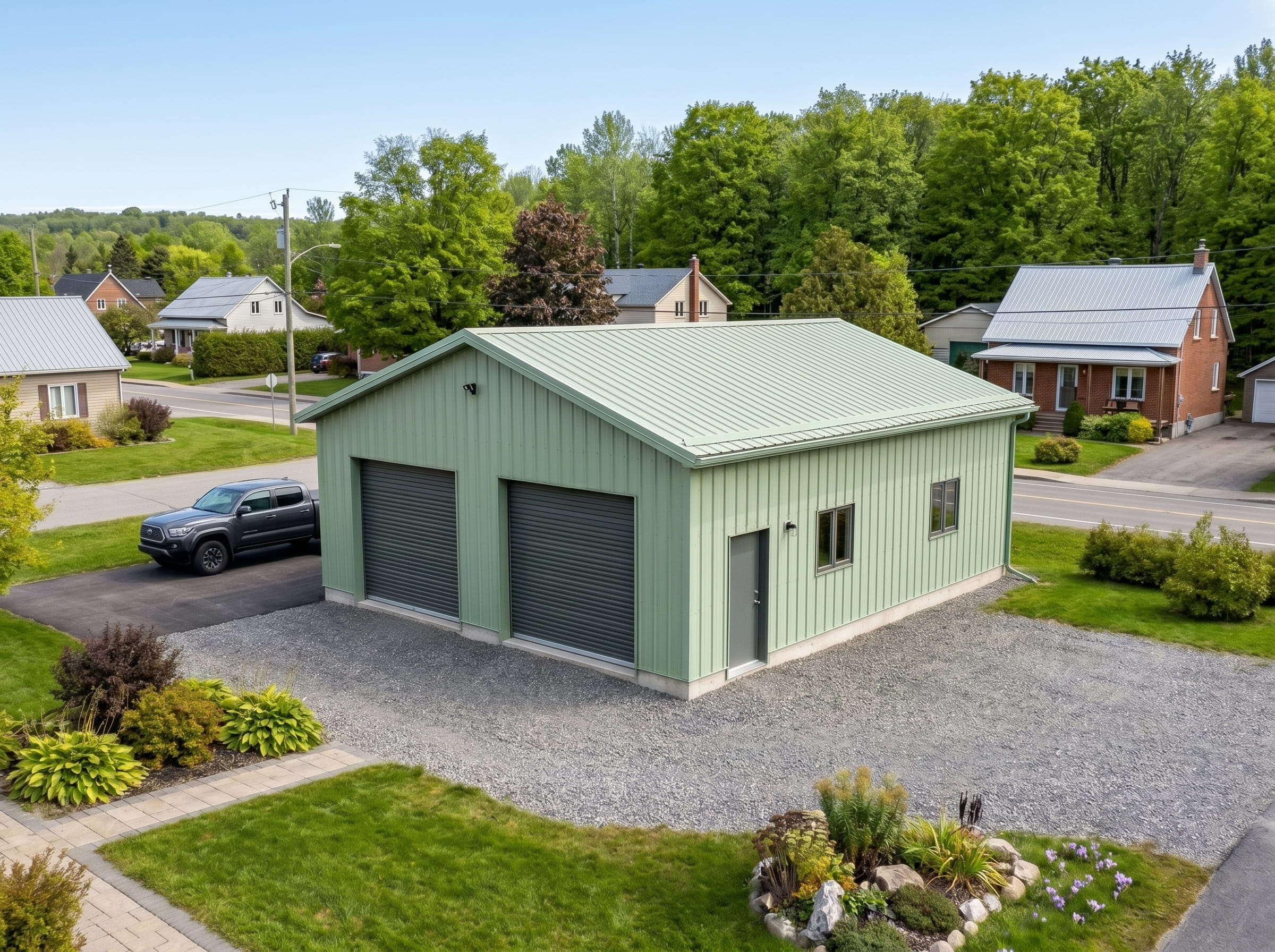
A storage building earns its value through consistent performance over time, not just initial cost. Steel provides an enclosed space for machinery, tools, inventory, and seasonal equipment while resisting moisture infiltration, dimensional changes, and pest infestations that affect other construction types over the long term. Door placement, bay configuration, and interior clearances can all be engineered to support how the property actually moves and stores material. For Quebec buyers who need reliable, low-maintenance storage, steel delivers on the criteria that matter most.
Carport Kits
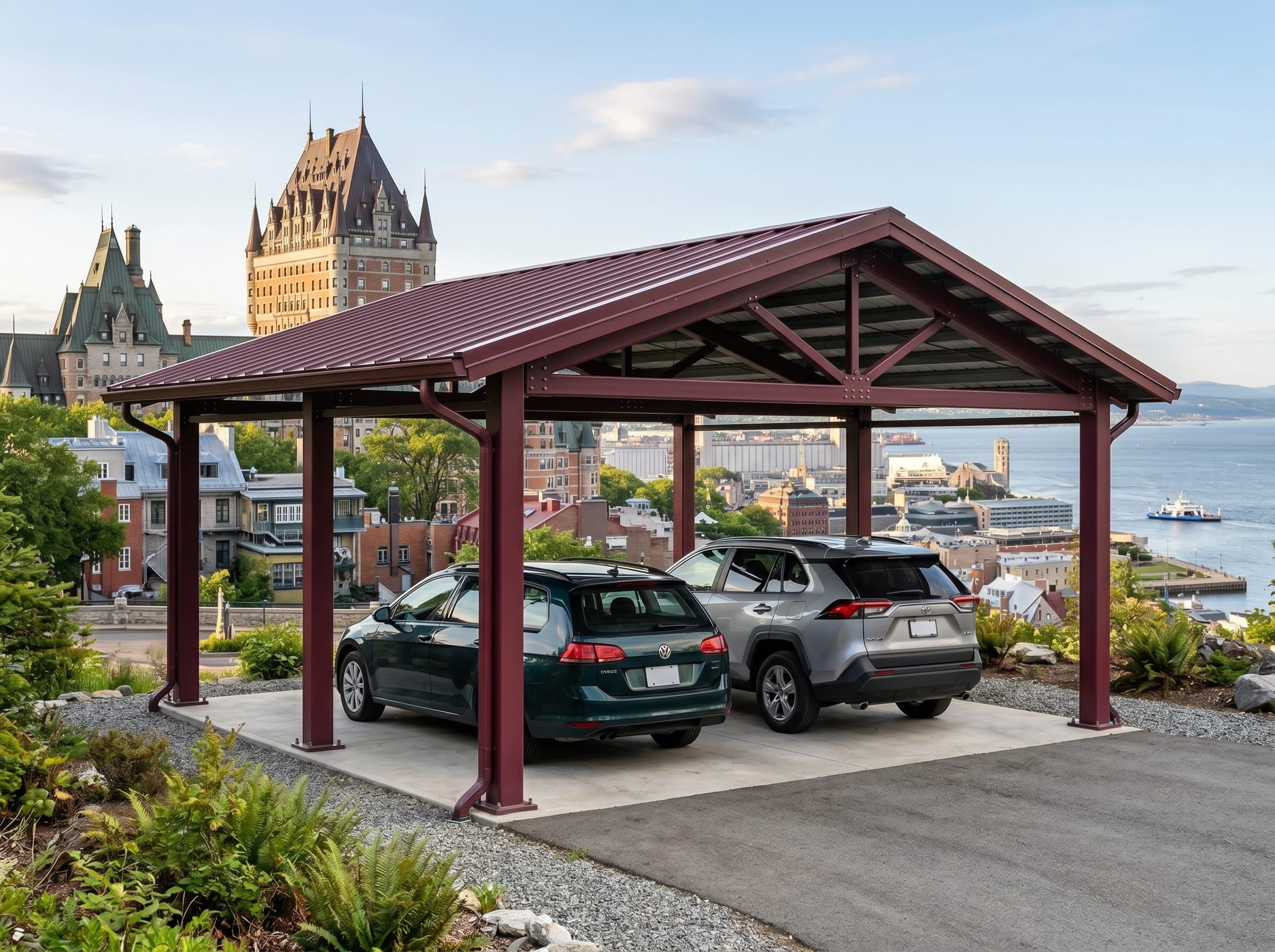
A carport protects vehicles and equipment from snow accumulation, freezing rain, and prolonged exposure to the elements without the cost and complexity of a full enclosure. The structural design still needs to be taken seriously in Quebec, where snow loads and wind uplift place real demands on even open-sided structures. Steel carport kits can be engineered to meet those load requirements while remaining straightforward to install and maintain. For buyers who need dependable overhead protection with open access, a properly specified steel carport is a practical and cost-effective solution.
Container Covers
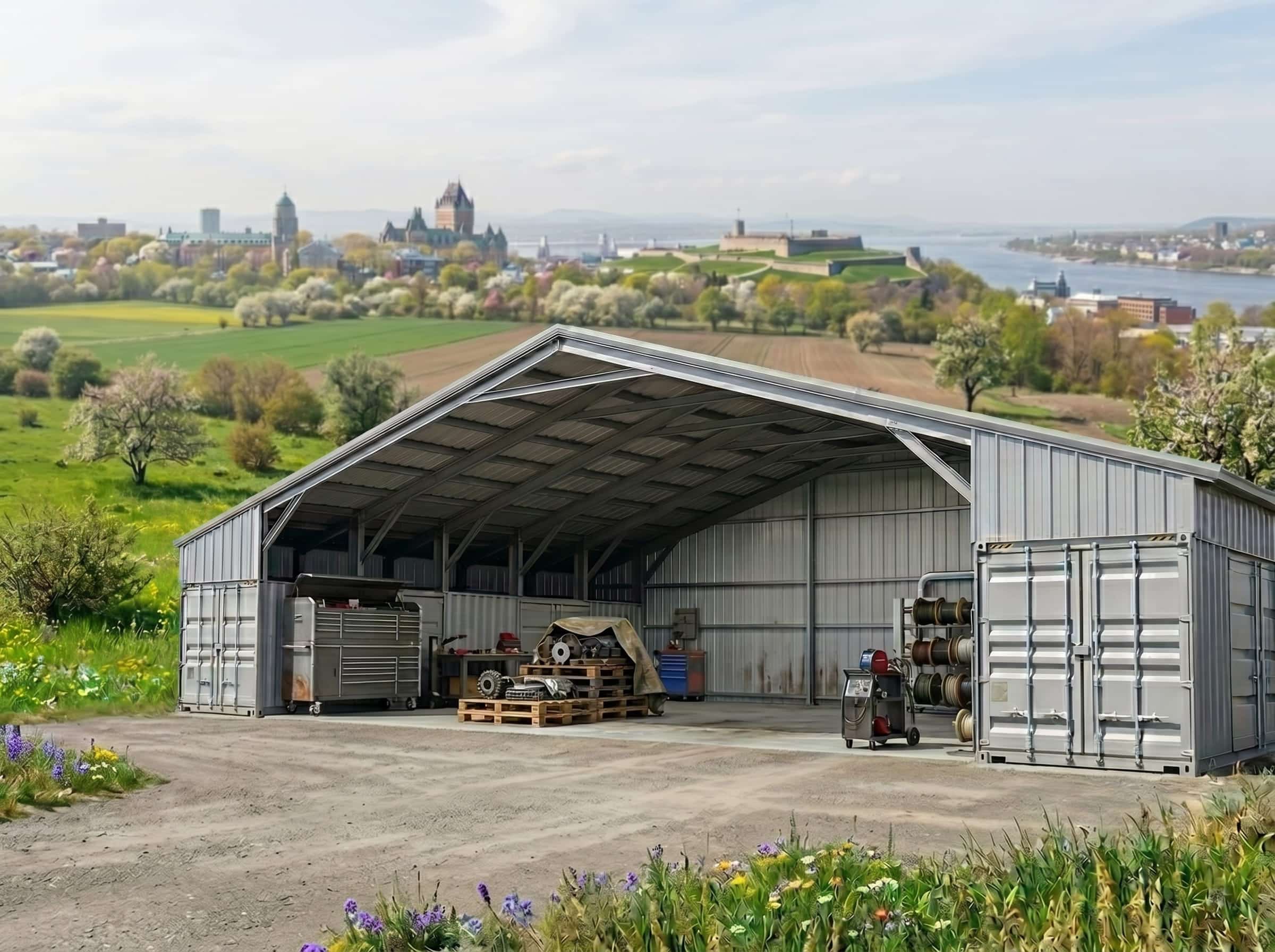
A container cover extends the utility of shipping containers by adding engineered overhead protection for work areas, equipment, parking, and open storage. The containers serve as the foundation and vertical support structure, which reduces the footprint and cost of a conventional foundation system. Steel framing spans between them to create a covered space that handles snow load and wind exposure without requiring a fully enclosed building. On farms, industrial yards, and job sites where flexible covered space is needed without major civil work, container covers are a structurally sound and practical option.
Agricultural Buildings
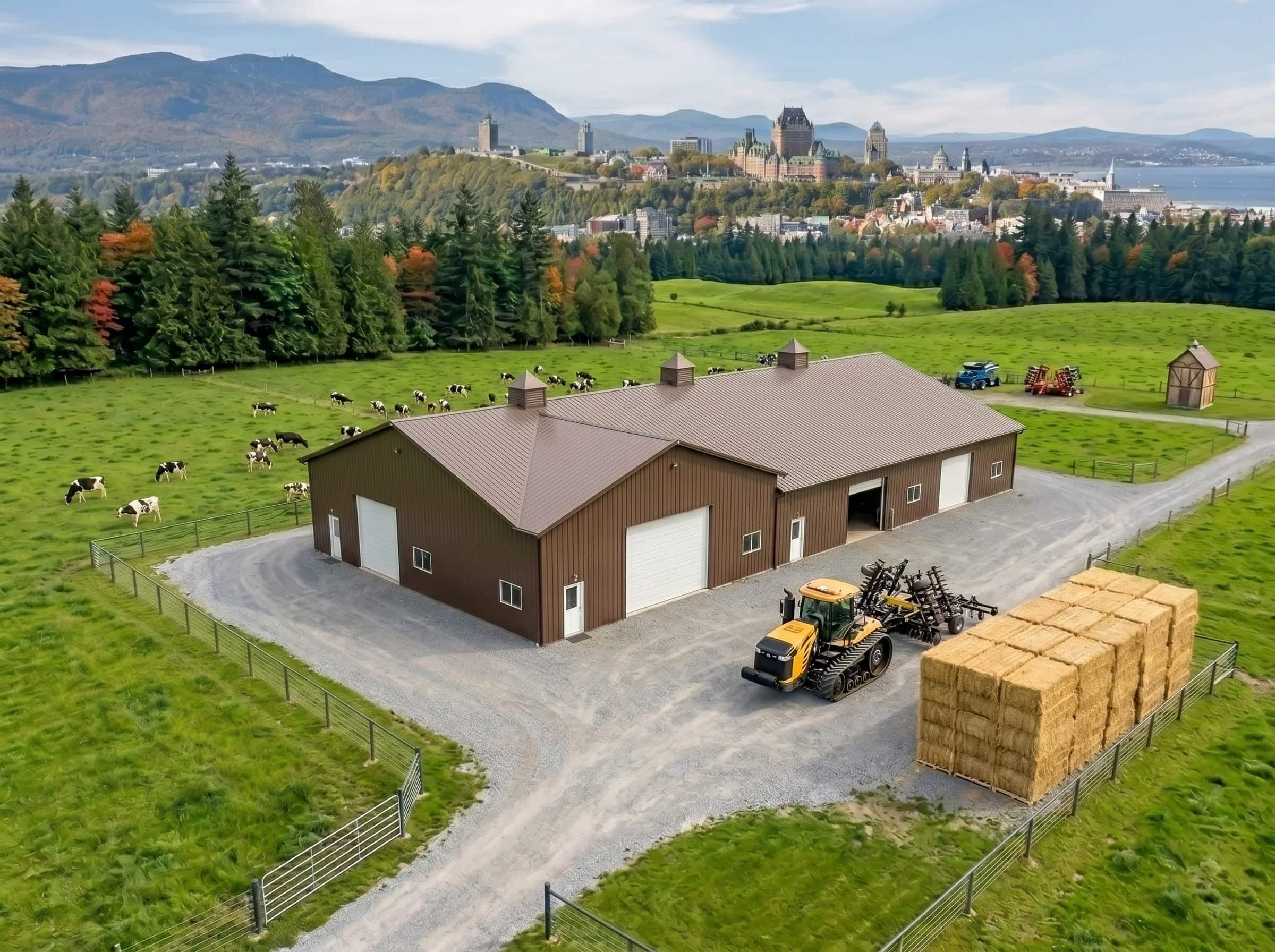
Agricultural buildings in Quebec must accommodate equipment, feed storage, livestock support, and heavy seasonal use in a climate that tests structural performance year after year. Steel allows these demands to be addressed through engineering rather than approximation, with clear spans, door openings, ventilation provisions, and floor-to-eave heights all specified to meet the actual working needs of the operation. Unlike wood-frame construction, steel does not carry the same long-term exposure risk to moisture, pest infiltration, or load-related dimensional change. For Quebec farms, that combination of structural precision and long-term durability makes steel a reliable choice.
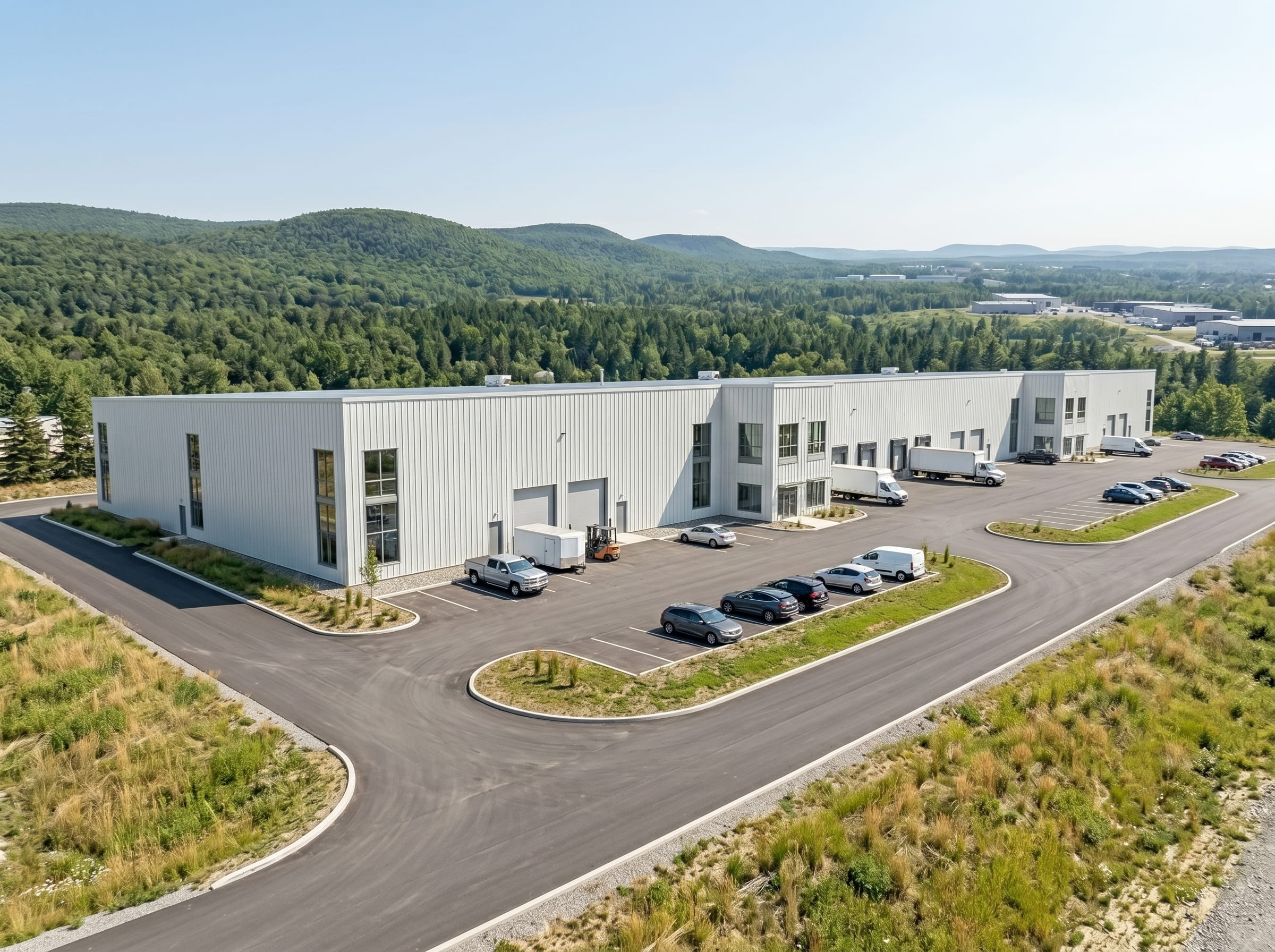
Commercial & Industrial Buildings
Commercial and industrial buyers need interior space that works for the operation, not around structural limitations. Steel clear-span framing removes interior columns, which allows offices, contractor facilities, service bays, warehousing, and manufacturing layouts to be planned around workflow, equipment, and storage requirements from the ground up. Future expansion can also be built into the original design rather than treated as a costly retrofit. For Quebec buyers managing operations that need to grow or adapt over time, steel provides the structural framework to do that without compromising what the building was built to do in the first place.
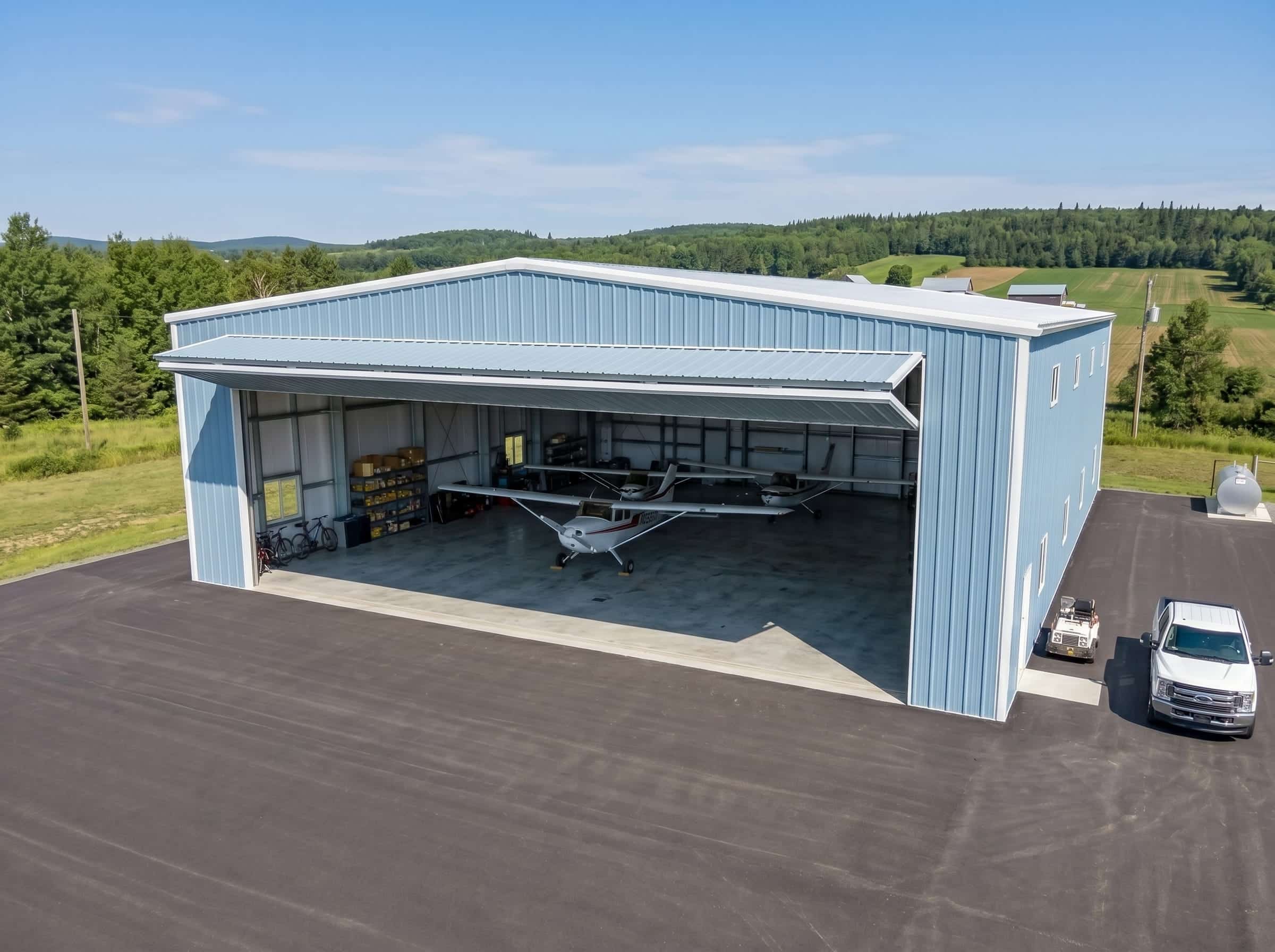
Airplane Hangars
An aircraft hangar places demanding requirements on structural design. Wide, clear spans, tall-framed door openings, and unobstructed interior space are not optional features; they are functional necessities for aircraft movement, parking, and ongoing servicing. Steel meets those requirements because it can be engineered to span the distances and heights that aviation use demands without interior columns interfering with access or layout. Roof loads, wind exposure, and foundation requirements can all be calculated for the specific site and aircraft type the hangar is intended to serve. For aviation projects in Quebec, steel is the structurally appropriate choice.
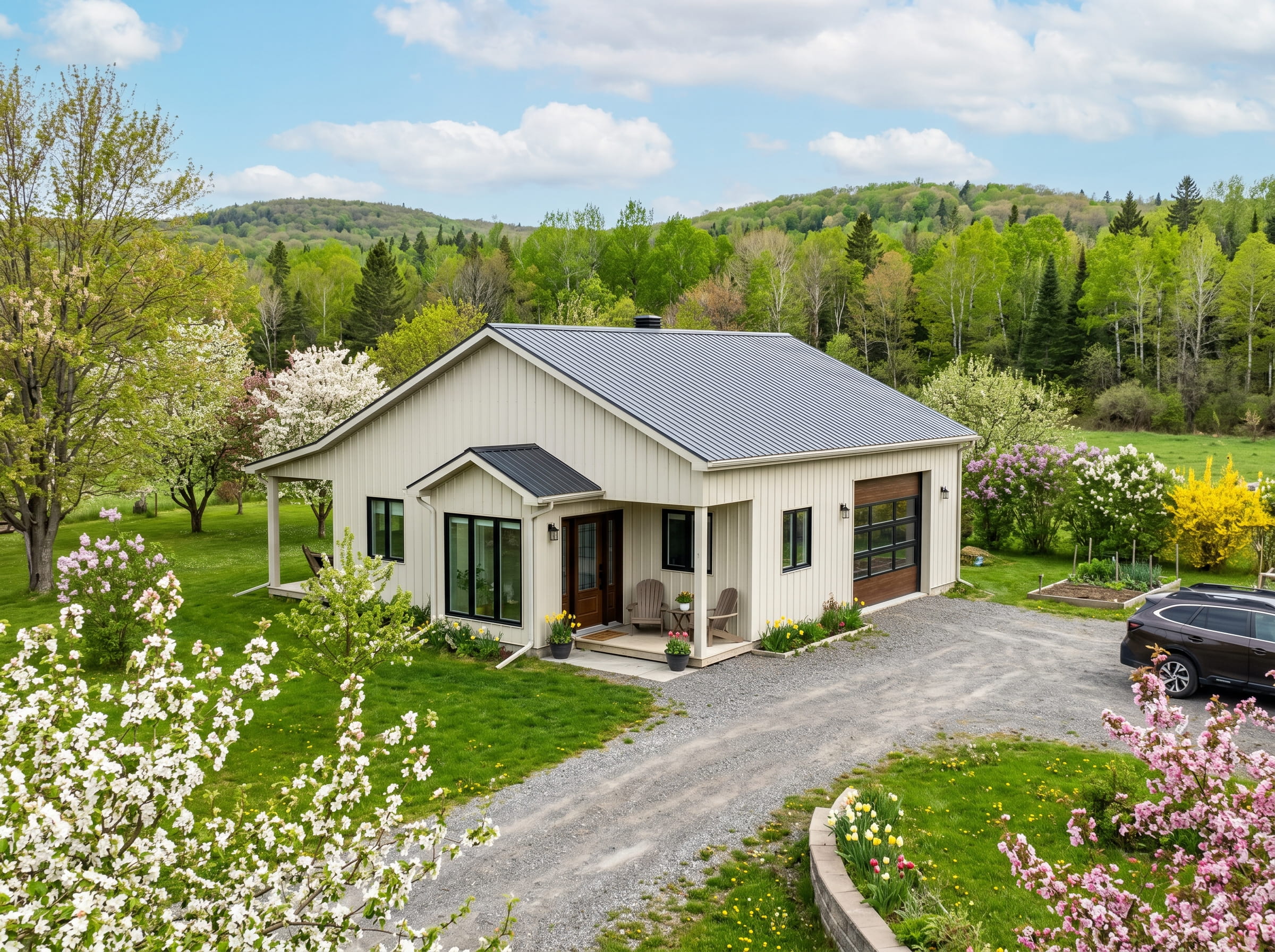
Metal Barndominiums
A barndominium shell has to support two distinct functional programs under one roof: living space and a utility bay for a garage, workshop, or storage area. Steel framing handles that combination well because the structural system can be configured to accommodate different interior heights, partition placements, and load conditions across the same footprint. The building envelope performs consistently across both portions without the moisture and pest vulnerabilities that affect wood-frame construction over time. For rural and mixed-use residential buyers in Quebec who need a durable, flexible structure that consolidates living and working spaces, steel provides a practical, long-lasting foundation.
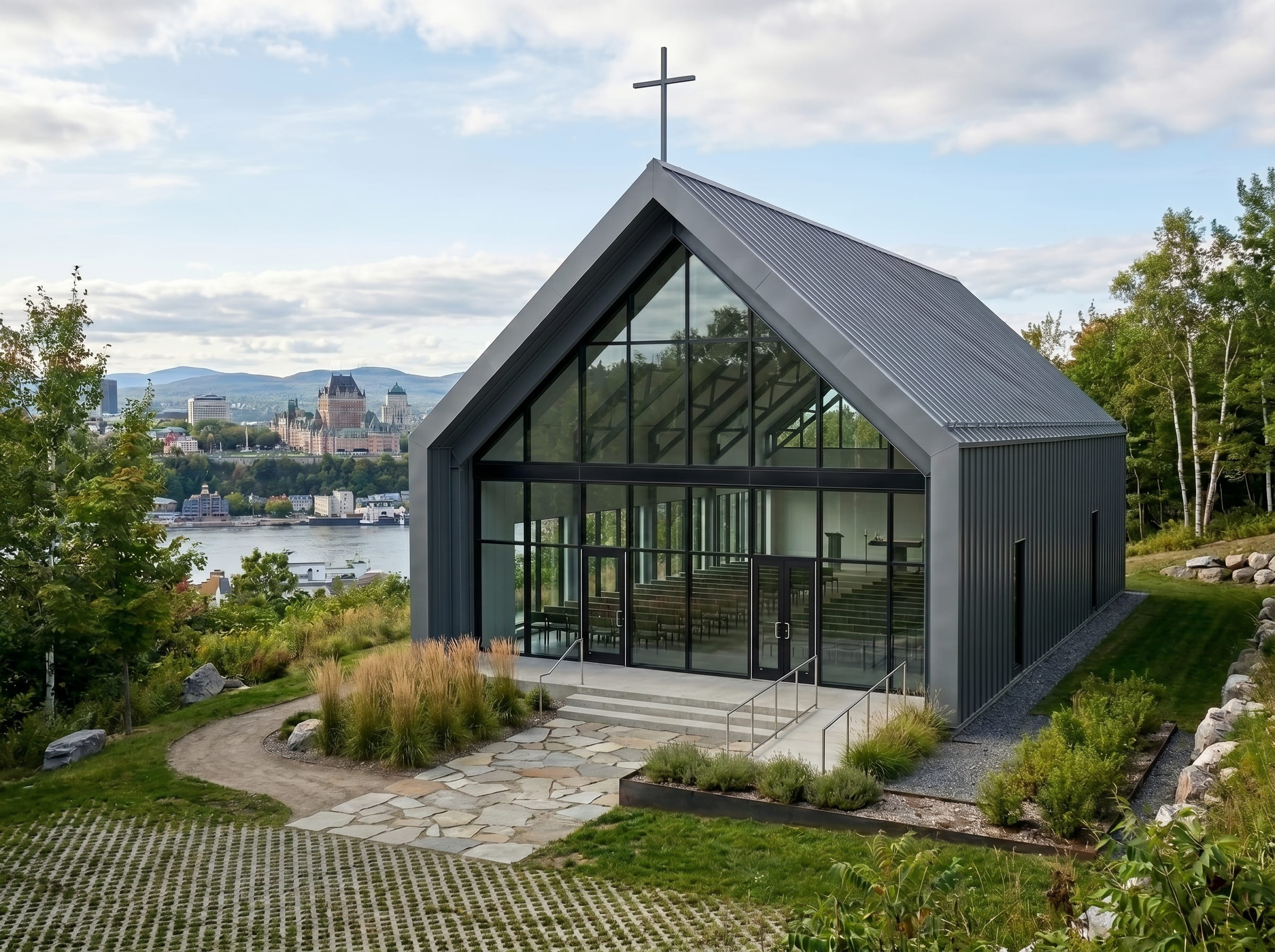
Church Buildings
A church building must support a wide range of occupancy conditions and interior configurations over a long service life. Worship, fellowship, classrooms, offices, and community gatherings all place different demands on interior layout, acoustic separation, and structural loading. Steel clear-span framing allows those requirements to be addressed without interior columns constraining how the space is used or partitioned over time. The building can also be designed to accommodate future expansion without requiring structural modification to the existing frame. For congregations that need a building engineered to serve well for decades, steel provides the structural reliability and interior flexibility.
Roofing Systems
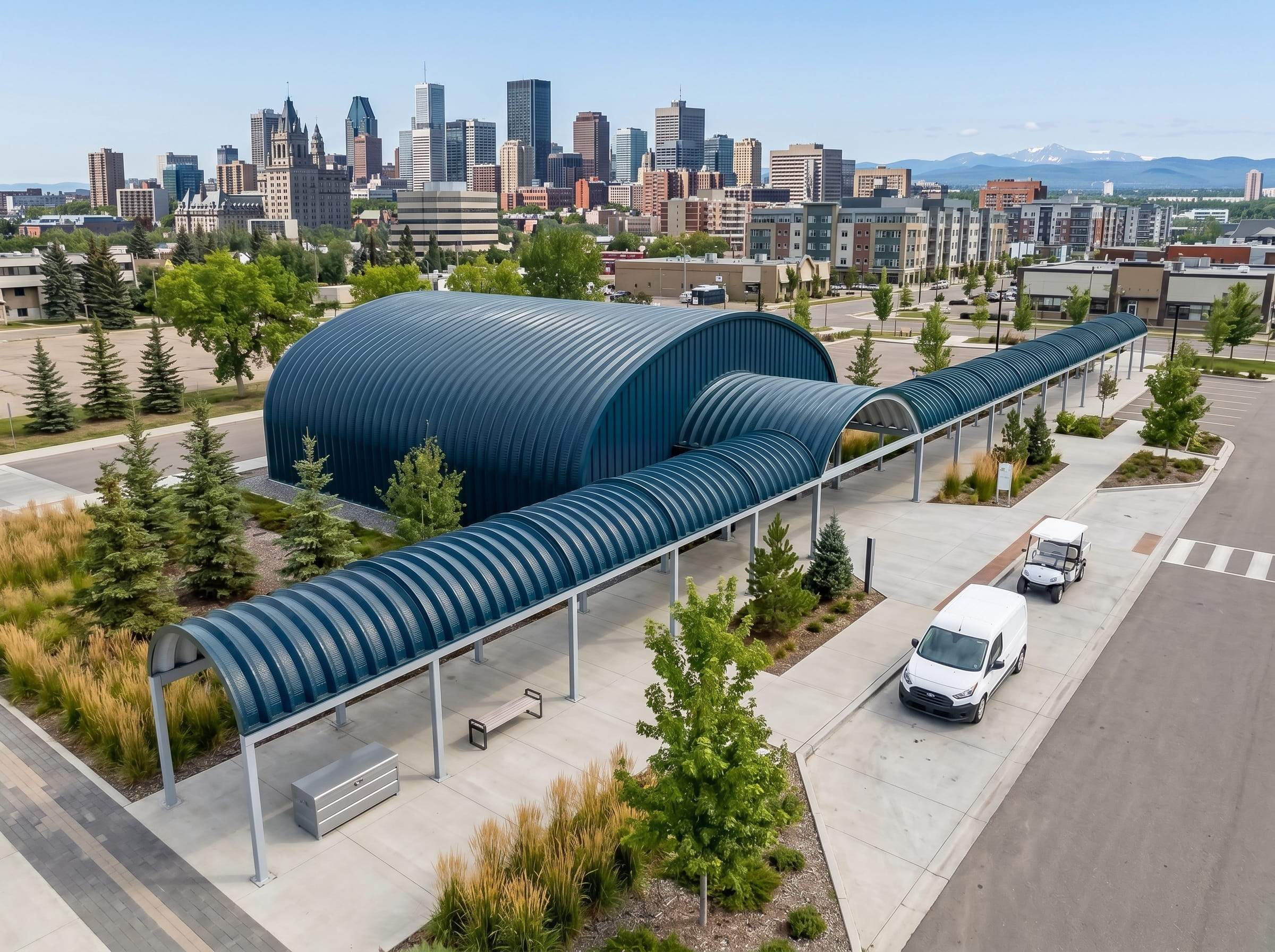
A steel roofing system provides engineered overhead protection where full enclosure is not required, but structural performance still matters. Snow accumulation, ice loading, wind uplift, and freeze-thaw cycling all place significant demands on roofing structures in Quebec, and those demands must be addressed through proper load calculations and connection design rather than standard assumptions. Steel roofing can be specified to meet those site-specific requirements while remaining low-maintenance across its service life. For buyers who need durable weather protection over work areas, walkways, equipment staging, or material storage, a properly engineered steel roofing system is a dependable long-term solution.
Quonset Huts
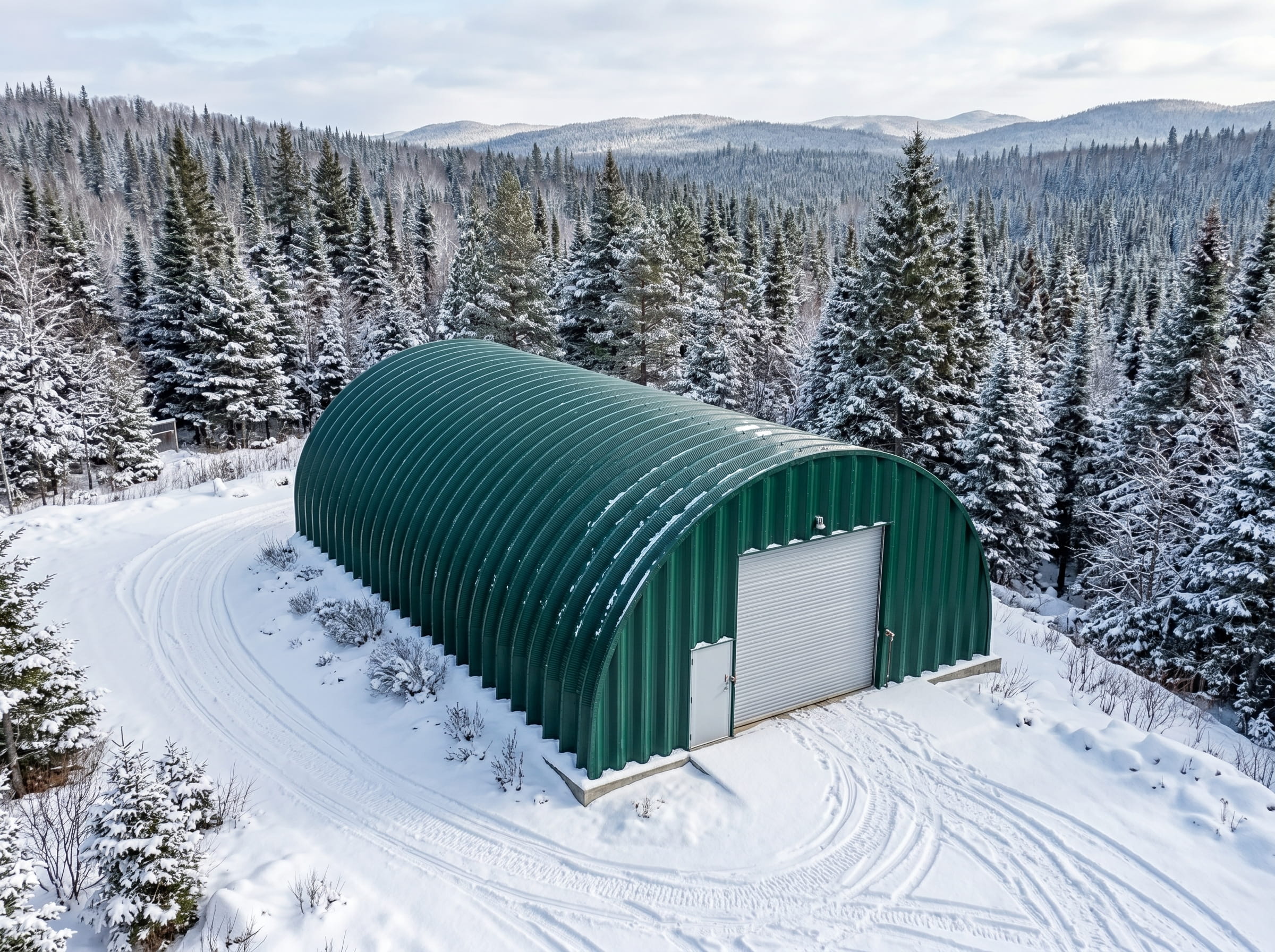
A Quonset hut’s curved arch profile is not just a visual characteristic; it is a structural system that distributes load efficiently across a clear-span interior without requiring internal columns or complex framing. That makes it well-suited for storage, workshop, agricultural, and garage applications where unobstructed interior space and straightforward construction are both priorities. The arch geometry also sheds snow load more naturally than flat or low-slope roof profiles, which is a practical advantage in Quebec’s climate. For buyers who need dependable, low-maintenance covered space without the cost of a more complex building system, a steel Quonset hut remains a structurally sound and efficient option.
What Makes Our Steel Buildings Unique
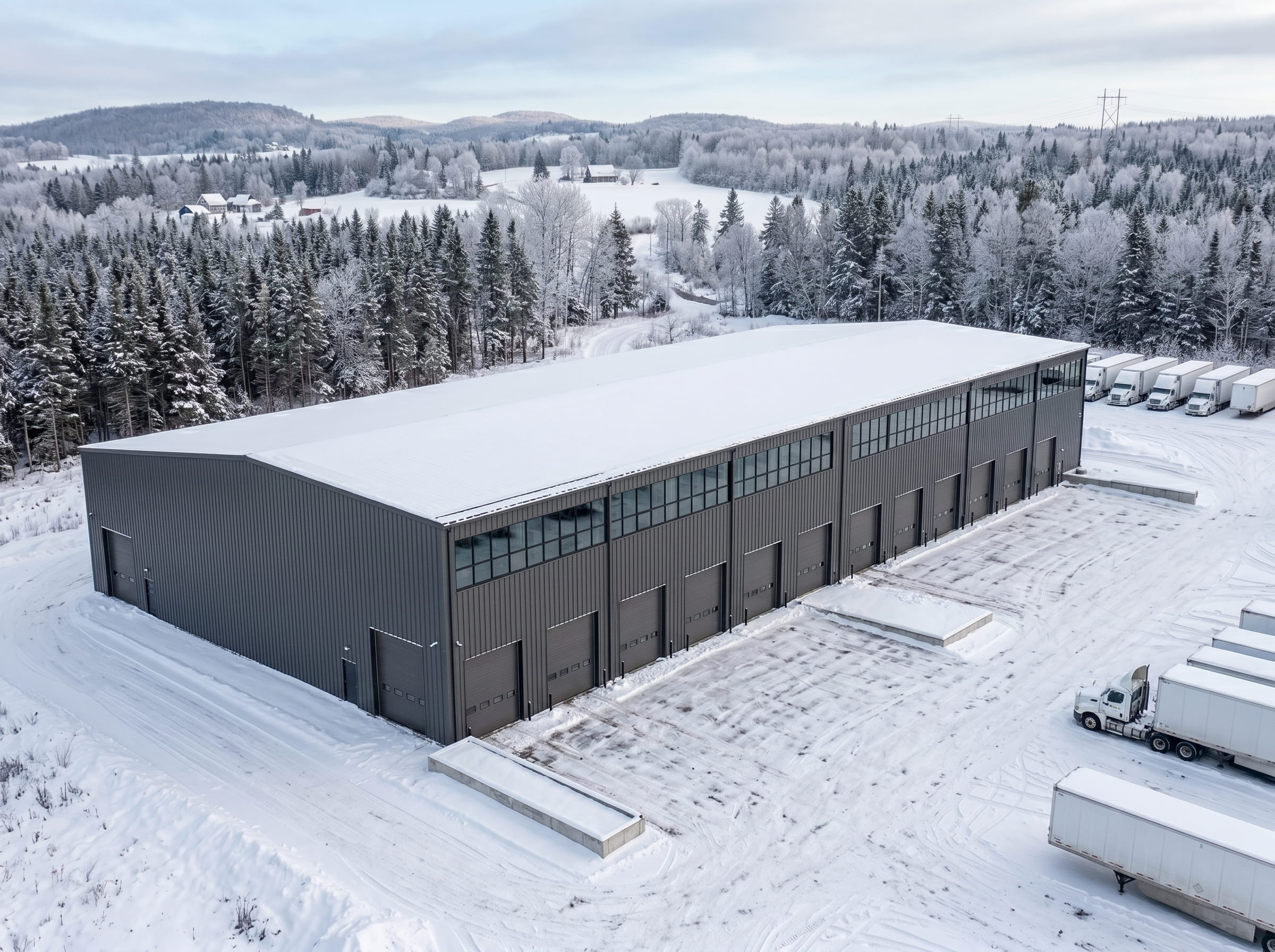
The following are a few of the unique advantages of choosing a prefab steel building kit over traditional construction methods:
Steel Building Systems Available in Quebec
Not every Quebec project calls for the same structural approach. The right system depends on how the building will be used, how much clear space it needs, the required layout, and how the structure is expected to perform over time.
Straight wall steel buildings are often the most flexible option because they work well for a wide range of residential, agricultural, commercial, and utility applications. Within that category, red iron systems are generally better suited for larger buildings that require greater span and structural capacity, while cold-formed steel systems are often a practical fit for garages, workshops, storage buildings, and other smaller to mid-scale projects. Arch buildings are a separate steel building system commonly used for storage, workshops, garages, agricultural buildings, shelters, and other utility-focused applications where clear-span interior space and efficient load distribution are important.
Engineering Steel Buildings for Quebec Conditions
Quebec’s climate places measurable, calculable demands on building structures. The Quebec Building Code sets the minimum structural thresholds for good reason, and a properly engineered steel building is designed to meet and exceed those requirements from the first drawing forward.
What to Look for in Steel Building Manufacturers in Quebec
Choosing a steel building supplier in Quebec is not a product decision. It is an engineering decision. Before committing to any supplier, the following questions should have clear, specific answers:
- Why does one structural system fit this project better than another, and what is the engineering basis for that recommendation?
- How does the intended use affect the framing design, span lengths, and load ratings being proposed?
- What do framed openings, door placements, and window locations do to the structural layout, and how are those accounted for in the design?
- Which customization options are genuinely available, and which are added as a change order after the quote is signed?
- How is the building designed around the actual site conditions rather than a regional assumption?
- Who is responsible for ensuring the structure performs across its full service life, and what does post-shipment support look like?
- How long has the manufacturer been in business, and does their track record reflect experience with projects comparable in scale, use, and climate demands to the one being planned?
- What warranties apply to the steel components, structural framing, and building envelope, and what do those warranties actually cover versus what they exclude?
- Does the supplier have an in-house design and engineering team, or is the technical work outsourced to third parties who have no ongoing accountability to the project?
A supplier who cannot answer those questions precisely is not engineering the building around the project. They are selling a package and hoping it fits. A long product catalog or a broad list of building types is not a substitute for substantive project guidance backed by real engineering capacity and demonstrated long-term experience.
The Toro Standard for Quebec Buyers
Every Toro project starts with the site, not a catalog. Intended use, site layout, access demands, snow and wind exposure, framed opening locations, and long-term operational needs are all factored into the design before a quote is issued. That is what separates a building that works as intended from one that simply encloses space.
Toro brings over 40 years in business, more than 85,000 customers served, an in-house design and engineering team, and manufacturing support across more than 30 facilities in North America. The result is engineering capacity and production infrastructure capable of handling projects of any scale.
Quebec buyers get a building designed around their property, not a generic solution retrofitted to fit it. Backed by CSA A660 Quality Certification for Steel Building Systems, every project is held to a recognized standard. The result is a structure properly engineered for its intended use, not just purchased.
Let’s Engineer the Right Solution for Your Property
For Quebec buyers who need a building that performs under real loads, survives demanding weather, and holds its structural integrity across decades of use, the material choice matters as much as the engineering behind it. Getting both right from the start is what separates a building that functions as intended from one that creates maintenance problems and operational limitations over time.
Toro Steel Buildings has spent over 40 years helping buyers make the right decision. Our in-house engineering team, bilingual project support, and manufacturing capacity across more than 30 North American facilities mean the building gets designed around your property, your intended use, and the long-term demands of your project from the first conversation forward. For more information about our metal building kits, please contact us or call Toro Steel Buildings at +1-877-870-8676 We offer fully bilingual services for those who require a French speaking team. Alternatively, you can request a quote below today.